
Lieferung heute & morgen

Qualitätsgarantie

Willkommens-Angebote freischalten: KOSTENLOSE Lieferung | Bis zu 80 % RABATT | Kostenlose 30-Tage-JoyPlus-Testphase
App herunterladen
A folding camping chair should be quick to set up, take up little space and still stand securely. In practice, however, differences often only become apparent after longer periods of sitting, during transport or on uneven ground. If you only look at colour and price, you risk overlooking important details about weight capacity, frame, seat height and packed size.
A stated maximum load isn’t a general comfort rating. It describes a technical upper limit under specific conditions. What matters is whether this is a static weight capacity and whether the chair is fully opened on level ground. Dynamic loads – such as sitting down suddenly or leaning out sharply – can place additional strain on the structure.
When choosing, you should distinguish between body weight, clothing, luggage and a safety margin. A heavy-duty camping chair with a stated static capacity of 150 or 180 kg offers more leeway than a model with a tightly calculated upper limit.
A lightweight camping chair is easy to carry to a festival, the beach or a picnic. However, very compact models can have a lower seat height, a narrower seat or less frame material. Always check the balance between weight, seating comfort and load capacity.
The packed size also matters: for a motorhome, the length of the carry bag is key; for a car boot, the width matters too. A chair with a high backrest can be more comfortable to sit in, but it often takes up more storage space when folded.
A camping chair with a cup holder and side pocket is handy in everyday use, but it doesn’t replace a sturdy construction. With an adjustable reclining chair, it should also be clear which positions are actually available. A headrest, armrests or a footrest are only worthwhile if the chair stands securely on firm, level ground.
Steel frames in many folding chairs are designed for load-bearing capacity but can be heavier. Aluminium or similar light metals reduce weight but require appropriately sized struts and joints. Look for reinforced connections, a full opening mechanism and a clear locking system.
For the seat fabric, materials such as Oxford fabric, polyester and mesh are commonly used. 500D polyester, for example, is a specific material specification; on its own, however, it doesn’t tell you everything about the stitching, coating or UV resistance. Mesh inserts can improve air circulation and dry faster after contact with water. The upholstery should be cleaned with a damp cloth according to the manufacturer’s instructions and stored dry.
A seat height of around 40 to 50 cm makes it easier for many people to sit down and stand up. For longer periods of sitting, seat width, seat depth and shoulder and head support are more important than a simple product label like “comfort chair”.
A camping chair with a high backrest can provide better support for your back and shoulders. For reading, fishing or longer breaks, a padded headrest is also worth considering. If you prefer to lie down, pay attention to the open dimensions, the number of reclining positions and the secure contact of all legs with the ground.
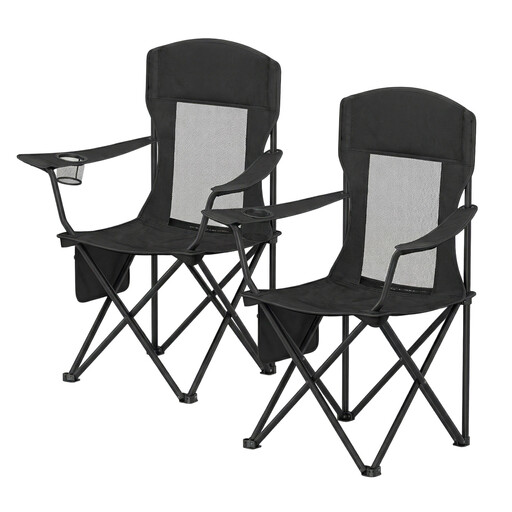
Why this product fits the profile: The set includes two folding chairs with carry bags and is ideal for couples, picnics, garden visits or shared camping trips.
The specifications state a maximum static load capacity of 150 kg per chair, a steel frame, and Oxford fabric with mesh. This allows you to assess the key buying criteria in advance.
Two chairs, each weighing around 2.5 kg, with cup holder, organiser pocket and carry bag.

Why this product fits the profile: This chair is ideal for those looking for a high backrest, fixed armrests and a higher stated load capacity for the garden, camping or fishing.
The product data lists a 70 cm high backrest, a seat height of 50 cm and a maximum load capacity of 180 kg. The chair weighs 5.8 kg.
500D polyester, mesh back, steel legs, hard plastic armrests, swivel cup holder and three-layer side pocket.
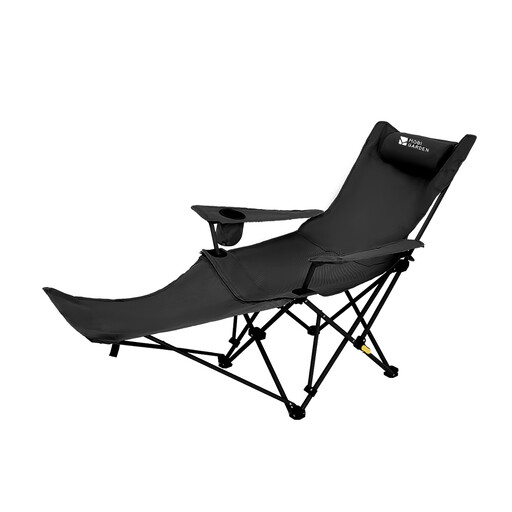
Why this product fits the profile: For anglers, beachgoers, balcony owners or travellers who want to switch between several sitting and reclining positions, this model offers a different range of features than a classic outdoor chair.
The construction is described with three positions, an X-frame made from carbon steel and a stated static load capacity of around 110 kg. The manufacturer advises using it on level, firm ground.
Reclining surface 153 cm long, removable padded headrest, cup holder, side pocket and packed size of approximately 24 × 23 × 93 cm.
We’ve put together a full, regularly updated list of products that fully meet these strict selection criteria and the safety regulations in force in the EU.
Before first use, the folding camping chair should be fully opened and the locking mechanism checked. All legs must rest on the ground at the same time. Keep your fingers away from the folding mechanism when opening and closing. Do not use the chair beyond its stated load limit and avoid concentrated pressure on the backrest, footrest or armrests.
After use, a damp cloth is sufficient for many models. Wet upholstery should be allowed to dry completely before the folding chair is stored in its bag or in the cellar. Prolonged, direct sunlight and rain can damage materials. Dry storage helps extend the chair’s lifespan, but it doesn’t replace regular checks of the seams, joints and frame.
That depends on the frame, joints, footprint and stated static load capacity. Check the manufacturer’s specification and use the chair on firm, level ground. The load limit must not be exceeded.
Adequate seat width, a suitable seat height and a high backrest are important criteria. For extra relaxation, an adjustable reclining chair with a headrest could be an option. The specific dimensions and a secure standing position remain key.
It’s not possible to give a reliable lifespan. Frequent opening and closing, moisture, UV radiation and overloading all affect wear and tear. Dry storage, cleaning according to the manufacturer’s instructions and checking the folding joints can help extend its useful life.