
Lieferung heute & morgen

Qualitätsgarantie

Willkommens-Angebote freischalten: KOSTENLOSE Lieferung | Bis zu 80 % RABATT | Kostenlose 30-Tage-JoyPlus-Testphase
App herunterladen
A folding camping chair needs to take up little space when you're on the move, stand steady when you sit down, and be straightforward to transport. In practice, however, unclear weight limits, seats that are too small, or flimsy folding mechanisms often lead to the wrong purchase. This applies just as much to camping as it does to fishing, festivals, the beach, or your own garden at home.
A stated maximum load capacity is only meaningful if it suits how you'll use the chair. When you sit down or stand up, higher forces act briefly than when you're sitting still. What's more, the weight limit shouldn't be pushed to its maximum permanently. So check whether the manufacturer specifies a static load capacity and whether this is matched to your body weight plus any extra clothing or equipment.
A lightweight camping chair is practical for hikes, trekking and festivals. However, particularly compact models often have a smaller seat area or a lower backrest. For longer periods of sitting while fishing or in the garden, a sturdier chair with a higher own weight may be more suitable. What matters is the balance between transport weight, packed size, seat height and frame construction.
A camping chair with a cup holder and side pocket can be useful. But accessories don't make up for a lack of sturdy construction. Look for a clearly described locking mechanism, robust joints, durable fabric and care instructions. Also, don't automatically assume that breathable mesh fabric is weatherproof. After rain or contact with damp sand, the chair must dry completely before being stored away.
For a durable camping chair, the details on material and maximum static load capacity are especially important. Steel frames are often heavier, but can provide a solid base in larger sizes. Aluminium frames, on the other hand, reduce the transport weight. The load capacity doesn't depend solely on the metal, but also on the tube thickness, joints, seat fabric and foot construction.
Always place the chair on a level, firm surface. On sand, soft forest floor or uneven ground, narrow feet can sink in or slide sideways.
A seat height of around 45 to 50 cm makes it easier for many people to sit down and stand up. If you prefer a high backrest, pay attention to the actual back height. A camping chair with a high backrest can support your shoulders better, but it usually takes up more storage space when folded.
Seat width also matters: a generous area increases comfort, but often increases the packed size and own weight. For hikers, a small packed size is often more important than a wide seat; for garden owners or motorhome travellers, the opposite may make more sense.
Compare the dimensions when open and when closed. A portable outdoor chair should be easy to set up without excessive effort. Before use, all legs must touch the ground and the structure must be fully opened and locked.
For care, follow the manufacturer's instructions. According to the product information, the models featured here should be cleaned with a damp cloth and stored dry. Harsh cleaning agents, machine washing, or prolonged exposure to rain and direct sunlight can damage the material and frame.
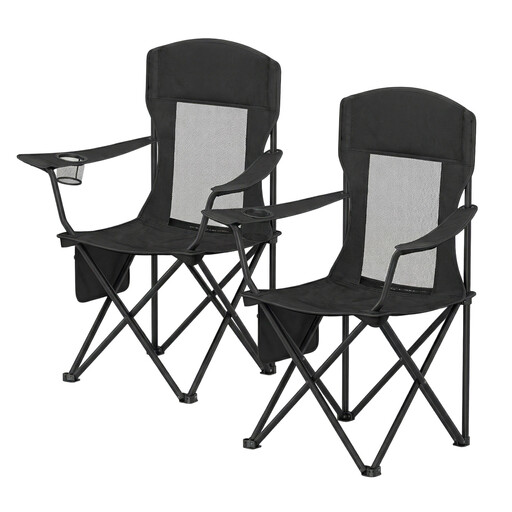
Why this product fits the profile: The camping chair set of 2 is ideal for couples, families, or two seats in the garden. Each chair has an own weight of 2.5 kg and a stated maximum static load capacity of 150 kg.
The product data clearly states weight, load capacity, material and package contents. The delivery includes two chairs and two carry bags.
Breathable mesh, integrated cup holder, organiser pocket and folding design for camping, beach, picnic or garden.

Why this product fits the profile: With a 58 × 52 cm seat area, 50 cm seat height and 70 cm backrest, this folding camping chair is aimed at users who value a spacious sitting position and good back support.
The specifications list frame material, fabric, seat dimensions, own weight of 5.8 kg and a maximum load capacity of 180 kg. This makes it easier to weigh up comfort against transport effort.
500D polyester, breathable mesh insert, hard armrests, swivel cup holder and three-layer side pocket.
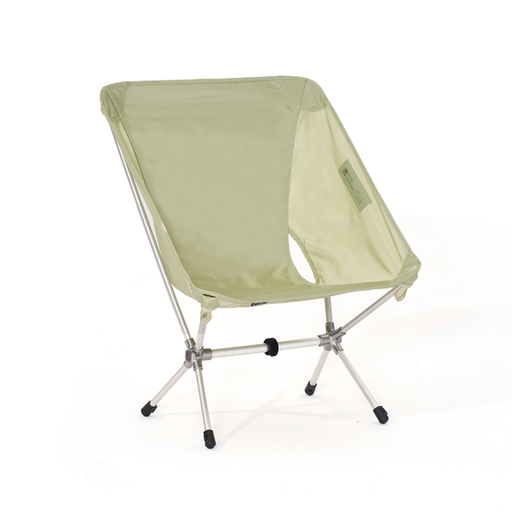
Why this product fits the profile: With an own weight of around 765 g and a packed size of 11 × 11 × 36 cm, this portable outdoor chair is ideal for trekking, backpacking trips and short breaks on the go.
The low weight is put into context with concrete dimensions, an aluminium frame and a stated static load capacity of around 140 kg, making it easy to understand.
Aluminium frame, Oxford fabric, non-slip rubber feet and a folding design with a compact carry bag.
We've put together a full, regularly updated list of products that fully meet these strict selection criteria and the safety regulations in force in the EU.
Place the chair on a level, firm surface. Open it fully until all joints are in their intended position. Check that each leg touches the ground and the locking mechanism has clicked into place. Keep your fingers and hands away from the folding points when opening and closing.
The lifespan depends on load, frequency of use, moisture, UV radiation and care. Never exceed the stated maximum load capacity. Let a wet chair dry before storing it, and regularly check the seams, fabric, joints and frame for visible damage.
The price depends on factors including frame material, fabric quality, load capacity, seat size, packed size and features. A cheap folding camping chair may be sufficient for occasional use. For frequent trips, fishing or time in the garden, it's worth comparing concrete product data rather than relying on advertising claims alone.