
Lieferung heute & morgen

Qualitätsgarantie

Willkommens-Angebote freischalten: KOSTENLOSE Lieferung | Bis zu 80 % RABATT | Kostenlose 30-Tage-JoyPlus-Testphase
App herunterladen
A functional workspace is crucial, but space is often limited in many homes. A folding desk seems like the ideal solution: a work surface when you need it, and free space when you don't. However, the market is vast, and not every model lives up to its promises. Certain design flaws or exaggerated marketing claims can quickly lead to a poor purchase. This guide will help you identify the key features to look for and make the right choice for your needs.
Before choosing a model, it's important to be aware of the typical weaknesses that often only become apparent after the purchase and during daily use.
To avoid these pitfalls, you should check three core aspects before buying. These factors will define the durability and functionality of your new workspace.
The folding mechanism is the core component of any model. Simple hinges are often less stable than sophisticated systems with gas springs or solid metal locks. For a wall-mounted folding desk, the quality of the wall attachment is critical. Pay close attention to the manufacturer's specified maximum load capacity in kilograms. A value below 20 kg is often only suitable for a lightweight laptop. For a monitor and other accessories, the load capacity should be significantly higher.
The choice of material affects both stability and lifespan. Common materials include:
A good space-saving desk intelligently combines these materials to ensure stability and a reasonable weight.
Measure not only the available space but also check the product dimensions in both states: unfolded and folded. A good desk for small spaces offers a sufficient work area (e.g., for a laptop and a mouse) but has a very shallow depth when folded. Models inspired by a modern secretary desk often integrate additional storage, like shelves or small drawers, making them a multifunctional small computer desk.
Instead of making a blanket recommendation, we have identified models tailored to specific user profiles.
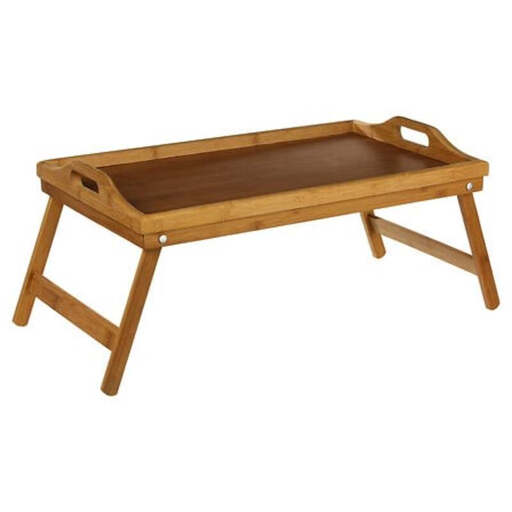
Why this model is a great fit: Ideal for those who don't need a fixed workstation but want the flexibility to work on the sofa, in bed, or on the floor. This folding laptop table is extremely lightweight and requires no assembly.
This model avoids the "hidden space requirement" pitfall, as its simple folding legs allow it to be stored completely flat without needing any permanent installation.
Maximum portability and instant, tool-free setup. The combination of bamboo and MDF ensures a low weight while providing sufficient stability for a laptop.
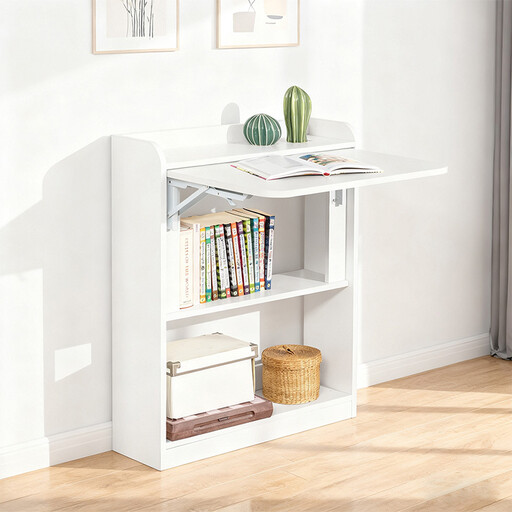
Why this model is a great fit: Perfect for anyone looking to set up a permanent yet discreet workspace. Designed as a wall-mounted folding desk, it offers integrated shelves for organization and is extremely slim when closed.
This model solves the problem of unstable mechanisms with a solid wall mount and a clearly defined load capacity of up to 35 kg. The rounded corners of the desktop are a thoughtful detail to prevent bumps.
Combines a work surface and storage in a single unit. The PB(E1) material meets a common standard for residential furniture. Ideal as a space-saving work or computer desk.
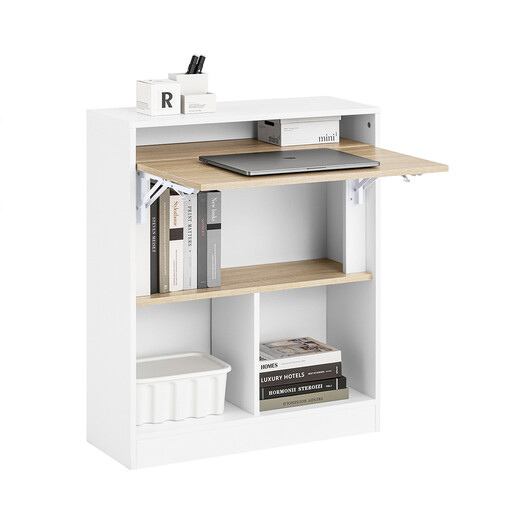
Why this model is a great fit: For users who need a robust and durable workstation for daily use but still want it to disappear when not needed. It offers a large work surface and ample storage space.
This model addresses concerns about instability with a solid construction and a high specified load capacity of up to 81 kg. This allows for the use of multiple monitors or heavier equipment.
High load capacity and generous storage with five compartments. The combination of PB and MDF (E1) provides a solid foundation for a long-lasting workspace.
We have compiled a complete, up-to-date list of products that fully meet these strict selection criteria and safety requirements.
Secure installation is critical. Always use wall anchors and screws appropriate for your wall type (e.g., concrete, drywall, brick). These are not always included. Check the wall for load-bearing structures and use a spirit level to ensure the desk is perfectly horizontal. If you're unsure, it's wise to consult a professional.
The load capacity varies greatly depending on the model and construction. Simple, freestanding models often support only 10-15 kg, which is sufficient for a laptop. More stable, wall-mounted desks can support 30 kg, 80 kg, or more, according to manufacturer specifications. Always check the maximum load capacity in the product details and do not exceed it.
Yes, as long as the model is chosen carefully. For daily use, you should opt for a model with a robust construction, a high load capacity, and a scratch-resistant surface. A wall-mounted folding desk with integrated storage is often a great choice, as it creates a permanent yet flexible workspace. Also, pay attention to an ergonomically comfortable height for the work surface.