
Lieferung heute & morgen

Qualitätsgarantie

Willkommens-Angebote freischalten: KOSTENLOSE Lieferung | Bis zu 80 % RABATT | Kostenlose 30-Tage-JoyPlus-Testphase
App herunterladen
A folding e-bike can simplify your commute, save space in the boot, and make it easier to combine cycling with public transport. At the same time, folding e-bikes differ significantly in weight, range, tyres and features. If you only focus on a large battery or an impressive motor output, you can easily overlook important details.
This buying guide shows you which specifications matter before purchasing a folding electric bike, which marketing claims deserve a closer look, and which model might suit different riding situations.
Ranges like 80, 120 or more kilometres are usually based on specific conditions. Assistance level, rider weight, inclines, tyre pressure, outside temperature and terrain all affect energy consumption. A claim like “up to 120 km” should therefore be understood as a manufacturer’s figure, not a guaranteed distance you can achieve.
For your commute, it’s also important whether the battery is removable. An e-bike with a removable battery can be charged indoors at home or in the office, without having to bring the whole bike to a power socket.
For a Pedelec that complies with German regulations, a continuous rated power of 250 W and pedal assistance up to 25 km/h are key. Product names with higher peak values may be classified differently under the law. Before buying, you should therefore check the details on rated power, top speed and operating mode.
Some models also offer a pure electric mode. This cannot automatically be used on public roads like normal Pedelec assistance. The applicable traffic rules and the bike’s specific approval are what matter.
A fat-tyre e-bike with 20 × 4.0-inch wide tyres can offer more contact area on gravel or uneven ground. However, the weight usually increases, and the folded bike often remains bulkier. If you have to carry the bike onto the train or up several flights of stairs every day, you should prioritise folded dimensions and net weight over particularly wide tyres.
Battery capacity is given in watt-hours. It is calculated from voltage and amp-hours, for example 36 V × 10 Ah = 360 Wh. A higher value can provide more range under comparable conditions, but it often also increases weight, price and charging time.
Pay attention to:
The range of a long-range e-bike remains a variable manufacturer’s claim. For daily journeys, you should plan a reserve rather than fully using the maximum kilometre figure.
A 250W e-bike with a rear hub motor is suitable for many city rides and moderate inclines. A motor with high torque can be helpful with a higher total weight or on hills. However, what matters is not just the wattage, but also the assistance levels, starting behaviour, gears and brakes.
Before buying, check whether the details on 25 km/h, Pedelec operation and included features match your intended use on public roads. Lighting, reflectors, brakes and compliance with local regulations should also be considered.
A compact folded size is only practical if the folding mechanism works safely and without excessive effort. Before every ride, the frame lock, safety pin and handlebar clamp must be fully engaged.
Also relevant:
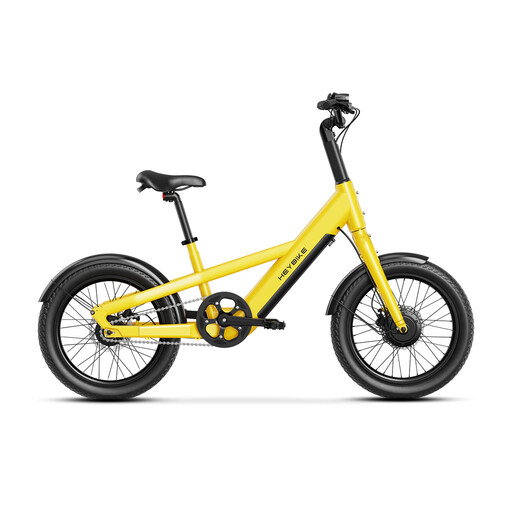
Why this product fits the profile: This compact city model is aimed at adults looking for an electric folding bike for short commutes, home use and the boot. The product states a weight of 22.5 kg and folded dimensions of 88 × 48 × 71 cm.
The removable 36 V battery with 10 Ah makes indoor charging easy. The stated range of 40–80 km is explicitly linked to assistance level and terrain.
250 W rear hub motor, LCD display, pedal assistance and disc brakes on front and rear wheels.
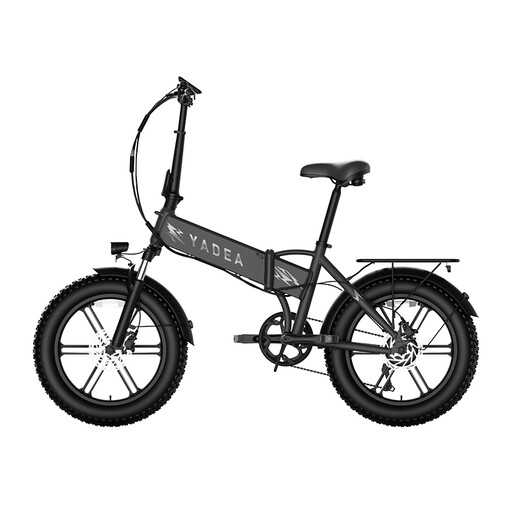
Why this product fits the profile: This folding e-bike is designed for riders who switch between city streets, gravel paths and uneven terrain. The 20 × 4.0-inch tyres and lockable suspension fork are tailored to different surfaces.
The equipment goes beyond wide tyres: hydraulic disc brakes, a 7-speed gear system and a lockable folding mechanism address several everyday points.
Aluminium frame, Shimano 7-speed gear system, NFC unlocking and USB-C port according to the product description.
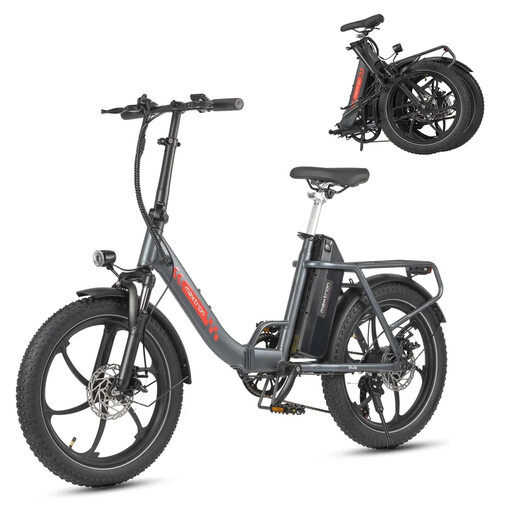
Why this product fits the profile: According to the product details, this model combines a 960 Wh battery with 20 × 3.0-inch tyres, a luggage rack, mudguards and LED lighting. This makes it interesting for longer commutes and weekend trips.
The range claim of up to 120 km is linked to the assistance mode. The removable battery also allows charging away from the storage area.
250 W rear hub motor, 7-speed gear system, mechanical disc brakes and a stated load capacity of 120 kg.
We have put together a complete, regularly updated list of products that fully meet these strict selection criteria and the safety regulations in force in the EU.
Before your first ride, fully charge the battery, adjust the seat position and check the folding mechanism. The frame lock, safety pin and handlebar clamp must be closed. Also test the brakes, tyre pressure, lighting and display.
The lifespan depends on charging cycles, storage, temperature and usage. Only use the supplied charger, do not leave the battery charging unattended, and store it in a dry place away from extreme heat or cold. If you notice swelling, smoke or unusual heat, stop using it immediately.
The direct electricity cost per charge depends on the battery capacity and your local electricity price. For a 360 Wh battery, the theoretical energy requirement per full charge is 0.36 kWh; charging losses add to this. Ongoing costs also arise from tyres, brake pads, chain, servicing and, if necessary, replacement parts.