
Lieferung heute & morgen

Qualitätsgarantie

Willkommens-Angebote freischalten: KOSTENLOSE Lieferung | Bis zu 80 % RABATT | Kostenlose 30-Tage-JoyPlus-Testphase
App herunterladen
A folding electric wheelchair can make everyday life easier when you want to get around your home, shopping centre or while travelling independently. At the same time, unclear product information and exaggerated advertising claims often lead to poor purchasing decisions. What matters is not simply a low price or light weight, but the right combination of seat width, battery capacity, motor power, folded dimensions and safety features.
This buying guide from the Joybuy Product Recommendation Officer explains which details you should check before buying a lightweight electric wheelchair and which models may suit different usage scenarios.
A stated range usually applies under specific conditions. Hills, low temperatures, a higher user weight, frequent starts and uneven surfaces can reduce the actual distance travelled. When choosing an electric wheelchair with a lithium battery, you should therefore check not only the stated range, but also the battery capacity in Ah, charging time and whether the battery can be removed.
A range of 48 km in the product description does not automatically mean 48 km in all everyday conditions. For regular outdoor journeys, it is advisable to allow a safety margin below the advertised maximum range.
The stated total weight may refer to the frame without the battery, the ready-to-use product or the packaging. For transporting the wheelchair in a car, the weight including the battery is particularly relevant. The folded dimensions and whether the battery can be removed separately also affect how practical it is to use every day.
A portable electric wheelchair with a smaller folded size can be practical in the boot. However, stability should not be judged solely by weight. The frame material, maximum load, seat width and centre of gravity are also important.
An all-terrain electric wheelchair may be designed for different surfaces with larger or puncture-resistant tyres and two motors. However, this does not mean that every slope, sandy path or snow-covered route can be navigated safely. Buyers should compare the stated maximum gradient, ground clearance, obstacle height and turning radius.
Public paths in Germany are also subject to traffic and usage regulations. The operating instructions must be read in full before the first journey.
Depending on its design, an electric wheelchair with a 500 W motor may, for example, have two motors rated at 250 W each. However, wattage alone does not describe the overall performance. The gearing, tyres, total weight and hill-climbing ability all affect how the wheelchair performs at kerbs or on ramps.
For indoor use, a small turning radius and moderate top speed are helpful. For outdoor journeys, electromagnetic brakes, anti-tip protection, tyre tread and sufficient ground clearance are also important.
Lithium-ion batteries often weigh less than other battery types for a comparable capacity. The product description should clearly state whether one or two batteries are included, whether they are removable and how long they are expected to take to charge. The models considered here include some with stated charging times of six to eight hours.
For air travel, the term airline-approved electric wheelchair alone is not sufficient. The transport of lithium batteries depends on their capacity, the airline, the aircraft type and packaging requirements. Before booking, you should confirm the battery specifications and transport conditions directly with the airline.
An electric wheelchair for adults must be suitable for your height and body weight. In addition to the maximum load, you should consider the seat width. Seats that are too narrow can affect positioning, while a seat that is too wide may make it harder to manoeuvre through doorways.
You should also check:
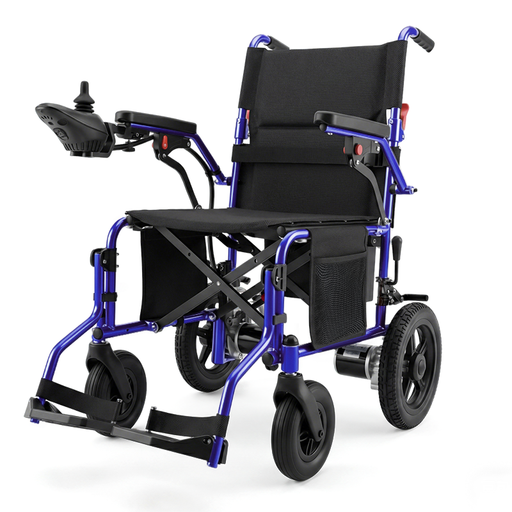
Why this product suits the profile: The specifications state a net weight of 23.45 kg, two 250 W motors, a top speed of 6 km/h and a steel frame. This makes it suitable for users looking for a powered wheelchair with straightforward technical specifications.
The product page provides specific dimensions, frame material, drive system and operating instructions instead of relying solely on terms such as “lightweight” or “suitable for rough terrain”.
Two motors, a folding design and a stated top speed of 6 km/h.
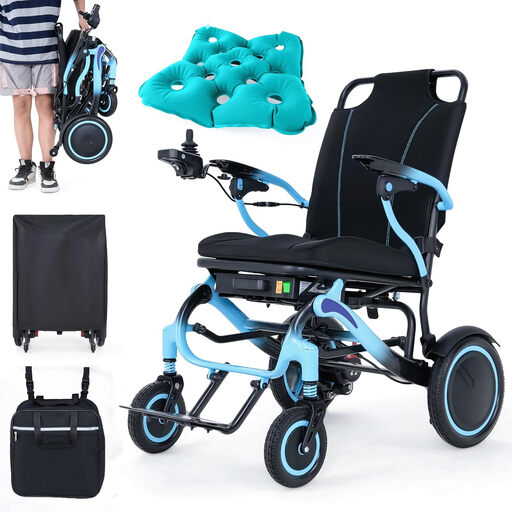
Why this product suits the profile: According to the product description, the features include an LCD display, a 360-degree joystick, two removable lithium batteries and electromagnetic brakes.
The product specifications list the motor power, number of batteries, charging time and controls. However, the different weight figures in the title and description should be checked again before purchase.
LCD display, removable batteries and a stated drive system with two 220 W motors.
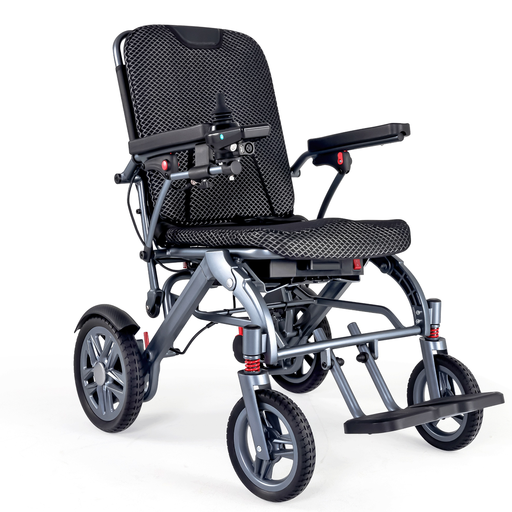
Why this product suits the profile: The product description lists two 12 Ah lithium batteries, a range of up to 48 km, a load capacity of 120 kg and features for different surfaces.
Battery capacity, motor configuration, charging time and load capacity are all specified clearly. Nevertheless, the range should be planned around the terrain, temperature and user weight.
Two 250 W motors, removable lithium batteries and stated contents including a backpack and dust bag.
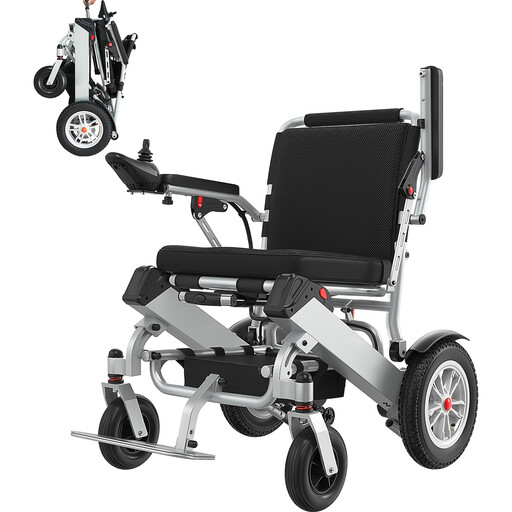
Why this product suits the profile: This model is described as having an aluminium frame, a 10 Ah lithium battery, two 250 W motors and an electromagnetic brake. It is aimed at users who prefer clear basic specifications for everyday use and short outdoor journeys.
The specifications include specific figures for obstacle height, turning radius, gradient, load capacity and net and gross weight.
A stated obstacle height of 40 mm, maximum load of 120 kg and turning radius of 750 mm.
We have put together a complete, regularly updated list of products that fully meet these strict selection criteria and the safety regulations applicable in the EU.
Its lifespan depends on charging cycles, storage, temperature and usage. The battery should be stored in a dry place and according to the manufacturer’s instructions. Ongoing costs include battery replacement, electricity consumption, tyres and possible maintenance. Electricity consumption can only be estimated approximately from the battery capacity and charging frequency.
This depends on the airline, battery type and capacity. A model advertised as suitable for air travel is not automatically approved by every airline. The battery and wheelchair specifications should be sent to the airline before booking, and carriage should be confirmed in writing.
This depends on the joystick, braking behaviour, seating position and practice. Before first use, training on level, private ground is recommended. Narrow doorways, ramps and kerbs should initially be tackled slowly and with assistance. The operating instructions and local traffic regulations are decisive.