
Lieferung heute & morgen

Qualitätsgarantie

Willkommens-Angebote freischalten: KOSTENLOSE Lieferung | Bis zu 80 % RABATT | Kostenlose 30-Tage-JoyPlus-Testphase
App herunterladen
A folding electric wheelchair can make everyday life easier when its weight, seat dimensions, range and transport requirements suit your needs. But unclear product information can quickly lead to the wrong purchase. Common pitfalls include advertised ranges based on ideal conditions, confusing battery specifications and failing to check folded dimensions against your car boot and the doorways at home.
This buying guide helps older people, adults with limited mobility, family members and carers assess important product details objectively.
The stated range depends on factors including user weight, gradients, outside temperature, surface, tyre pressure and speed. So the range shown in a product listing is not guaranteed in every everyday situation. If you’re looking for an electric wheelchair with a long range, check the following too:
A lithium-battery electric wheelchair can be convenient to transport. However, air travel is subject to the requirements of the airline and, where applicable, the airport. A product description such as ‘airline-friendly’ is no substitute for getting approval in advance.
A lightweight electric wheelchair is easier to load, but that doesn’t automatically make it suitable for every user or type of terrain. The key factors are net weight, maximum user weight, seat width and frame construction. Also check whether the stated weight includes the battery.
A model weighing 18 to 20 kg may be a good option if you travel by car frequently. Heavier models, on the other hand, may offer a higher weight capacity or a sturdier construction. Always check the specifications against the user’s actual weight, luggage and any accessories.
An electric wheelchair designed for rough terrain needs suitable ground clearance, tyres and motor power. Grass, wet ground, gravel, sand and snow all present different challenges. A stated maximum gradient also doesn’t mean it’s safe to drive on every slope.
Check the following:
Measure your car boot opening, storage space, front door and, if relevant, your lift. The packaging dimensions are not the same as the folded product dimensions. A folding wheelchair may save space, but you still need to be able to lift and stow it safely.
For regular transport, removable batteries, an easy-to-reach folding mechanism and low weight are useful. For a model with a net weight of 26 kg, for example, consider whether you’ll need someone to help you load it.
Don’t choose the seat width based only on the space available. Check the seat width and depth, backrest height, armrests and joystick position. Adjustable armrests and removable cushions may make the wheelchair easier to use for longer periods, but they’re no substitute for individual adjustment.
An electromagnetic brake can bring the wheelchair to a stop when you release the controls. Even so, follow the instructions and observe gradient limits and safety distances. A 360-degree joystick can be useful in tight indoor spaces, but you’ll need a little time to get used to it.
The maximum weight capacity is a technical limit. Avoid using it to the full if you’ll also be carrying bags or other items.
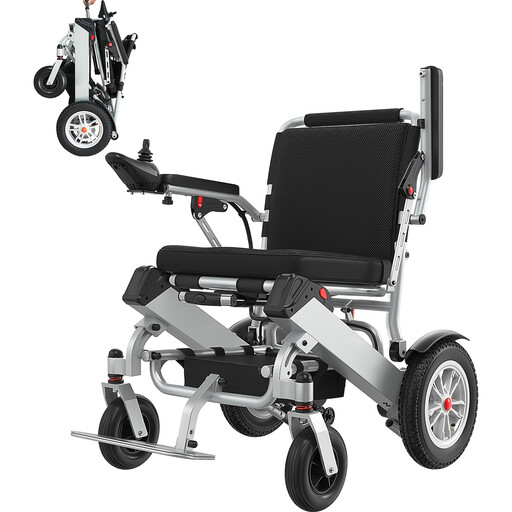
Why this product suits this user: With its aluminium frame and net weight of 26 kg, this model is suited to everyday use, indoor spaces and occasional transport by car.
The specifications include the battery type, weight capacity, turning circle, obstacle height and climbing ability, rather than relying on vague promises about comfort.
10-Ah lithium battery, two 250-W motors, electromagnetic brake, maximum weight capacity of 120 kg and stated turning circle of 750 mm.
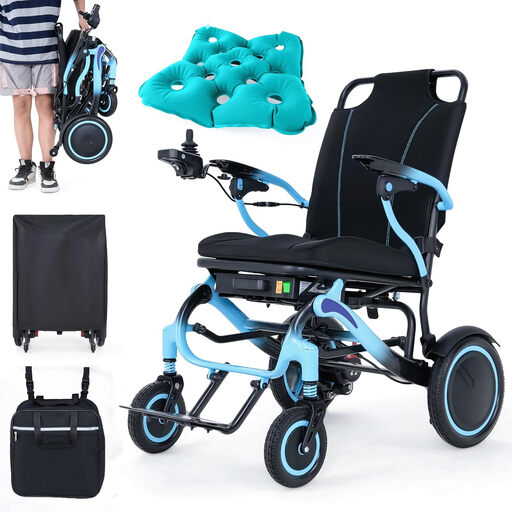
Why this product suits this user: This listing is aimed at people looking for a lightweight, portable model with two batteries and an LCD display for travel and everyday use.
The description gives details of the separate batteries, charging time, controls and weight capacity. The stated range should still be treated as the manufacturer’s or seller’s estimate.
Stated weight of 30 lb, two removable 12-Ah lithium-ion batteries, LCD display and total motor power of 440 W.
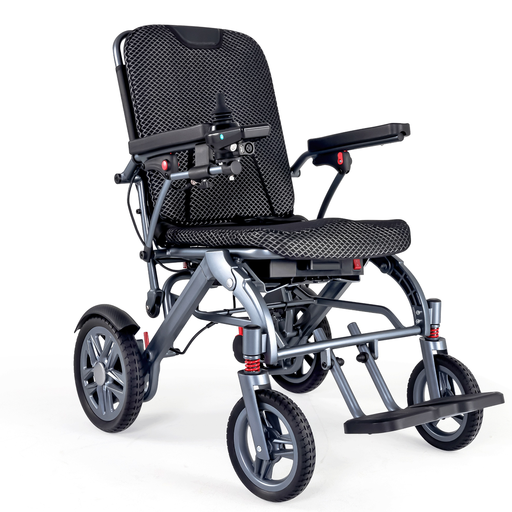
Why this product suits this user: Two 12-Ah batteries, all-terrain specifications and a folding design make this a good option for people who regularly travel outdoors or go away.
The listing gives specific details about the number of batteries, seat width, weight capacity, braking system and folding design.
Stated weight of 18 kg with battery, two 12-Ah batteries, total motor power of 500 W and maximum weight capacity of 120 kg.
We’ve put together a complete, regularly updated list of products that meet these strict selection criteria and the safety regulations in force in the EU.
Before buying, compare the folded dimensions and weight with your car boot opening. Removable batteries can reduce the weight you need to lift. Secure the wheelchair in the vehicle so it can’t move around, and make sure it doesn’t obstruct the driver’s view.
Battery life depends on charging cycles, storage, temperature and use. Use the supplied charger, avoid storing the battery for long periods when fully discharged, and follow the manufacturer’s instructions. Lithium batteries should be stored in a dry place and protected from high temperatures.
A seller’s statement that a wheelchair is suitable for air travel doesn’t automatically mean it’s approved for transport. Airlines usually ask for details of the battery type, voltage, watt-hours and dimensions. Check directly with the airline before booking and notify them about the electric wheelchair well in advance.