
Lieferung heute & morgen

Qualitätsgarantie

Willkommens-Angebote freischalten: KOSTENLOSE Lieferung | Bis zu 80 % RABATT | Kostenlose 30-Tage-JoyPlus-Testphase
App herunterladen
A folding electric wheelchair can make everyday life easier if it folds away neatly and suits your physical needs, home environment and intended use. However, there are significant differences between a lightweight electric wheelchair for short trips and an all-terrain electric wheelchair for outdoor use.
If you focus only on range or motor power, you could overlook important details. Poor purchases often result from three common marketing traps:
A portable electric wheelchair needs to be easy to handle as well as foldable. Check:
A model weighing 18 kg with the battery is different to an electric wheelchair weighing 26 or 40.5 kg when it comes to transport. For adults and older people who have help from family members, a higher weight may be acceptable if frame stability and seating comfort are the priority.
An electric wheelchair with a lithium battery is often chosen because the battery is comparatively light. But amp-hours aren’t the only thing that matters. You can estimate the energy capacity as follows:
Volts × amp-hours = watt-hours
Two 24-volt batteries rated at 12 Ah each give a combined value that, depending on the configuration and the manufacturer’s figures, is relevant to transport approval. For air travel, you’ll need the full technical details of the batteries. You should also check:
A stated range of 48 km should therefore be treated as a manufacturer’s or retailer’s claim, not a distance you’re guaranteed to achieve in everyday use.
A powered wheelchair should have a braking system that’s clearly described. Several of the models on offer specify an electromagnetic brake, which is designed to engage when you release the joystick. Test this function on a level surface before use.
For indoor use, a small turning radius, compact width and easily controlled speed are particularly important. Outdoors, ground clearance, drive power, tyre tread and the maximum gradient are the key considerations. “All-terrain” doesn’t automatically mean it’s safe to travel on sand, snow, mud or steep ramps. Follow the instruction manual and avoid surfaces for which no technical specifications are available.
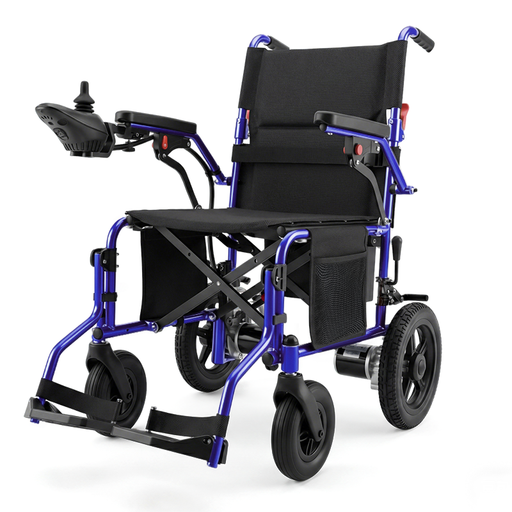
Why this product suits these needs: This model is aimed at adults looking for a folding electric wheelchair with straightforward specifications for everyday use and short trips outdoors.
The product details state the net weight, dimensions, motor power and maximum speed, rather than relying solely on vague claims about comfort.
Net weight of 23,45 kg, 500-W motors according to the product name and a stated maximum speed of 6 km/h.
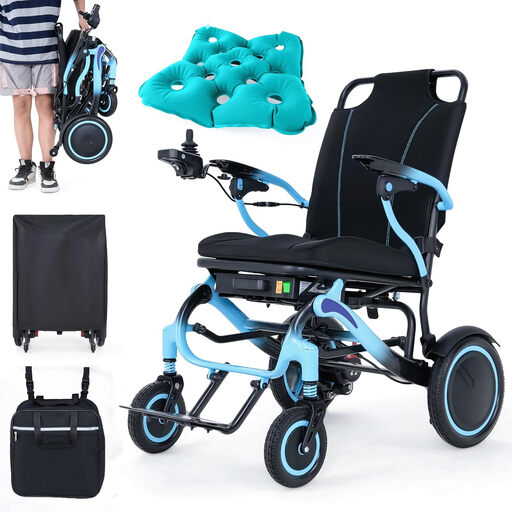
Why this product suits these needs: This model is designed to be light to transport, with removable batteries and convenient controls with an LCD display.
The description gives a weight of 19 kg, two removable 12-Ah lithium batteries and a charging time of 6 to 8 hours. Check these figures against the spec sheet before buying.
LCD display, total motor power of 440 W according to the description, and a stated range of at least 30 miles.
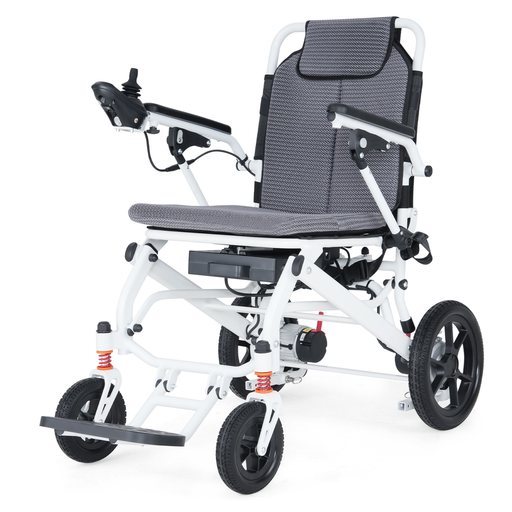
Why this product suits these needs: For longer outings and varied surfaces, the product is listed with two 12-Ah batteries, two 250-W motors and accessories such as a rucksack and dust bag.
The listing gives specific figures for range, seat width, maximum user weight and turning radius. The stated suitability for air travel should also be confirmed with the airline.
18 kg including the battery according to the product description, a maximum user weight of up to 120 kg and a stated turning radius of 33 inches.
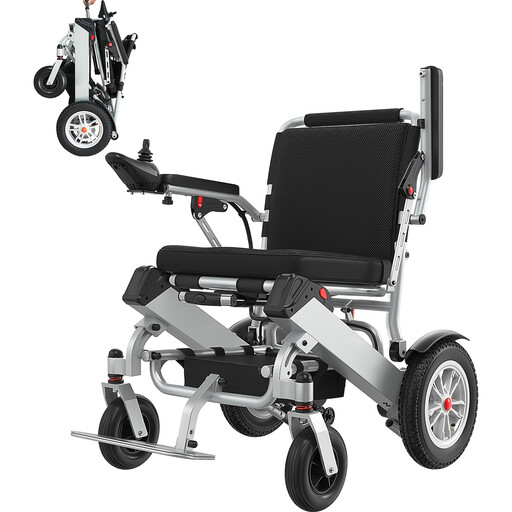
Why this product suits these needs: This model is suitable for users who want to take obstacle height, gradient and maximum user weight into account when making their choice.
The product details state a maximum obstacle height of 40 mm and a maximum gradient of 9°. These figures help you plan realistically where to use it.
Net weight of 26 kg including the battery, 250 W × 2 motors and an electromagnetic brake according to the product details.
Measure your doorways, ramps, lift and car boot. Also check that the seat is wide enough and that you can operate the joystick comfortably with your preferred hand. For older people or anyone with limited strength, the weight of each individual component is particularly important.
If you’re choosing an electric wheelchair for an adult, check the seat belt, anti-tip wheels, brakes and tyres regularly. Keep lithium batteries dry, protect them from excessive heat and charge them according to the manufacturer’s instructions. Follow the relevant traffic and use regulations when travelling on public routes.
We’ve put together a complete, regularly updated list of products that meet these strict selection criteria and fully comply with the safety regulations in force in the EU.
The actual range is often lower than the figure in the listing. Weight, gradients, surfaces, temperature, speed and battery condition all affect how far you can travel. If you’re planning a longer trip, make sure you have a way to recharge and allow for a reserve.
Battery life depends on charging cycles, storage, temperature and use. Use the recommended charger, avoid fully draining the battery and follow the manufacturer’s guidance. If the range starts to decrease, have the battery checked by a professional.
As well as electricity, you may need to pay for maintenance, tyres, a charger and a replacement battery. You can estimate the electricity needed for each charge fairly easily using the voltage, capacity and your electricity tariff. Before buying, it’s also worth checking whether spare batteries and replacement parts are available.