
Lieferung heute & morgen

Qualitätsgarantie

Willkommens-Angebote freischalten: KOSTENLOSE Lieferung | Bis zu 80 % RABATT | Kostenlose 30-Tage-JoyPlus-Testphase
App herunterladen
A folding rollator for older people should support mobility, offer reliable braking and take up little space when needed. In practice, however, people often buy models whose dimensions, weight or seat don’t suit their everyday needs. Family members often focus on the price and folded size, while overlooking important details such as handle height, weight capacity and brake controls.
This buying guide will help you choose a lightweight rollator, a rollator with a seat or a compact walking aid for getting around, using clear, practical information.
A rollator may look compact when folded but be too wide for doors, hallways or lifts when opened. So always check both sets of measurements:
When transporting it by car, make sure there’s enough room left for other items too. A heavy steel model with a seat may feel sturdy, but can be difficult for some people to lift.
The maximum weight capacity is a technical limit, not a recommendation for every body size or situation. If a model has a stated weight capacity of 150 kg, you should also consider the seat width, seat height and handle adjustment.
A height-adjustable rollator should be set so that your arms don’t have to reach too far up or down to grip the handles. The wrong height can encourage poor posture. After an operation or if your mobility has changed significantly, discuss which walking aid is right for you with a healthcare professional.
A rollator with a seat is useful for short breaks, but it’s no substitute for an ordinary chair. Check the seat dimensions, the permitted weight while seated and whether there’s a parking brake. Make sure the walking aid is secure before sitting down.
A rollator with a shopping bag is only helpful if the bag’s contents don’t exceed its stated weight limit. Heavy shopping can affect how the rollator handles. Try to distribute the weight evenly and follow the manufacturer’s instructions.
Aluminium frames are often lighter than carbon steel versions. One example is the yuwell YU730: its product description mentions a folding design, an aluminium frame and height adjustment. These features may be useful when transporting and storing the rollator.
Carbon steel models may have different weight and capacity specifications. The Carbon Steel Folding Walker with Seat, for example, has a stated net weight of 9.35 kg and a weight capacity of 150 kg. These figures should suit the user’s strength and the planned transport arrangements.
Look for a clear adjustment range. According to the product details, the Tomado rollator has a five-position armrest adjustment and a range of 90 to 102.5 cm. The YU730 is described as having multi-level height adjustment, although no exact range is given in the information provided.
Before buying, estimate the handle height you need while standing upright. If you have forearm or wrist problems, the type of handle can make a difference. Non-slip handles should be secure and mustn’t twist.
Smaller wheels may be enough indoors. Larger wheels are often more practical outdoors, for example when tackling kerbs or uneven paths. However, that doesn’t mean every model is suitable for every surface.
Check:
Before using a walking aid for the first time, unfold it fully and check that all the locks are securely in place.
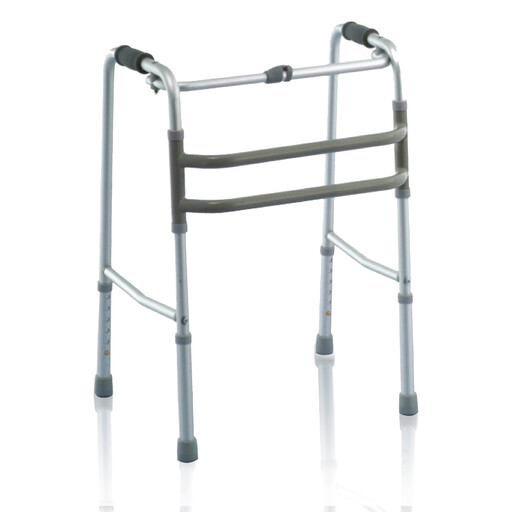
Why it suits this user profile: This folding walking aid is designed for compact transport and could be a good option for use at home, while shopping or when travelling.
The description covers the folding mechanism and multi-level height adjustment, making it easier to assess everyday practicality as well as price.
Folding design, aluminium frame according to the product description, and ergonomic, non-slip handles.
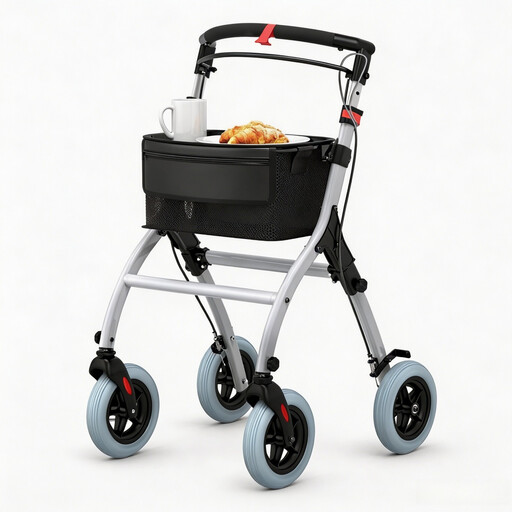
Why it suits this user profile: The stated dimensions and five-position armrest adjustment make it easier to compare the product objectively before buying.
The product details include the folded and open dimensions, weight, wheel size and weight capacity. This makes it easier to compare promotional claims with specific figures.
Aluminium alloy, 7.8 kg net weight, 8-inch PU wheels and a stated weight capacity of 110 kg.
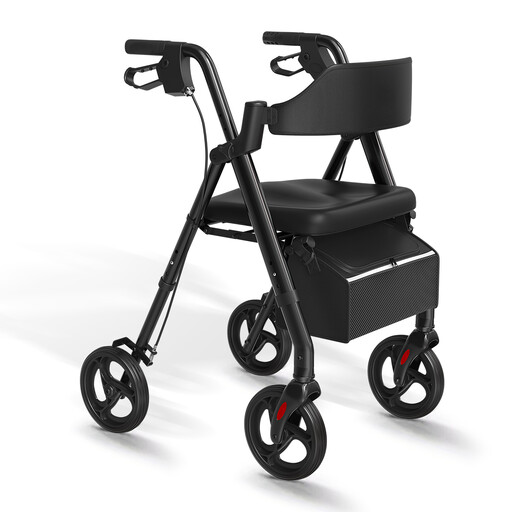
Why it suits this user profile: This model is for people who need a seat and storage space when out and about, and can manage its heavier overall weight.
The seat dimensions, weight capacity, folded dimensions and basket capacity are all stated. This makes it easier to check in advance whether the seat and shopping storage suit your needs.
Carbon steel frame, stated weight capacity of 150 kg, seat, five-position handle height adjustment and shopping basket with a 10 kg capacity.
We’ve put together a complete, regularly updated list of products that meet these strict selection criteria and fully comply with the safety regulations in force in the EU.
Before each use, check that the frame is fully locked into place and the wheels turn freely. Check brake cables, handles and fixings regularly for visible signs of wear. Depending on the material, you can remove dirt with a slightly damp cloth; follow the manufacturer’s care instructions.
If you need a walking aid after an operation, it’s particularly important to consider the permitted weight, brake controls and correct height. Your choice should reflect your mobility and the advice of your healthcare professional.
Stand upright between the handles. Your arms should remain slightly bent when gripping them, without raising your shoulders. Then check the brakes, folding mechanism and stability on a flat surface.
There’s no single answer. Its lifespan depends on how often it’s used, the user’s weight, the surfaces it’s used on, how it’s transported and how well it’s maintained. Regularly checking the wheels, brakes and locks can help you spot wear early.
As well as the purchase price, you may need to pay for spare parts, replacement wheels, brake components or repairs. Before buying, check whether information about spare parts and servicing is available. If your rollator has a seat, check the seat and its fixings regularly too.