
Lieferung heute & morgen

Qualitätsgarantie

Willkommens-Angebote freischalten: KOSTENLOSE Lieferung | Bis zu 80 % RABATT | Kostenlose 30-Tage-JoyPlus-Testphase
App herunterladen
A folding rollator with a seat can make walking easier and give you somewhere to sit when you’re out and about. For older people, those with limited mobility and people recovering from an operation, however, choosing the right one is about more than a low price or modern design. Reliable product information, suitable dimensions and safe handling are what matter.
A lightweight rollator is not automatically suitable for everyone. Check the stated maximum load capacity, and remember to allow for clothing, a bag and shopping. The seat or shopping bag may also have a lower weight limit than the frame.
Depending on its design, a folding rollator may pack away to a different size. Check the folded dimensions, the weight and whether the model can stand upright on its own when folded. If you’re planning to take it on car journeys or store it in a small flat, compare these details with the space available before you buy.
With a walking aid that has a seat, seat width, depth and height all matter, as does the stability of the frame. Soft padding can’t make up for a seat that’s the wrong size. The rollator should also be braked while you’re sitting on it, in accordance with the instructions, and used on suitable, preferably level ground.
A lightweight rollator is easier to lift, for example when putting it in the boot of a car. Aluminium often helps to reduce a product’s weight, while carbon steel is used for the frames of the models listed here. However, the material alone doesn’t tell you how safe or practical a rollator will be for everyday use.
Check the following:
A height-adjustable rollator should be set so that you can comfortably reach the handles while standing upright. The right setting depends on your height, arm position and how you use the rollator. If you’re recovering from an operation or have an existing health condition, ask a healthcare professional or physiotherapist to help you choose a suitable walking aid. These products are not a substitute for individual advice.
For indoor use, a compact width and easy manoeuvrability are important. Larger wheels can make it easier to get over small edges outdoors, but you’ll still need to take care on uneven ground. Check whether the rollator has parking brakes and whether you can operate them comfortably.
A rollator for indoor and outdoor use should also fit through doorways, into lifts and along narrow paths. A bag or basket can be handy for shopping, but make sure you stay within its own weight limit.
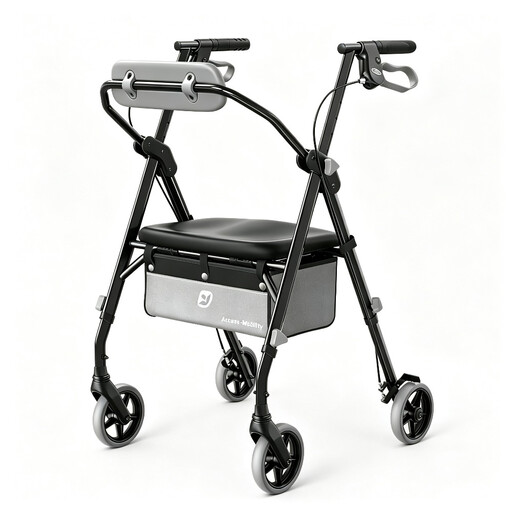
Why it suits this user profile: According to the product information, this model weighs 8.5 kg and has a 41 × 31.5 cm seat and five height settings from 80 to 93 cm, making it suited to transport and short breaks.
The product information gives the net weight, seat dimensions, height range and bag capacity of 5 kg. This makes it easier to check transport and storage requirements before buying.
8.5 kg net weight; 15.2 cm wheels; five height settings; seat and bag specifications provided.
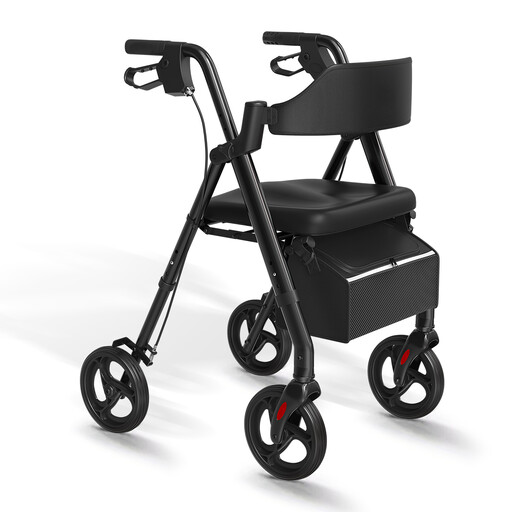
Why it suits this user profile: The carbon steel frame, front and rear folding and five-position handle height adjustment will appeal to anyone who wants to compare the technical details carefully before buying.
The folded dimensions of 40 × 58 × 78.5–93.5 cm are clearly stated, as is the fact that it cannot stand on its own when folded. This helps set realistic expectations for storage.
Stated total load capacity of 150 kg; 9.35 kg net weight; basket capacity of 10 kg; adjustable handle height.
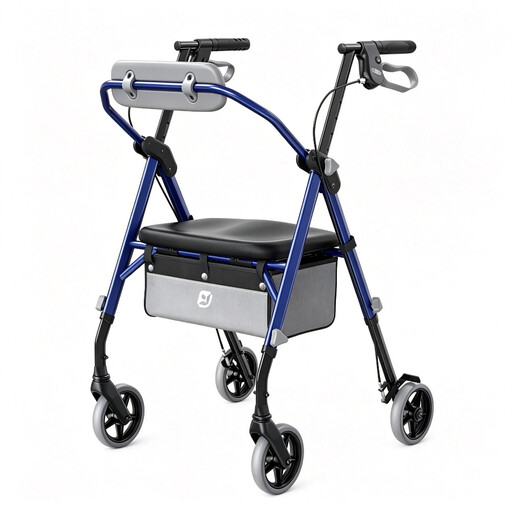
Why it suits this user profile: For regular outings with seating breaks and small shopping trips, the stated seat dimensions, bag and height-adjustable handle are useful details to compare.
The product information gives the bag capacity as 5 kg and the seat dimensions as 41 × 31.5 cm. This lets you check whether the storage space and seat size suit your everyday needs.
8.5 kg net weight; stated load capacity of 158 kg; 15.2 cm TPR wheels; five handle height settings.
We’ve put together a complete, regularly updated list of products that fully meet these strict selection criteria and the safety regulations in force in the EU.
Set the handles so that your arms are slightly bent when you’re standing upright. The exact position depends on your height and how you use the rollator. If you’re recovering from an operation, ask a healthcare professional involved in your care to help you adjust it.
There’s no reliable one-size-fits-all answer. Its lifespan depends on factors including the load, the surfaces it’s used on, how well it’s maintained and how often it’s folded. Check the screws, wheels, brakes, seat and folding mechanism regularly. Have damaged parts checked or replaced before using the rollator again.
As well as the purchase price, you may need to pay for replacement parts, wheels, brake components or servicing. Clean and dry the rollator according to the instructions, and store it somewhere dry. When using it outdoors, follow the manufacturer’s guidance and the relevant road rules.