
Lieferung heute & morgen

Qualitätsgarantie

Willkommens-Angebote freischalten: KOSTENLOSE Lieferung | Bis zu 80 % RABATT | Kostenlose 30-Tage-JoyPlus-Testphase
App herunterladen
A folding rollator with a seat can make walking easier and provide a short seated break when you are out and about. However, for older people, those recovering from an operation and their families, choosing one is not simply a matter of colour or price. The key factors are dimensions, load capacity, brakes, folding mechanism and how the rollator will actually be used.
Many products are described as “lightweight”, “mobile” or “suitable for every situation” without explaining the relevant technical details clearly enough. This can lead to common buying mistakes: the model does not fit through the front door, the seat height is impractical or the folded product is difficult to transport.
A lightweight rollator is not automatically easy to put in the boot of a car or carry up stairs. As well as the product’s own weight, you should consider its folded dimensions, handle position and whether it can be carried safely. For example, a carbon steel rollator may offer a robust construction but weigh more than one with an aluminium frame.
You should therefore check:
A rollator with a seat is primarily a walking aid with a seat. The seat is intended for taking breaks, not automatically for pushing someone who is sitting down. A transfer chair for older people or a sit-to-stand aid serves a different purpose and requires different safety features.
If you regularly need help transferring from one seat to another, you should look specifically for a transfer solution. If your weight-bearing capacity is limited after an operation, it is also advisable to consult a medical or care professional.
The stated maximum load capacity refers to the manufacturer’s product specification. It does not replace checking the rollator’s stability in the intended situation. Body weight, shopping being carried and dynamic loads should all be considered together. The seat width and seat depth must also be suitable for the user.
For a rollator for older people, the frame material and construction are important points of reference. Carbon steel is used in several of the available models. Depending on the design, the stated load limits range from 136 kg to 158 kg; the transfer machine has a manufacturer-stated capacity of 180 kg. Before buying, these figures should be checked against the user’s body weight and any additional load that may be carried.
You should also consider:
A seat does not turn a walking aid into a wheelchair. Anyone looking for a folding wheelchair for longer periods of sitting needs a model designed for that purpose, with suitable seating and mobility components.
A height-adjustable walking aid should be set up so that the handles support an upright posture. For example, the compact rollators with seats in our selection have handles adjustable to five positions between 80 and 93 cm. The correct setting depends on your height, arm length and footwear.
Handles set too low can lead to a hunched posture. Handles set too high, on the other hand, can make the rollator harder to control. Once adjusted, check all clamps and push-fit connections.
For indoor use, narrow dimensions and easy-rolling wheels are important. Outdoors, wheel size, the surface and brake operation all matter. Small wheels may be sufficient on smooth paths, while cobblestones or uneven ground place greater demands on the rollator.
Before buying, measure:
With any walking aid after an operation, start by practising on an even, unobstructed surface. Read the instructions in full, and check the brakes, wheels and folding connections before every use.
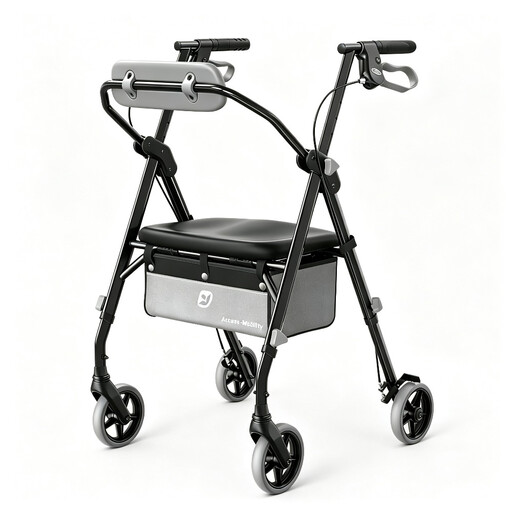
Why this product suits this profile: With a net weight of 8.5 kg, five-step handle height adjustment from 80 to 93 cm and a stated load capacity of 158 kg, this model is designed for compact everyday journeys and transport.
The net weight and adjustable height are clearly specified. This makes it easier to assess in advance whether the model is suitable for your home, shopping trips and car boot.
8.5 kg net weight, a 41 × 31.5 cm seat and a bag with a stated load capacity of 5 kg.
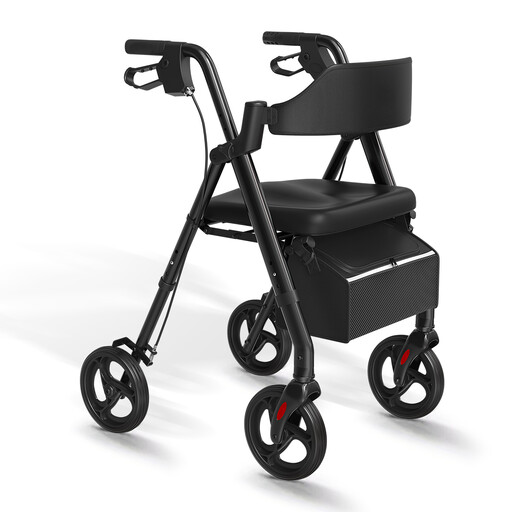
Why this product suits this profile: The product specifications state the material, folding design, folded dimensions and handle heights. This makes it easier to compare before buying.
According to the product information, it does not stand upright when folded. Knowing this helps prevent unrealistic expectations when storing it.
Stated total load capacity of 150 kg, front and rear folding, and a basket with a stated load capacity of 10 kg.
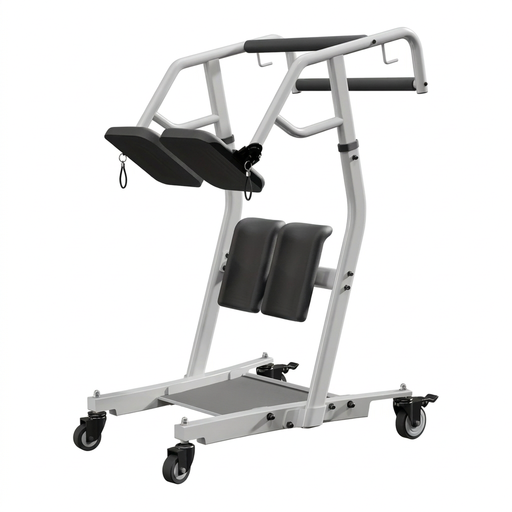
Why this product suits this profile: This is not an ordinary walking aid, but a solution designed for assisted transfers and short movements. It is intended for households where additional support is required.
The product type is clearly distinguished from a mobile rollator with a seat. Before buying, you can check whether you actually need a transfer function.
Steel frame, stated load capacity of 180 kg, 180° rotating seat and two lockable rear wheels.
We have put together a complete, regularly updated list of products that fully meet these strict selection criteria and the safety regulations applicable in the EU.
First, adjust the handles to support an upright posture and secure all height adjustments. Then check that the brake levers are easy to reach. Before sitting down, make sure the rollator is on a level surface and that the parking brakes are engaged.
Its service life depends on how often it is used, the surface, the user’s weight, care and storage conditions. The wheels, brake cables, handles and seat may be subject to wear. Clean and dry the product after use, and store it somewhere dry and well ventilated. If you notice unusual play, damaged brakes or loose connections, stop using it until it has been checked.
That depends on the folded dimensions, net weight and vehicle used for transport. For train or air travel, you should also check the relevant carrier’s conditions of carriage. A compact rollator with a seat may be suitable for short breaks while you are out and about; for longer journeys where you will spend most of the time seated, a suitable folding wheelchair may be more practical.