
Lieferung heute & morgen

Qualitätsgarantie

Willkommens-Angebote freischalten: KOSTENLOSE Lieferung | Bis zu 80 % RABATT | Kostenlose 30-Tage-JoyPlus-Testphase
App herunterladen
A folding rollator with a seat needs to do several jobs at once: support you as you walk, let you take short breaks, carry your shopping and fold away neatly when not in use. In practice, poor purchases are often caused not by a lack of extra features, but by unsuitable dimensions, confusing weight limits or a fiddly folding mechanism.
This buying guide from the Joybuy Product Recommendation Officer helps you separate marketing claims from verifiable product details, so you can choose a rollator for older people, a folding walking aid or a portable rollator for getting around that suits your everyday needs.
‘Folding’ does not automatically mean a model will fit in every car boot or beside a cupboard. The key is to check its exact dimensions when folded. You should also check whether it can stand upright on its own when folded. This is not a feature of the carbon steel model in our selection.
If you live in a small flat, travel or plan to transport it by car, ask yourself:
A stated maximum load does not replace a separate check of the seat’s weight limit. Depending on the model, the frame, seat, bag and shopping basket may all have different weight limits. When buying, check the manufacturer’s figures for maximum user weight, seat weight limit and basket or bag capacity separately.
Another common issue is that the product name and technical specifications do not always match. The name of the narrow-seat model states a maximum load of 172 kg, while the technical specifications give 158 kg. For your purchase decision, rely on the detailed specification or user manual.
A lightweight rollator is easier to lift, but that does not automatically make it suitable for everyone. Carbon steel may offer a different weight and handling experience from aluminium. A lower overall weight must also go hand in hand with an adequate weight capacity, suitable handle heights and appropriate wheels.
A height-adjustable rollator should be set so that you can comfortably reach the handles while standing upright. Handles that are too low can make you lean forwards; handles that are too high can make the rollator harder to control. The carbon steel model has five handle-height settings, from approximately 78.5 to 93.5 cm. The narrow-seat model offers five settings from 80 to 93 cm.
Always adjust the rollator in accordance with the user manual. After an operation or during rehabilitation, it may be helpful to discuss your choice and the adjustments with a medical or therapy professional. A rollator is no substitute for personalised mobility advice.
A seat is only practical if it suits your height, how long you want to rest for and where you plan to use it. Indoors, the key considerations are the overall width, turning circle and the width of doorways. For outdoor use, wheel size, ground conditions and brake operation are important.
According to the product details, the narrow-seat model has a seat measuring 41 × 31.5 cm and an overall width of approximately 59 cm. The carbon steel rollator is approximately 58 cm wide when unfolded. Before buying, compare these dimensions with your doorways, lifts and car boot.
A rollator with a shopping basket can be useful for trips to the supermarket or pharmacy. However, the basket’s weight limit should be considered separately from the user weight limit. The carbon steel model’s shopping basket is rated for 10 kg. According to the data sheet, the narrow-seat model has a bag with a capacity of 5 kg.
Where possible, carry heavy items low down and distribute them evenly. Do not use the rollator as a seat unless the brakes are on and the wheels are securely locked.
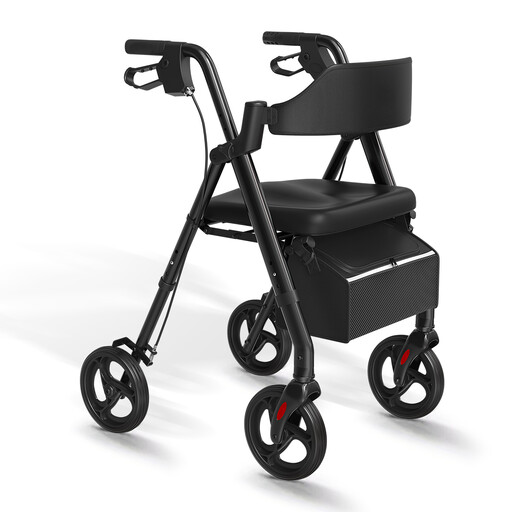
Why this product suits this profile: This model combines a seat, shopping basket and five-position handle-height adjustment. With a net weight of 9.35 kg and a stated maximum load of 150 kg, it is suited to everyday use, short breaks and shopping, provided its dimensions meet your needs.
The product details state the net weight, folded dimensions, handle heights and separate basket capacity of 10 kg. This makes it easier to assess transport and storage before you buy.
Carbon steel frame, seat, shopping basket and five-position handle-height adjustment.
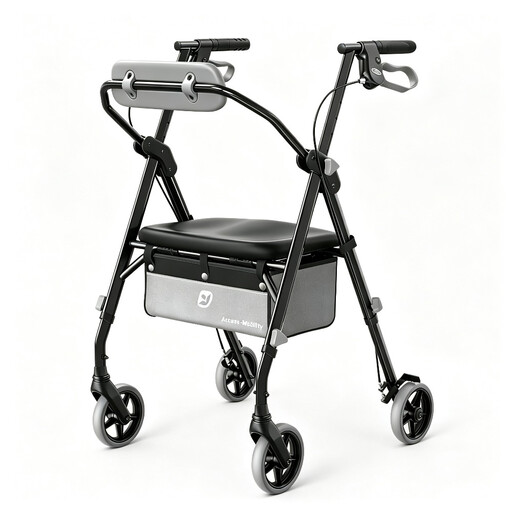
Why this product suits this profile: Its narrow design, at approximately 59 cm wide, may suit flats, lifts and tight spaces. The data sheet gives a net weight of 8.5 kg, as well as the seat dimensions, wheel size and handle-height range.
The technical details distinguish between the maximum load and bag capacity. As the product name and data sheet give different figures, you should use the specification of 158 kg as your guide.
Net weight of 8.5 kg, 6-inch wheels, a narrow design and five-position handle-height adjustment.
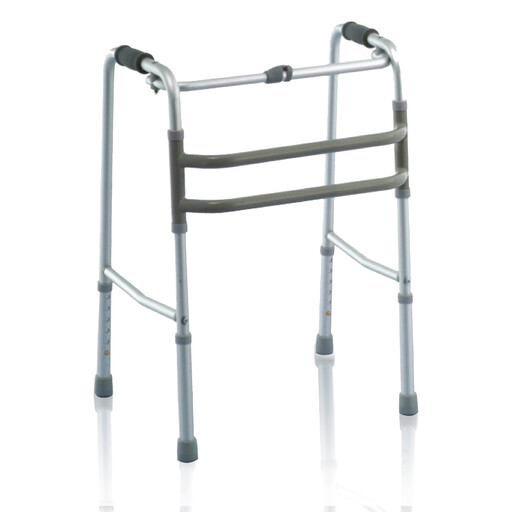
Why this product suits this profile: This is a height-adjustable, folding walking aid for people who mainly need compact support while walking. However, according to the information available, it does not have an integrated seat, so it is not the right choice if you need to be able to sit down for a rest.
Clearly distinguishing between a walking aid and a rollator with a seat helps prevent you ordering a product that does not have the features you need.
One-handed folding mechanism, height-adjustable handles and an aluminium frame, according to the product description.
We’ve put together a comprehensive, regularly updated list of products that meet these strict selection criteria and fully comply with the safety regulations in force in the EU.
Position the handles so that your arms remain slightly bent when you stand upright. Both sides should be set to the same height. Before using the rollator for the first time, check the folding mechanism, brake cables, wheels and locks. Follow the user manual for your specific model when making adjustments.
How long it lasts depends on the user’s weight, how often it is used, the surfaces it is used on, storage and maintenance. Check the wheels, brakes, screw connections and handles regularly. If the rollator gets wet in the rain, let it dry fully before folding it away for storage. Do not continue using damaged parts.
In addition to the purchase price, you may need to pay for replacement wheels, brake components or handles. For a rollator with a shopping basket, you may also need a replacement or additional bag. Before buying, check whether spare parts are available and what maintenance the manufacturer recommends.