
Lieferung heute & morgen

Qualitätsgarantie
App herunterladen
Kategorien
A folding saw is a compact and efficient tool for making precise cuts in wood. Its functionality makes it an invaluable tool for gardeners engaged in tree pruning, as well as for outdoor enthusiasts during activities like camping or bushcraft. Selecting the right model depends on specific technical requirements and the intended application. This guide analyses the key features of a folding hand saw and presents a selection of recommended models.
The performance and durability of a folding saw are determined by a combination of its material, construction, and design. The following criteria are essential for making an informed purchasing decision.
The saw blade is the core component. A commonly used material is SK5 steel, a type of Japanese carbon steel. This steel is distinguished by its high hardness, typically ranging between 64 and 65 HRC (Rockwell Hardness). This property ensures excellent edge retention, meaning the blade stays sharp even after intensive use. At the same time, SK5 steel offers good toughness, which reduces the risk of the blade breaking under stress. Many saw blades are also hardened and coated for rust resistance to extend their lifespan.
The arrangement and shape of the saw teeth determine the efficiency and cleanliness of the cut. A common configuration is 3D or triple-ground teeth. With this geometry, each tooth is ground on three sides, enabling aggressive and rapid material removal. Most high-quality folding saws, especially those used as a pruning saw or garden saw, are designed for a pull cut. This means the primary cutting action occurs when pulling the saw towards your body. This technique requires less effort and allows for greater control over the cut.
A secure and comfortable grip is crucial for handling and safety. Handles are often made from materials like TPR (Thermoplastic Rubber) or cork.
The ergonomic shape of the handle should support a natural hand position to minimise fatigue during extended use.
A reliable locking mechanism is an essential safety feature. The saw should lock securely in both its open and closed positions. This prevents the blade from accidentally opening or closing during transport or use. An easy-to-operate yet robust locking button or lever is standard.
The length of the saw blade affects both the maximum diameter of the wood you can cut and the tool's portability.
Based on the technical criteria above, we present a few models suitable for various applications.
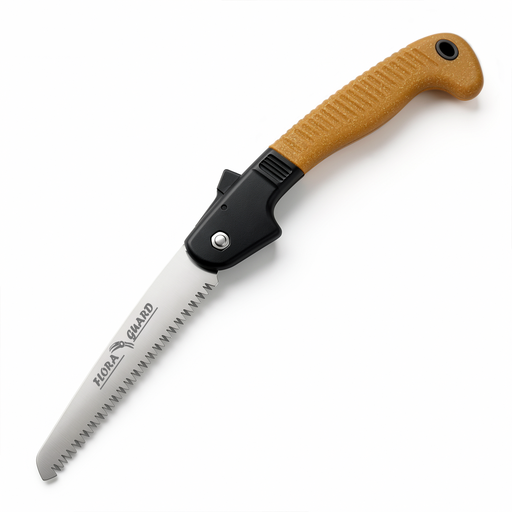
Why We Recommend This Product: This model combines a hardened SK5 steel blade with a lightweight cork handle. Its 7-inch (approx. 18 cm) blade length and compact folding design make it a portable tool for on-the-go use. The 3D teeth are engineered for efficient cuts in various types of wood.
Pros:
Best Suited For: This model is an excellent choice for campers, hikers, and bushcrafters who need a reliable and lightweight wood saw. It is also suitable for light gardening tasks and removing smaller branches.
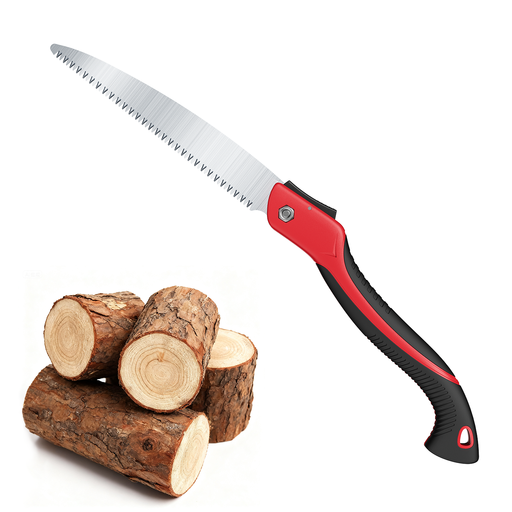
Why We Recommend This Product: With a 10-inch (approx. 25 cm) blade, this tree saw is designed for more demanding tasks in the garden. The SK5 steel blade with 3D teeth allows for cutting thicker branches and shrubs. The ergonomic soft-grip handle reduces hand fatigue during prolonged use.
Pros:
Best Suited For: This model is aimed at gardeners and hobby arborists who need to regularly cut thicker branches and require a tool with greater reach and cutting power.
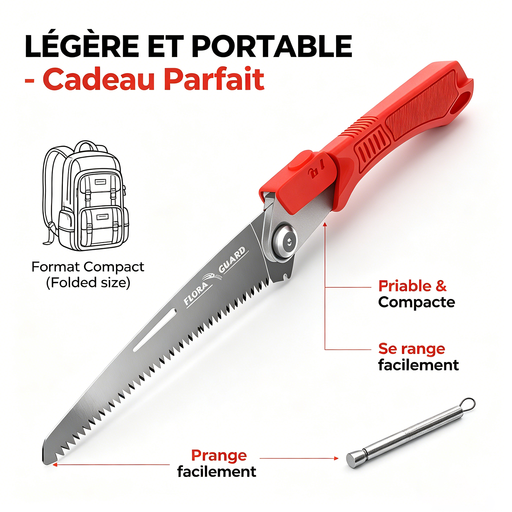
Why We Recommend This Product: This 8-inch version (approx. 20 cm) strikes a balance between portability and cutting performance. The SK5 steel blade is robust enough for various materials like wood and plastic. The handle, made from TPR material, offers a secure grip and durability.
Pros:
Best Suited For: An all-rounder for homeowners and outdoor enthusiasts looking for a single tool for various tasks—from tree pruning in the garden to woodwork while camping.
A folding saw is a versatile tool, but specialised equipment may be necessary depending on the project. For a wider selection of tools and gear for your next adventure or garden project, explore more options in our Camping and Outdoor Equipment category.
1. What is the advantage of a folding saw over a fixed-blade saw? The primary advantage lies in portability and safety. When folded, the sharp teeth are protected, making it safe to transport in a backpack or toolbox. This also makes it more compact and easier to store.
2. How do you maintain the blade of a folding saw? After each use, the blade should be cleaned of resin and wood debris. A dry cloth is usually sufficient. To prevent rust, the dry blade can be coated with a thin film of machine oil. The locking mechanism should also be kept clean to ensure it functions properly.
3. What type of steel is best for saw blades? Carbon steels like Japanese SK5 steel are an excellent choice. They offer high hardness for long-lasting sharpness while also providing sufficient toughness to prevent the blade from breaking under stress.