
Lieferung heute & morgen

Qualitätsgarantie

Willkommens-Angebote freischalten: KOSTENLOSE Lieferung | Bis zu 80 % RABATT | Kostenlose 30-Tage-JoyPlus-Testphase
App herunterladen
A folding solar panel can provide electricity when you’re camping, travelling in a motorhome, spending time in the garden or using a power station. But choosing one isn’t just about the wattage. Claims such as ‘high efficiency’, ‘weather-resistant’ and ‘universally compatible’ can refer to different technical requirements.
Before you buy, check that the portable solar panel is suitable for where you’ll use it, your power station and the cables you already have.
A 200W solar panel reaches its rated output under defined standard test conditions. In the UK, factors such as the sun’s position, cloud cover, temperature, shade and panel orientation all affect its actual output. So a 400-watt model won’t necessarily deliver twice the power of a 200-watt panel at all times.
For a more meaningful comparison, consider rated output, efficiency, dimensions and connection specifications together, rather than looking at wattage alone.
Power stations have different input ranges, plugs and maximum current ratings. A solar charger with an XT60, MC4, DC5521 or Anderson connector may therefore need an adapter. Check:
An adapter doesn’t automatically change the electrical limits. Before connecting the devices, check these limits against the manufacturers’ specifications for both products.
A rating such as IP65, IP67 or IP68 describes protection against dust and water under specified test conditions. It doesn’t mean the panel can be left out in persistent rain, standing water or a storm. Folding solar panels should be set up securely and taken down in strong winds, hail or thunderstorms.
A portable 100 W solar panel is often enough for smartphones, tablets and smaller batteries. A 200 W model is a better fit for mid-capacity power stations or regular camping trips. A 400W solar panel may suit larger solar generators, longer stays or higher daily energy needs.
Also check whether your power station can make full use of the panel’s output. A higher-rated panel won’t necessarily charge it faster if the power station’s input is limited.
A monocrystalline solar panel uses monocrystalline silicon cells. Its stated efficiency indicates the proportion of incoming solar energy converted into electricity under test conditions. The portable models listed here have stated efficiency ratings of around 20 to 25 per cent.
Efficiency is only one factor to consider. A more efficient panel may be more compact, while another model may be more practical thanks to its larger surface area or easier positioning.
A folding solar panel is made to be carried around, so pay attention to:
A lightweight 100-watt panel can be handy for day trips. For a 200 W or higher camping solar panel, a stable setup is especially important, as larger panels can be more vulnerable to wind.
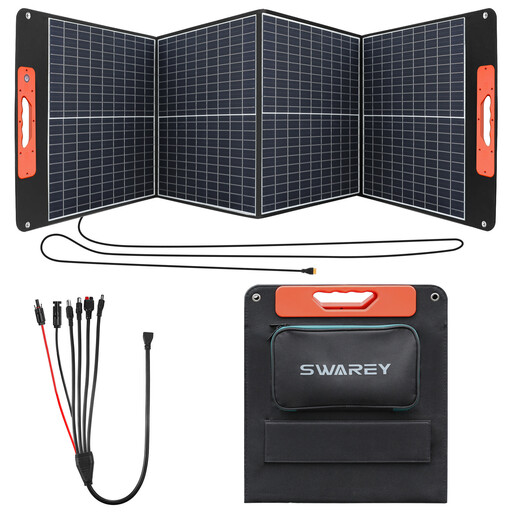
Why this product suits this user: Its compact 100-watt design is suitable for charging smartphones, tablets and smaller power stations on camping and weekend trips.
It comes with several adapters, as well as USB-C and USB-A outputs, making it easier to work out which cables you’ll need before buying.
Monocrystalline cells, a 60 W USB-C PD port, built-in stands and a stated weight of around 3.48 kg.
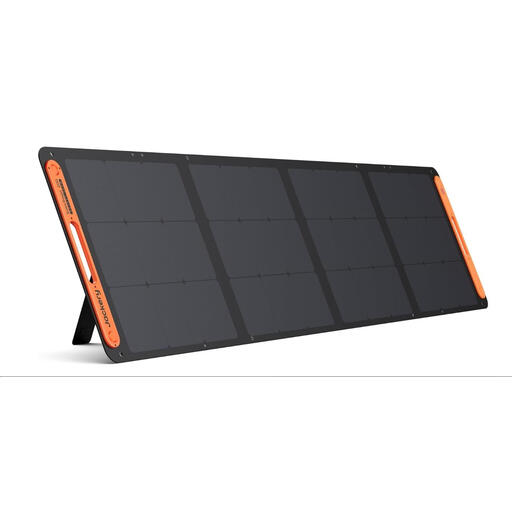
Why this product suits this user: With a rated output of 200 W, an ETFE-coated surface, carrying options and several support legs, it’s designed for regular outdoor use.
The stated operating specifications, dimensions and IP68 rating make it easier to check compatibility with a power station. You should still bear the weather limitations in mind.
200 W rated output, stated efficiency of up to 24.3%, USB-A and USB-C outputs, and a folded size of 615 × 552 × 40 mm.
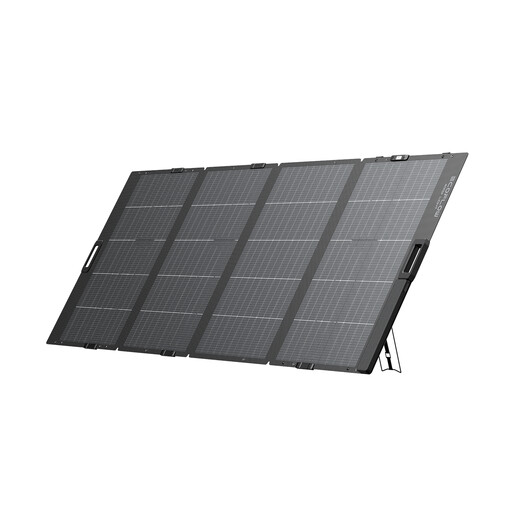
Why this product suits this user: The 400-watt design is aimed at owners of larger power stations and motorhomes, as well as households with greater mobile energy needs.
The built-in support system and stated connection specifications help you plan your setup. Before buying, check that it’s compatible with the Delta Pro or Delta Max.
400 W rated output, monocrystalline cells, integrated XT60 cable, IP68 rating and several adjustable angles.
We’ve put together a complete, regularly updated list of products that meet these strict selection criteria and fully comply with the safety regulations in force in the EU.
When using solar power away from home, position the panel somewhere as free from shade as possible. Even partial shade over a section of cells can affect the output of the entire panel. Adjust it regularly to face the sun, and use the built-in stands on a level surface.
Also bear the following points in mind:
An off-grid solar panel can charge a power station, but it isn’t a substitute for a professionally planned home installation. Fixed installations, grid-connected systems and solar power for emergency backup are subject to additional technical and legal requirements. The TSUN 400-watt system, for example, is described as an on-grid solution with an inverter and shouldn’t be confused with a simple DC panel for a power station.
It depends on the rated output, sunlight, orientation, temperature, shade and the device connected. A 200-watt panel can deliver more power in favourable conditions than in diffuse light. Its rated output is a comparison figure, not a guaranteed continuous output.
Its lifespan depends on the cell technology, coating, transport and storage. Folding models should be stored somewhere dry and clean, without any creases. Physical damage, prolonged moisture around the connections and exposure to strong winds can shorten their service life.
If you regularly spend time away from mains power, a portable solar panel can recharge your power station and reduce your need for mains sockets or fossil-fuel generators. Whether it’s worth buying depends on how often you’ll use it, the power you need, storage capacity and transport requirements. Most importantly, make sure the panel, cables and power station are electrically compatible.