
Lieferung heute & morgen

Qualitätsgarantie

Willkommens-Angebote freischalten: KOSTENLOSE Lieferung | Bis zu 80 % RABATT | Kostenlose 30-Tage-JoyPlus-Testphase
App herunterladen
Whether you're reaching for the top kitchen shelf, changing a lightbulb, or cleaning windows, many everyday household tasks require you to safely reach greater heights. A simple chair is often a wobbly and unsafe solution. A sturdy folding step stool or a household ladder provides the necessary safety and stability.
This article serves as a practical guide. It explains the key features you should look for when making your selection and presents a range of models for different needs. The goal is to provide you with a solid basis for making an informed decision so you can find the right ladder for your home.
Choosing the right model depends on your individual needs. Three central criteria will help you objectively compare the features of different products.
The material directly impacts stability and weight. Most models for domestic use are made of either steel or aluminum.
Regardless of the material, the maximum load capacity is a crucial safety feature. Many models are designed for a load of up to 150 kg, which is a common standard for safe household use. Look for relevant certifications, such as the EN 14183 standard, which specifies the requirements for step stools.
A good safety step stool is distinguished by several features that minimise the risk of accidents.
The required height and available storage space are also important factors.
Based on the criteria mentioned, we have compiled a selection of models suitable for various household applications.
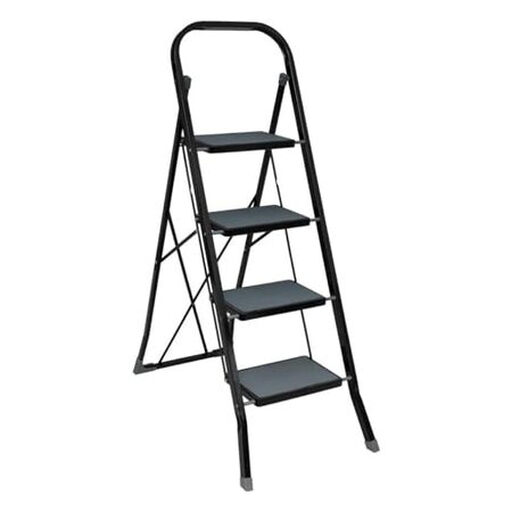
What makes it stand out: This four-step model combines a robust steel construction with comprehensive safety features. The high safety bar, non-slip steps and feet, and a secure locking mechanism ensure a stable footing. Certification according to T?V and EN14183 standards underscores its focus on safety.
Advantages:
Who it's for: This model is an excellent choice for users who need a greater working height and place a high value on maximum stability and certified safety.
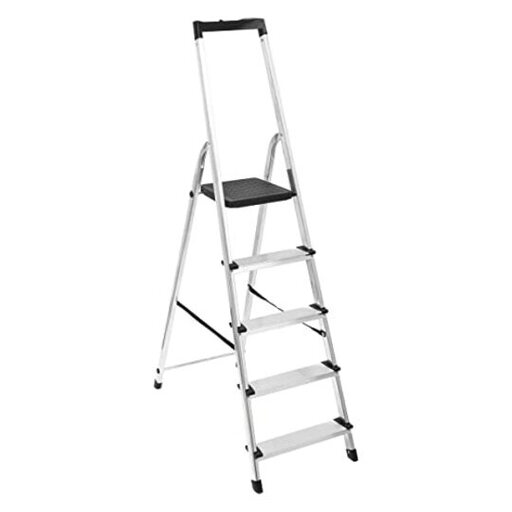
What makes it stand out: This five-step aluminum household ladder is lightweight yet sturdy. It offers a long reach for working on ceilings or high shelves. A special feature is the integrated tool tray, which allows you to keep necessary utensils within easy reach. The safety bar also ensures a secure grip.
Advantages:
Who it's for: Ideal for DIY enthusiasts or for longer household tasks where a long reach and a tray for tools or cleaning supplies are beneficial.
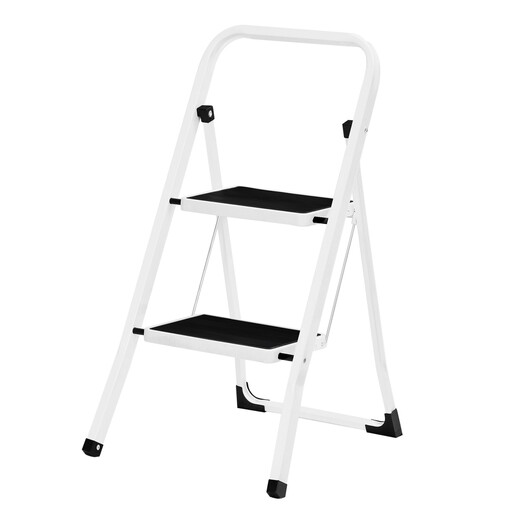
What makes it stand out: This two-step steel folding step stool is designed for maximum compactness. With a thickness of just 4.5 cm when folded, it can be stored in an extremely space-saving manner. Despite its slim design, it offers a secure footing for everyday tasks thanks to its steel frame, safety lock, and ribbed steps.
Advantages:
Who it's for: Perfect for quick use in the kitchen, storage room, or garage, and for anyone with limited storage space in their home.
If you haven't found the right model for your specific needs in this selection, or if you are looking for other sizes and materials, you can find a wider range of products in our category.
? Explore more models in the Construction Ladders category
The ideal height depends on your ceiling height and the task at hand. For most indoor spaces with a standard ceiling height of about 2.50 m, a model with three to four steps is sufficient to comfortably reach lights or the tops of cabinets. For reaching upper kitchen cabinets, a two-step stool is often enough.
The terms are often used interchangeably. Generally, a folding step stool refers to a smaller, more compact model with two to four steps for quick use. A stepladder or household ladder can have more steps and is often designed for more extensive tasks like renovations. The key shared feature is that both types are foldable for space-saving storage.
Both materials have their merits. Steel offers very high stability and is often more affordable, but it is heavier. Aluminum is significantly lighter, which makes it easier to transport, and it does not rust. If the ladder needs to be moved frequently, aluminum is often the more practical choice. If the primary concern is maximum stability in a fixed location, steel can be advantageous. Both materials can safely support a load of up to 150 kg with the proper construction.