
Lieferung heute & morgen

Qualitätsgarantie

Willkommens-Angebote freischalten: KOSTENLOSE Lieferung | Bis zu 80 % RABATT | Kostenlose 30-Tage-JoyPlus-Testphase
App herunterladen
A folding stool can provide extra seating in the living room, a place to put things in the hallway or a step stool for household tasks. Choosing one, however, is about more than colour and price. The key factors are where you plan to use it, its weight capacity, stability and folded dimensions.
Unclear product information can easily lead to a poor purchase, particularly for families, older people and households with limited storage space. A seating stool is not automatically suitable for standing on, and a storage stool needs to meet different requirements from a folding step stool.
An upholstered folding pouffe may be designed as a seat or footstool. That doesn’t mean it’s safe to stand on. A non-slip stool or folding step stool should be clearly specified as suitable for stepping on, with stable feet and a locking mechanism.
If you need a stool to reach high shelves or light fittings, look specifically for a folding step stool, step stool or 2-step folding ladder. A storage stool, on the other hand, belongs in the furniture category, not the category of climbing aids.
The stated weight capacity often applies to a specific type of use, such as sitting, with the weight distributed evenly and remaining static. Movement, leaning to one side or standing on the stool may place different demands on it. For a storage stool, also check whether the weight capacity applies only when the lid is fully in place.
It’s therefore important to check:
Product details often give the dimensions when the item is set up. But for storage, it’s the folded dimensions that matter. If you plan to store a stool behind a door, under the bed or in a cupboard, its length, width and height need to fit the space available.
It’s also worth checking the weight of a folding stool. A lightweight aluminium model is easier to carry, while a larger storage stool takes up more floor space and is usually heavier.
For seating, details such as maximum static weight capacity, materials and dimensions are important. MDF panels, metal reinforcements and a lid that closes fully can offer structural benefits in a storage stool. Even so, always follow the manufacturer’s stated guidance.
For a folding step stool, look for a secure locking mechanism, a sturdy frame and a clearly specified number of steps. The ladders featured here have a stated maximum weight capacity of 150 kg. This does not mean they are suitable for unrestricted use in every situation.
Non-slip steps and rubber feet can improve grip, but they’re no substitute for a level, dry and stable surface. Don’t use a folding step stool on wet, uneven or slippery floors.
Before each use, it’s worth checking:
Choose a storage stool based on both its internal capacity and its external dimensions. Longer models are suitable for blankets, cushions or bedding. A compact cube is enough for smaller items. A folding pouffe measuring 38 × 38 × 38 cm is easier to store than a bench measuring 110 cm wide.
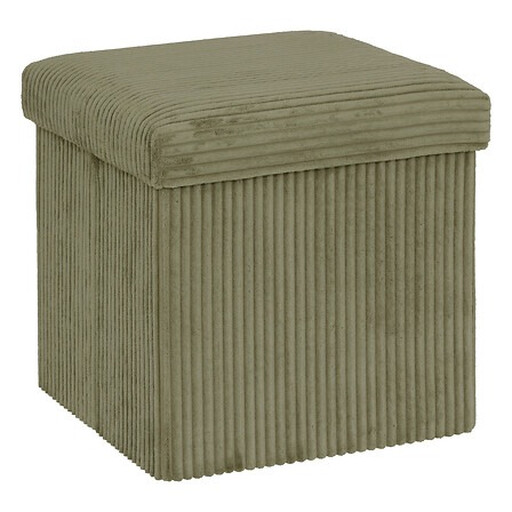
Why it suits this user type: This compact pouffe is designed as a seat, footstool or occasional side table, and folds away when not in use.
Its intended use as a seat and footstool is clearly described; it should not be used as a climbing aid.
38 × 38 × 38 cm; polyester corduroy fabric, MDF-E1 structure and folding design.
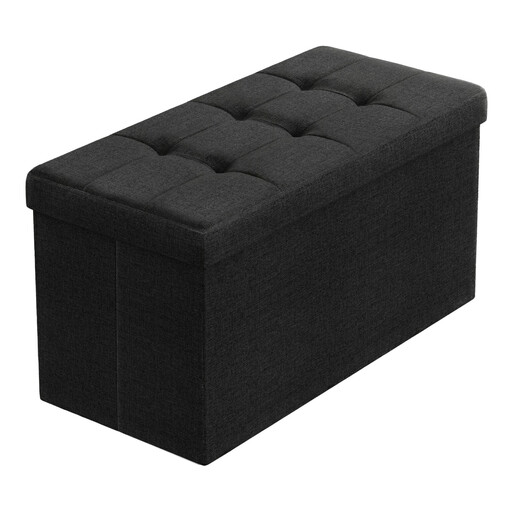
Why it suits this user type: This rectangular storage stool combines a seat with space for blankets, cushions or books, and works well in the living room, bedroom or hallway.
The product details specify MDF panels, metal reinforcements in the lid and a maximum static weight capacity of 300 kg. Make sure the lid is fully in place before sitting on it.
38 × 76 × 38 cm; stated capacity of 89 l; folds away and is ready to use without complicated assembly.
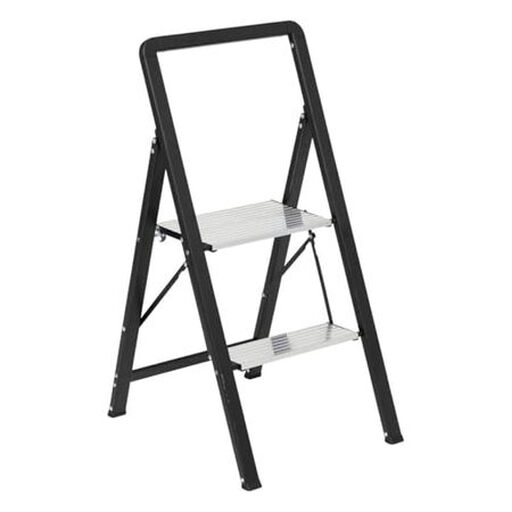
Why it suits this user type: With two steps and a lightweight aluminium frame, this folding step stool helps you reach shelves, light fittings and other hard-to-reach places.
Non-slip steps, non-slip feet, a safety rail and a locking mechanism are all specified. The floor must be level and dry.
Weighs 2,9 kg; 49,5 × 41,5 × 83 cm; stated maximum weight capacity of 150 kg.
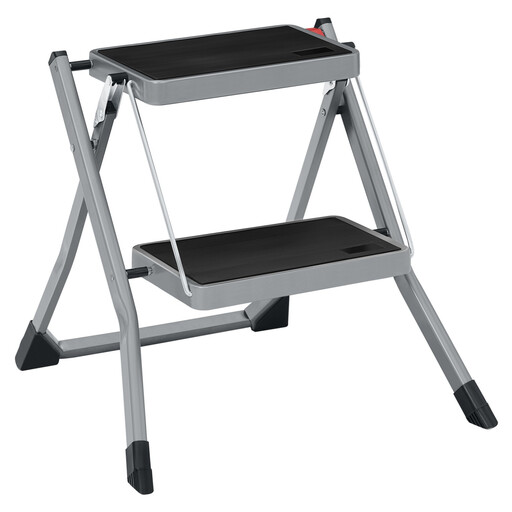
Why it suits this user type: According to the product details, its steel frame is suitable for regular household tasks, such as reaching high shelves, curtains or light fittings.
The automatic locking system, ribbed non-slip steps and rubber feet help address common concerns when setting up a step stool. Check the lock before every use.
Steel frame; folds to 55 × 50 × 4,5 cm; stated maximum weight capacity of 150 kg.
We’ve put together a complete, regularly updated list of products that meet these strict selection criteria and fully comply with the safety regulations in force in the EU.
Only if the manufacturer explicitly states that it is suitable for use as a climbing aid. Don’t stand on a seating stool, pouffe or storage stool. For shelves and household tasks, a folding step stool with non-slip steps, stable feet and a locking mechanism is the more suitable choice.
Its lifespan depends on the materials, how often it’s used, the load it bears and how it’s stored. Check the joints, hinges, lid and rubber feet regularly. Damaged or loose parts are a sign that you should stop using the product.
A folding stool doesn’t usually have any ongoing running costs. The only things to consider are the storage space it needs and any care it may require. When not in use, folding models can be stored under the bed, in a cupboard or behind a door. Routine cleaning in line with the care instructions is usually enough; don’t soak fabric covers.