
Lieferung heute & morgen

Qualitätsgarantie

Willkommens-Angebote freischalten: KOSTENLOSE Lieferung | Bis zu 80 % RABATT | Kostenlose 30-Tage-JoyPlus-Testphase
App herunterladen
As a Joybuy Product Recommendation Officer, I analyse product information to provide you with an objective basis for your purchasing decision. This article highlights the functional aspects of folding tables and introduces various models to help you find a suitable solution for your needs—whether for a small balcony, your next camping trip, or as a flexible addition to your home.
A folding table is a practical solution when available space is limited. Whether as a table for a small balcony, a spontaneous work surface in the kitchen, or a reliable companion for camping, the flexibility of such a table is its greatest advantage. However, the selection is vast, and the differences are in the details. This guide is designed to help you understand the relevant features and find a model that meets your requirements.
The choice of a foldable table largely depends on its intended location and purpose. The following criteria offer guidance.
The material determines not only the look but also the durability and application range of the table.
A space-saving table is characterised by a simple mechanism and compact dimensions when folded.
Stability is a key quality feature. A solid frame, non-slip feet, and a locking mechanism when unfolded contribute to safety. Depending on the application, additional features can be useful:
Here you will find a selection of models that are suitable for different needs due to their specific properties.

What makes it stand out: This square table combines a compact footprint with a sturdy design. The alloy steel frame and wood-effect tabletop allow for flexible use both indoors and in sheltered outdoor areas. An integrated locking system ensures stability during use.
Advantages:
Who it's for: Individuals looking for a stable and easy-to-store side table for a small kitchen, dining area, or covered balcony.
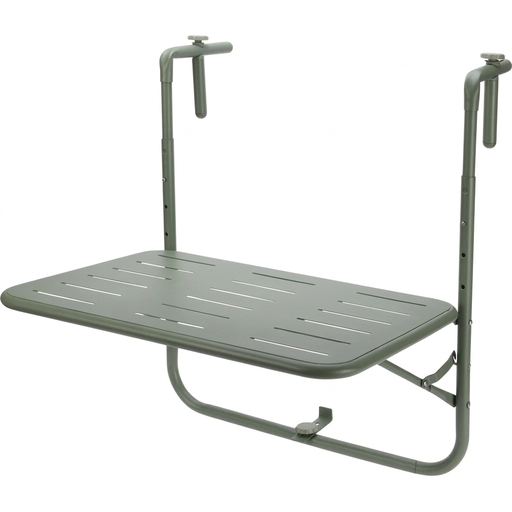
What makes it stand out: This model is designed as a folding balcony table and is attached directly to the railing, taking up no floor space. Its extendable feature provides additional surface area when needed. According to the manufacturer, the material is weather-resistant and suitable for outdoor use.
Advantages:
Who it's for: Residents with very small balconies who need a space-saving solution for a coffee or a book outdoors without sacrificing floor space.
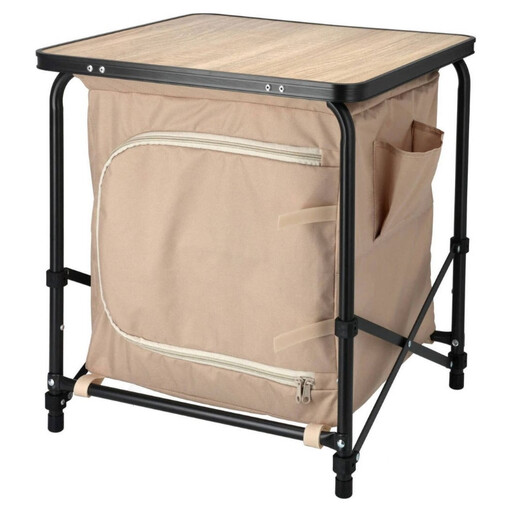
What makes it stand out: This camping table focuses on on-the-go functionality. It combines a tabletop with an integrated fabric cabinet that offers two shelves. The lightweight aluminium frame and the included carrying bag underscore the portable nature of this model.
Advantages:
Who it's for: Campers, festival-goers, and picnic enthusiasts looking for an organised and functional solution to keep cooking utensils and supplies tidy and within easy reach.
If the models presented don't exactly match your needs or if you prefer a different shape, there are other alternatives to discover. Browse our selection to find more tables, such as a Round Black Metal Garden Table.
1. Is every folding table suitable for outdoor use? No, not every foldable table is designed for permanent outdoor use. Models with tabletops made of untreated wood or MDF can swell and get damaged when wet. For a garden table or balcony table, you should look for materials explicitly labelled as weather-resistant, such as powder-coated steel, aluminium, or special plastics.
2. How much weight can a folding table support? The maximum load capacity varies greatly depending on the model, construction, and material. A lightweight camping table generally has a lower load capacity than a sturdy folding table with a steel frame. You can find the exact load capacity in the manufacturer's product specifications. It is important not to exceed this limit to ensure stability.
3. How do I clean and maintain a folding table? Most folding tables can be easily cleaned with a damp cloth. For tougher stains, a mild detergent can be used. Avoid aggressive or abrasive cleaners, especially on coated surfaces or MDF panels. To extend its lifespan, it is recommended to store the table in a dry, sheltered place when not in use, particularly over the winter.