
Lieferung heute & morgen

Qualitätsgarantie

Willkommens-Angebote freischalten: KOSTENLOSE Lieferung | Bis zu 80 % RABATT | Kostenlose 30-Tage-JoyPlus-Testphase
App herunterladen
A folding table can save valuable space in small flats, on balconies, when camping or as an extra surface for storage. However, product images and general marketing claims do not always lead to the right purchase decision. Specific details about dimensions, load capacity, material and folding mechanism are what really matter.
A table measuring 60 × 60 cm often looks more spacious in product images than it really is. For two people, this size is usually enough for plates and drinks. For four people or larger work materials, however, the surface may feel cramped.
You should therefore check:
A folding table with a small tabletop is often suitable as a side table or workspace. A small dining table, on the other hand, needs sufficient depth for crockery and freedom of movement.
A stable appearance may come from the design, but it is not technical proof of stability. Look for a stated maximum load capacity and check whether it applies to evenly distributed weight. A table with a maximum load of 40 kg must not automatically be subjected to a concentrated load at a single corner.
The following are also important:
An outdoor folding table does not necessarily need to stay outside permanently. Metal, coatings and connecting parts can be affected by rain, standing water and frost. Even with a rust-resistant or powder-coated surface, storing the table in a dry place is advisable.
For balconies, patios and gardens, you should also check:
For one person, drinks or a laptop, a folding side table with a compact surface is often sufficient. Two people can generally manage with around 60 × 60 cm, provided the table is only used for smaller meals. For four people, information about seating capacity and the actual floor space required is particularly relevant.
A table for small spaces should not only take up little room when folded. Its assembled depth and height must also suit the intended area. A balcony folding table with a diameter of around 70 cm, for example, can provide enough space for two people, but requires a different footprint from a square table.
A metal frame can provide a robust construction, while MDF or melamine tabletops offer a smooth, easy-to-wipe surface. A wood-effect finish does not necessarily mean the table is made from solid wood. The exact material specifications should therefore be checked before buying.
For everyday use:
A portable table for camping or picnics should be lightweight and have compact packed dimensions. It is important to check whether the tabletop and frame are stored separately or whether the table folds as one unit. A low weight can make transport easier, but depending on the construction, it may also mean a lower load capacity.
Before use, all legs, crossbars and locking mechanisms should be fully unfolded and correctly connected. When folding the table, watch out for potential pinch points around the joints.
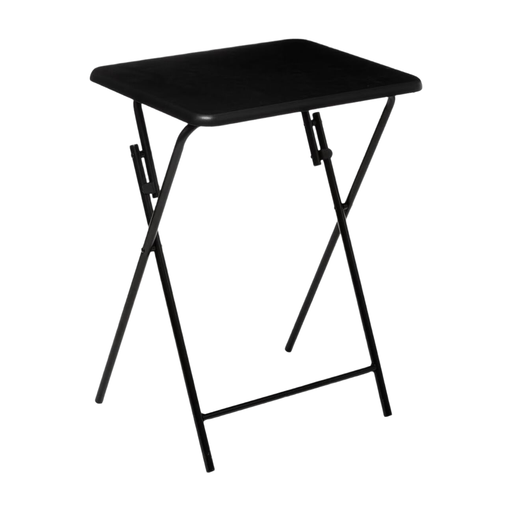
Why this product suits this profile: The 48 × 38 cm surface is ideal for small flats, student accommodation or as an additional surface next to a sofa or bed. The table can be unfolded without complicated assembly and then stored away to save space.
The compact dimensions make the actual space required clear. The surface can be cleaned with a damp cloth; prolonged exposure to moisture and abrasive cleaners should be avoided.
Compact 48 × 38 cm size, easy handling and flat storage.

Why this product suits this profile: The square 60 × 60 cm tabletop, metal frame, locking system and stated capacity of up to four people make it suitable for flexible dining and storage situations in the kitchen, living area or on the balcony.
Rather than making a vague claim about stability, the description specifies a reinforced design with a locking system. The table must nevertheless be placed on a level surface.
Metal frame, wood-effect finish, folding mechanism and integrated footrest.
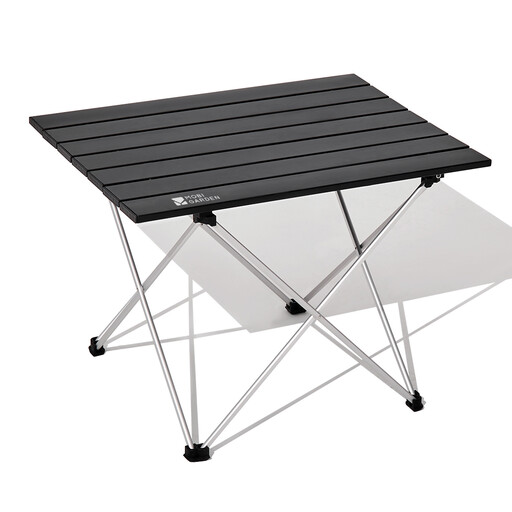
Why this product suits this profile: Weighing around 1.25 kg, measuring 50 × 40 × 40 cm when assembled and with packed dimensions of around 16 × 8 × 57 cm, this camping table is designed for transport when hiking, fishing or camping.
The stated weight and packed dimensions show whether the table will fit in your luggage or vehicle. Before use, the frame, crossbars and tabletop corners must be fully locked into place.
Aluminium alloy, X-shaped frame structure, non-slip feet and a static load capacity of around 20 kg.
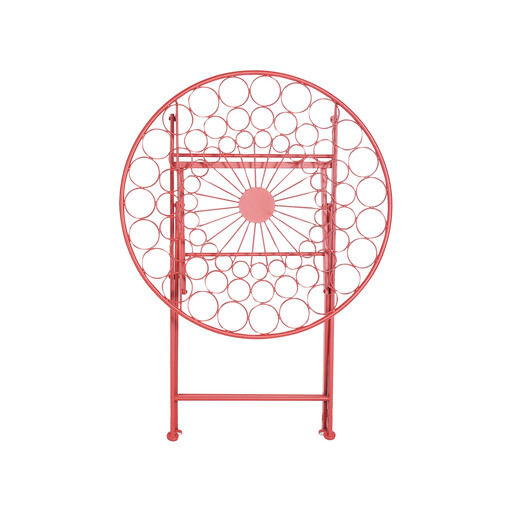
Why this product suits this profile: With a diameter of 70 cm and a height of 75 cm, this round balcony table provides space for up to two people. Its folding metal construction is designed for balconies, patios and small indoor areas.
The stated maximum load of 40 kg sets a clear limit. In strong winds, the table should be moved indoors or secured additionally.
Powder-coated iron, folding design, 4 kg net weight and no assembly required.
We have compiled a complete, regularly updated list of products that fully meet these strict selection criteria and the safety regulations applicable in the EU.
To keep a folding table in working order for as long as possible, you should only set it up on a level, firm surface. Before loading it, all legs must be fully unfolded and the locks closed. For outdoor models, dry storage out of season is recommended. Regularly check the screws, joints, coating and feet.
With a table featuring an MDF or melamine tabletop, standing moisture should be avoided. Aluminium tables are practical for transport, but they should also not be exposed to rain and direct sunlight for prolonged periods.
For smaller meals, around 60 × 60 cm is often sufficient. If you also need to place pots, bowls or work materials on the table, a larger tabletop may be advisable. Before buying, measure the space required, including room for chairs.
Its lifespan depends on the material, load, number of folding cycles and storage conditions. A table that is only used on a level surface, is not overloaded and is stored in a dry place can remain functional for longer than a model that is regularly exposed to moisture, wind or knocks.
A folding table does not normally incur ongoing energy costs. The only expenses to consider are care products, a protective cover if necessary and, for outdoor models, replacing or treating damaged coatings. The key consideration is therefore whether the size, load capacity and material are suitable for your intended use.