
Lieferung heute & morgen

Qualitätsgarantie

Willkommens-Angebote freischalten: KOSTENLOSE Lieferung | Bis zu 80 % RABATT | Kostenlose 30-Tage-JoyPlus-Testphase
App herunterladen
A folding transport trolley can make it much easier to move shopping, camping gear, drinks or garden accessories. However, unclear information about load capacity, storage space and folded dimensions can quickly lead to the wrong purchase. A trolley that looks sturdy in the product photo may prove impractical in everyday use if its wheels, brakes or base aren’t suited to the job.
A figure such as 100 kg transport trolley or 200 kg transport trolley initially tells you only the maximum capacity stated by the seller. It’s also important to consider whether the load will be evenly distributed, what surface the trolley will be used on and whether it’s fully unfolded and locked in place.
Heavy, concentrated loads such as crates of drinks place different demands on a trolley from lightweight, bulky camping blankets. For this reason, you shouldn’t use the maximum load capacity all the time.
A spacious interior is useful for camping or trips to the market. However, a large folding camping wagon can be impractical on narrow paths, on public transport or in the boot of a car. So check the following:
A space-saving transport trolley shouldn’t just fold away; it should also be manageable to carry and store without too much effort.
360-degree swivel wheels make it easier to manoeuvre on smooth surfaces. Larger, wider wheels are often more suitable for gravel, grass or uneven paths. A trolley with brakes gives you extra control when loading and unloading, but it’s no substitute for distributing the load safely.
Also check whether the wheels are actually fitted with brakes, or whether the product description simply mentions brakes in general terms. Never leave a loaded trolley unattended on a slope.
For a folding wagon or outdoor transport trolley, the stated load capacity should suit the way you plan to use it. For shopping and light equipment, 70 to 100 kg may be enough. For larger quantities of garden equipment or heavy camping gear, consider models with a stated capacity of 200 kg.
Important: the load capacity is not a recommendation to transport people or animals. Follow the relevant manufacturer’s safety instructions and don’t exceed the maximum stated capacity.
A metal or steel frame can be a good choice for heavier loads. For fabric trolleys, the quality of the material matters. For example, the Ochama model with a 100 kg capacity is listed as using 600D Oxford fabric. According to the product information, this material is designed to resist wear and scratches; however, that doesn’t guarantee it will be suitable for every use.
A lightweight aluminium sack truck is a different type of product from a folding wagon. It’s better suited to parcels, crates of drinks or individual, compact loads. A wide loading platform and fabric compartment, on the other hand, are more practical for luggage and loose items.
A good folding trolley should be easy to set up without complicated assembly. Claims such as ‘folds in one second’ or ‘folds in three seconds’ refer to the intended folding mechanism. Before loading, make sure the trolley is fully open and locked in place.
For a folding sack truck, handle height, loading platform and wheel-folding mechanism are also important. A telescopic handle can be useful for people of different heights. Check whether the trolley stands securely when folded or needs to be fastened separately.
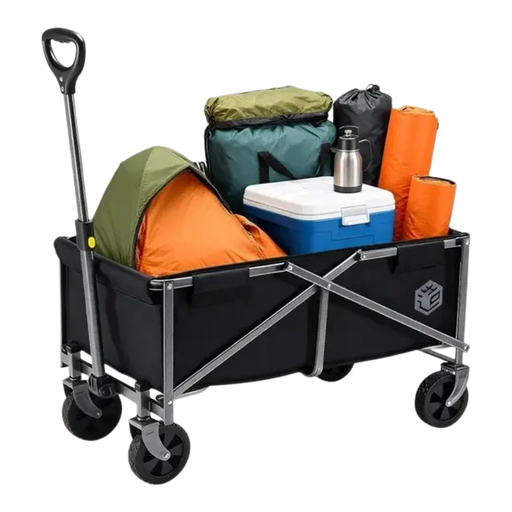
Why this product suits this type of buyer: With a capacity of 75 litres and a stated load capacity of up to 100 kg, this folding wagon is suitable for shopping, picnics and smaller loads.
The product information clearly states its capacity, load limit, 360-degree wheels and cleaning instructions. Even so, you shouldn’t exceed the 100 kg load limit.
No assembly required; 600D Oxford fabric and a stated capacity of 75 litres.
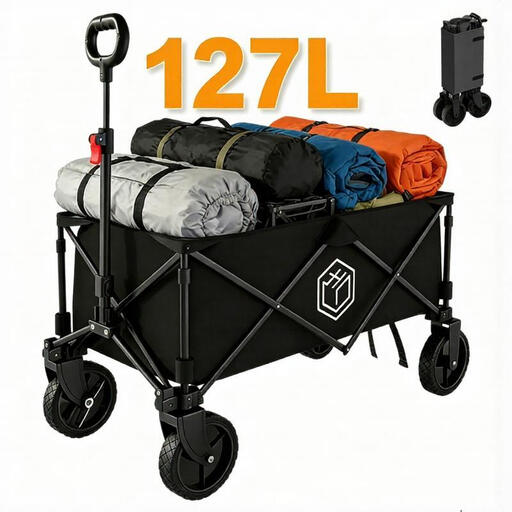
Why this product suits this type of buyer: For regular outdoor use, the key features are a stated capacity of 127 litres, a load capacity of 200 kg and dual front brakes.
The description specifically mentions the brakes, the need to open the trolley fully before loading, and drying it before storage.
127 litres of storage, a stated load capacity of 200 kg and dual front brakes.
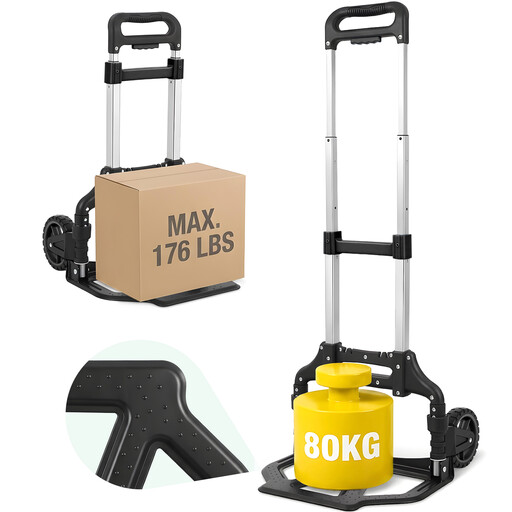
Why this product suits this type of buyer: Weighing just 3.5 kg, this folding sack truck is designed to be stored away frequently and to carry compact loads.
With a folded width of 5.7 cm and three adjustable handle heights, it’s easier to plan where to store this trolley than it would be based on a vague marketing claim alone.
3.5 kg own weight, a stated load capacity of 80 kg and handle heights of 63, 90 and 100 cm.
We’ve put together a complete, regularly updated list of products that meet these strict selection criteria and fully comply with the safety regulations in force in the EU.
To keep a folding trolley in good working order for longer, remove sand, soil and moisture after using it outdoors. Fabric areas should be completely dry before you fold the trolley away. For sack trucks and trolleys with metal frames, it’s worth regularly checking the following:
Don’t use the trolley as a step or ladder. When loading it, keep the load as low and central as possible. This reduces the risk of tipping and makes the trolley easier to pull.
For shopping, drinks or light luggage, models with a stated load capacity of 70 to 100 kg should be enough, depending on how you plan to use the trolley. For larger camping or garden loads, a trolley with a capacity of 200 kg may be a good choice. The surface, how the load is distributed and the actual size of the items all matter.
A folding wagon has a fabric compartment and plenty of room for loose items. A sack truck is more compact and is better suited to individual, stackable loads such as parcels or crates. If you have limited storage space, a lightweight aluminium sack truck is often easier to store.
Clean the wheels and joints regularly, let damp fabric dry and check the locking mechanism before each use. Never exceed the stated maximum load capacity. If you’re storing the trolley for an extended period, keep it somewhere dry and protected from the elements.