
Lieferung heute & morgen

Qualitätsgarantie

Willkommens-Angebote freischalten: KOSTENLOSE Lieferung | Bis zu 80 % RABATT | Kostenlose 30-Tage-JoyPlus-Testphase
App herunterladen
A folding trolley can carry shopping, camping gear, gardening tools or beach essentials. But when buying one, a high capacity in litres or an impressive load limit shouldn’t be your only consideration. What matters is whether the internal dimensions, wheels, folding mechanism and brakes suit the way you plan to use it.
As Joybuy’s Product Recommendation Officer, I’ll explain the key specifications clearly and objectively. This will help you avoid common buying mistakes and compare models more effectively.
A trolley with a high load capacity isn’t automatically suitable for every use. The maximum load usually refers to the total weight of the cargo. The stated capacity may also apply to the fully unfolded model, an open rear flap or an additional attachment.
So check the following:
A folding trolley with a 200 kg load capacity could be a good choice for heavy equipment. On uneven ground, however, it’s still important to distribute the load evenly to prevent the trolley from tipping over.
Trolleys with large wheels usually roll more easily over grass, gravel or firm sand than models with small wheels. But wheel diameter isn’t the only thing that matters on deep, loose beach sand. Tyre width, wheel material and bearings also affect how the trolley handles.
Look for:
Wheels designed for a shopping trolley may be fine on tarmac. For grass, gravel and beaches, a camping trolley or outdoor trolley needs a sturdier set of wheels.
A folding trolley should pack away neatly in your car boot, cellar or motorhome. But folding speed matters less than a frame that locks securely into place. Before loading it, check that the frame is fully open and locked.
The handle should also suit your height. An adjustable handle can make it more comfortable to pull. Side pockets and cup holders are handy extras, but they don’t increase the trolley’s carrying capacity.
A capacity of 80 to 100 kg may be enough for light shopping or picnic accessories. For gardening tools, firewood or a large amount of camping gear, consider models rated for 120 to 200 kg. Never exceed the maximum load limit. It also doesn’t mean the trolley can be used safely on steep paths.
If you’re carrying a heavy load, stick to level ground where possible and place the weight low down in the trolley.
A large capacity is useful for carrying bulky items. But internal length, width and height are also important for everyday use. A 300-litre trolley may hold a lot with the rear flap open, but you’ll need enough room to manoeuvre it in that configuration.
If you plan to use your trolley in the garden and at the beach, look for water-repellent or easy-wipe fabrics too. A coating won’t prevent all water from getting through, but it does make cleaning easier.
A trolley with brakes is useful when loading and unloading on slopes or uneven ground. Product descriptions often distinguish between parking brakes, wheel brakes and dual brakes. In the product information available here, some brakes are specifically described as parking aids only, not for slowing the trolley while it’s moving.
Before use:
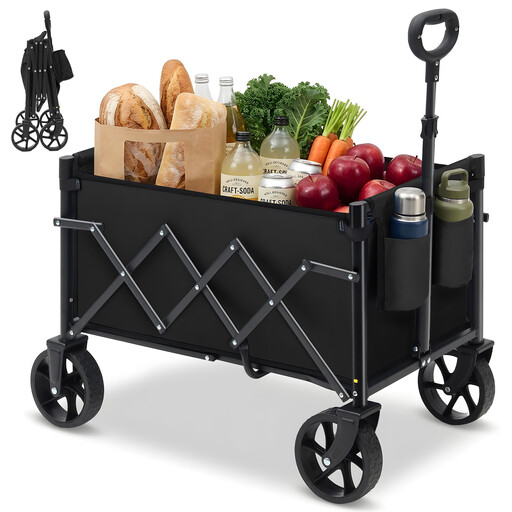
Why this product suits this profile: This compact folding hand trolley is designed for shopping, picnics and everyday loads. Weighing 4.8 kg and with an 80 kg load capacity, it’s relatively easy to handle.
The load capacity, weight and removable wheels are all clearly specified. This makes it easier to assess whether it’s right for your car, cellar or home.
Reinforced steel frame, one-handed folding, three-position adjustable handle and a self-standing design.
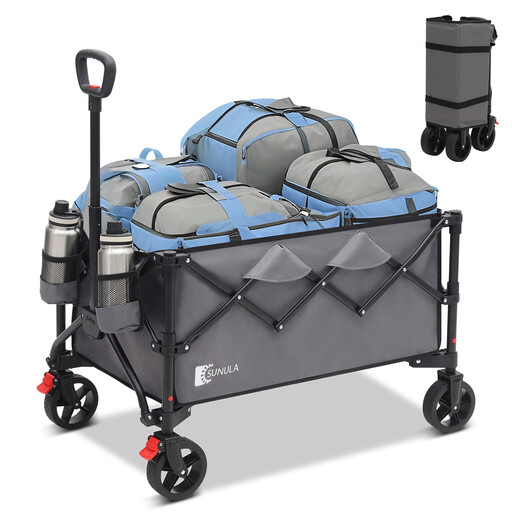
Why this product suits this profile: This model combines 150 litres of storage space with a 120 kg load capacity, off-road wheels and brakes. It’s designed for people who want to use a trolley in the garden, at the campsite and on the beach, as well as for regular loads.
The product details specify the material, load capacity and storage space, and clarify that the brakes are intended for parking. This helps you plan how to use it more realistically.
600D Oxford fabric with PE coating, removable wheels, one-click handle and all-terrain wheels with brakes.
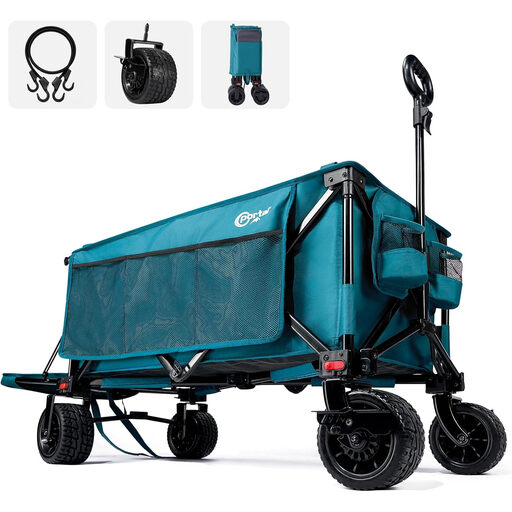
Why this product suits this profile: With a capacity of 300 litres when the rear flap is open, this outdoor trolley is suitable for festival essentials, gardening tools, camping gear and larger beach items.
The expanded capacity is clearly specified as applying when the rear flap is open. The folded dimensions, wheel material, load capacity and dual brakes are also listed separately.
PU wheels with bearings, quick-release fastener, side pockets, cup holders and stated folded dimensions of 35 × 26 × 80 cm.

Why this product suits this profile: With a 200 kg load capacity, 127 litres of storage space and a space-saving folding design, this trolley is well suited to heavy camping or outdoor gear.
The load capacity is stated as a specific figure of 200 kg, rather than simply described with a marketing term. Two front brakes are provided to keep the trolley safely parked.
Stated folding time of around three seconds, steel tube frame, 127 litres of storage space and dual front brakes.
After using your trolley at the beach, clear sand from the wheels and frame. Many models can be cleaned with a damp cloth. Let the trolley dry completely before folding it away, so moisture doesn’t linger in the fabric or on metal parts.
Store your folding trolley somewhere dry and without a load inside. Before each use, check:
We’ve put together a complete, regularly updated list of products that meet these strict selection criteria and fully comply with the safety regulations in force in the EU.
Fully open the frame until the joints click into place. Then extend the handle and check that the trolley is standing securely. Only then should you distribute the load evenly. The exact design may vary from model to model.
Its lifespan depends on the load, the surface it’s used on, how well it’s maintained and how it’s stored. Regular overloading, sand in the bearings or storing it somewhere damp for long periods can speed up wear and tear. A sturdy steel frame, durable wheels and a clean folding mechanism are all important for long-term use.
Trolleys with large, wide wheels can move more easily over firm sand and grass. Even a large wheel can sink into very soft sand, though. If you’re planning a beach holiday, also check the tyre width, overall weight, load capacity and how easy the wheels are to clean.