
Lieferung heute & morgen

Qualitätsgarantie

Willkommens-Angebote freischalten: KOSTENLOSE Lieferung | Bis zu 80 % RABATT | Kostenlose 30-Tage-JoyPlus-Testphase
App herunterladen
A reliable folding utility knife is an indispensable tool for DIY enthusiasts, professional tradespeople, and even for outdoor activities. However, the market is flooded with models of widely varying quality. Many buyers discover only after a short time that their new knife is unsafe, impractical, or simply unusable. This guide will help you navigate the common pitfalls and find a model that will serve its purpose for the long haul.
As your Joybuy Product Recommendation Officer, I have analyzed the most common problems that arise when choosing a folding utility knife.
The 3 Most Common Frustrations with Low-Quality Folding Knives:
To avoid a bad purchase, you should check three core technical features before making a decision. These determine the safety, efficiency, and longevity of your tool.
The way the blade is secured in its working position is the most important safety feature. A good safety utility knife should have a robust and easy-to-use lock.
A knife with replaceable blades should make replacement as easy as possible. Modern systems allow for a tool-free change in seconds. Look for a button or lever that releases the blade, allowing you to remove the old one and securely insert a new one. This is a critical efficiency advantage, especially for a folding knife for tradespeople who frequently cut materials like carpet, drywall, or plastic sheeting.
The materials of the handle and blade determine the knife's durability and handling.
Based on the criteria above, we have identified several models suitable for different user groups.
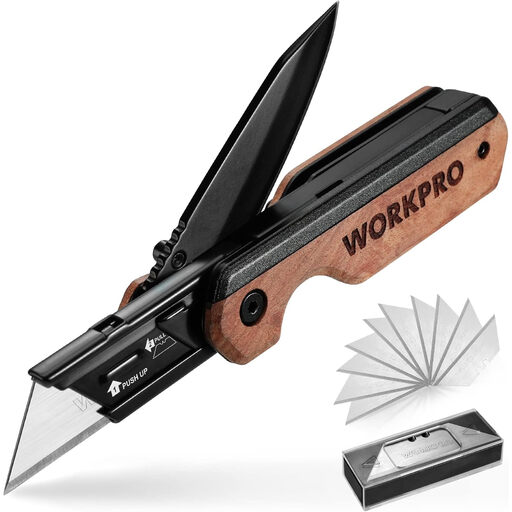
Why This Fits Their Persona: Ideal for DIY enthusiasts and outdoor users who need one tool for various tasks. The combination of a classic knife blade and a utility blade covers everything from opening packages to light carving work.
The 2-in-1 functionality eliminates the need to carry multiple tools. The liner lock ensures both blades are securely fixed, and blade changes are tool-free.
Combines a pocket knife and a utility knife in one tool. The mahogany wood handle offers a comfortable grip and a classic aesthetic.
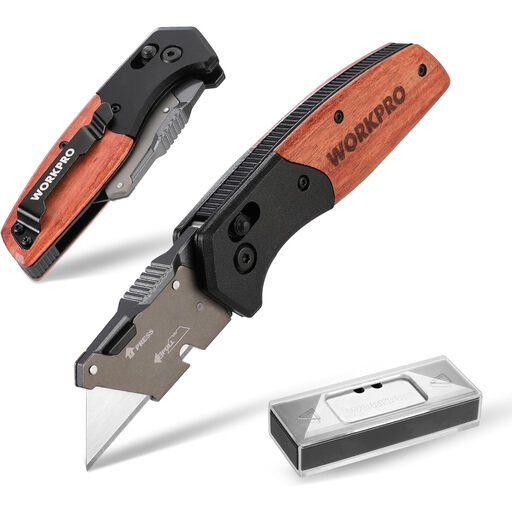
Why This Fits Their Persona: Designed for tradespeople like drywallers or floorers for whom speed and safety are critical. The one-handed operation is a key advantage here.
The external slide lock is more robust and safer than many basic liner locks. It allows for quick, one-handed operation without putting fingers in the blade's path.
Enables safe one-handed operation. The tool-free quick-change mechanism and the included SK5 blades ensure uninterrupted work.
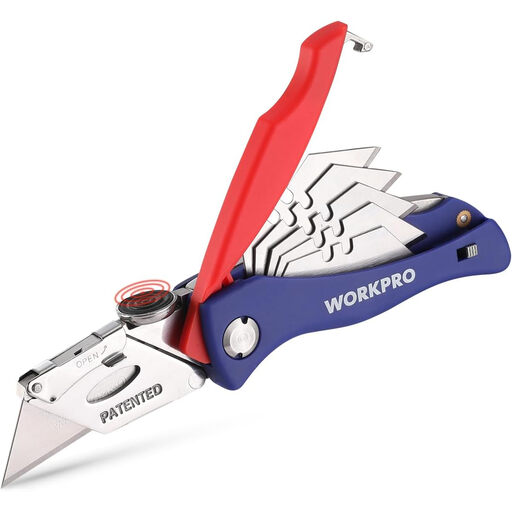
Why This Fits Their Persona: Perfect for users looking for a functional, straightforward tool. Warehouse workers or logistics staff who constantly open boxes will appreciate the ready availability of spare blades.
The integrated blade storage in the handle solves the problem of constantly searching for replacement blades. The lock-back mechanism is time-tested and secure.
Integrated storage for 5 spare blades directly in the handle. The lightweight ABS handle and stainless steel frame offer a great mix of durability and low weight.
We have compiled a complete, up-to-date list of products that fully meet these strict selection criteria and rigorous safety standards.
The blade should be changed as soon as you notice that more pressure is needed for a clean cut. A dull blade increases the risk of slipping and thus the danger of injury. For daily professional use, a change may be necessary every few days or weekly, depending on the material being cut.
A liner lock is a spring integrated into the handle that moves behind the blade to lock it. It is often designed for one-handed operation. A slide lock is an external sliding mechanism that blocks the blade. It is considered very safe because your fingers do not enter the blade's path during unlocking. The choice depends on personal preference regarding handling and sense of security.
Modern work knives often use handles made from a combination of metal (e.g., aluminum) and wood inlays. The wood primarily serves for ergonomics and aesthetics. As long as the handle's core frame is made of sturdy metal, these handles are very durable and resilient for normal use. A handle made purely of wood would be less suitable for heavy-duty work.