
Lieferung heute & morgen

Qualitätsgarantie

Willkommens-Angebote freischalten: KOSTENLOSE Lieferung | Bis zu 80 % RABATT | Kostenlose 30-Tage-JoyPlus-Testphase
App herunterladen
A good food chopper can significantly reduce your prep time in the kitchen. Whether you're dicing onions without tears, grinding nuts for a cake, or preparing fresh baby food, the right appliance is a true kitchen assistant. However, the market is flooded with models whose marketing promises often suggest more than the technology can deliver. Many buyers soon find their new kitchen gadget is just gathering dust in a cupboard.
As your Joybuy Product Recommendation Officer, I have analysed the most common reasons for such purchase mistakes. This guide will show you what to look for to find a durable and practical appliance that truly fits your needs.
Before we dive into the key features, let's look at three common problems that often lead to disappointment:
To avoid these problems, you should carefully examine three technical aspects before making a purchase. These will determine whether a food chopper will be a help or a hindrance in your kitchen.
The power, measured in watts, is an indicator of the motor's strength. However, it's not the only decisive factor.
Just as important are multiple speed settings or a pulse function. They give you control over the final consistency. A low speed is suitable for coarsely chopped vegetables, while a high speed ensures fine purées or pesto.
The choice between glass and plastic has a direct impact on durability and hygiene.
The capacity should suit your household. A mini chopper with a 0.2 to 0.5-litre capacity is perfect for individuals or for small batches of pesto and dips. For families processing larger quantities of vegetables or meat, models with a 1.5 to 2-litre capacity are the more practical choice.
The quality and design of the blades are crucial for a consistent result.
Here are some models that represent a smart choice for different user profiles, based on objective features.
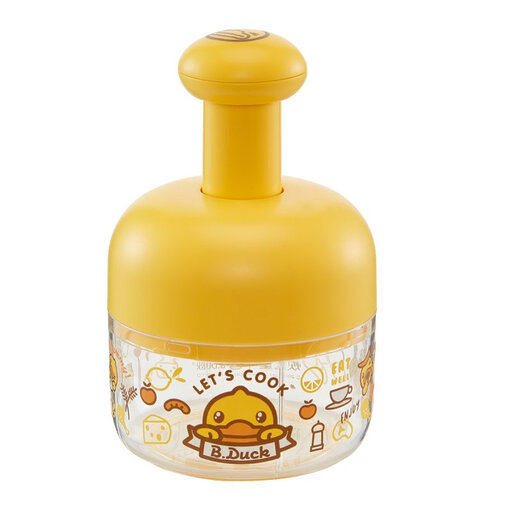
Why it's a good fit: This manual chopper is ideal for anyone who wants to quickly chop a single onion, garlic, or herbs without setting up an electric appliance. At 220 ml, it's extremely compact, requires no electricity, and is therefore also suitable for camping or small kitchens.
Since there is no motor, there is no risk of overheating. The simple mechanical design and few parts make cleaning straightforward.
Cordless operation and an extremely small footprint for storage. Easy to use with a pull-cord mechanism, making it a great alternative to a knife, even for those with limited hand strength.

Why it's a good fit: With a 2-litre glass bowl, this electric chopper is ideal for families. It effortlessly processes larger quantities of vegetables for stews, meat for bolognese, or ingredients for baby food. The two speed settings allow for precise control.
The large glass bowl prevents staining and odour build-up. The 300-watt motor is designed for the most common family kitchen tasks, and the four blades ensure efficiency.
Large 2-litre capacity and a hygienic, dishwasher-safe glass bowl. The quad-blade system made of stainless steel ensures consistent results.
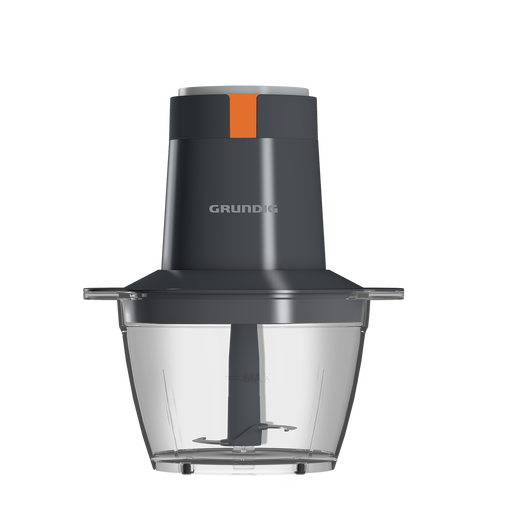
Why it's a good fit: This kitchen chopper combines a powerful 500-watt motor with a compact 0.5-litre glass bowl. It's the right choice for anyone with limited space who doesn't want to compromise on performance for chopping nuts, pesto, or harder vegetables.
The powerful motor prevents overload during more demanding tasks. The robust glass bowl is durable and easy to clean, avoiding the typical problems of plastic models.
High motor power of 500 watts in a space-saving design. The combination of two speed settings and a durable glass bowl offers flexibility and quality.
We have compiled a complete, up-to-date list of products that fully meet these strict selection criteria and German safety regulations.
1. Can a food chopper crush ice? Most household food choppers are not designed for crushing ice cubes or very hard frozen foods. Doing so can damage both the blades and the motor. Always check the manufacturer's instructions. For crushed ice, specialised blenders or ice crushers are the safer choice.
2. How do you clean a food chopper properly and safely? Always unplug the appliance before cleaning. Carefully remove the blade assembly, holding it only by the upper plastic part. The bowl, lid, and blades can usually be cleaned with warm water and dish soap. Many glass bowls and stainless steel blades are dishwasher-safe—refer to the manufacturer's manual for details. The motor unit must never be submerged in water; wipe it only with a damp cloth.
3. What power (wattage) does a good chopper need? The required power depends on the intended use. For soft ingredients like herbs and onions, 200-300 watts is often sufficient. If you regularly plan to process harder foods like nuts, hard cheese, or raw meat (as a substitute for an electric meat grinder for small quantities), a model with 400 watts or more is a more robust and durable choice.