
Lieferung heute & morgen

Qualitätsgarantie

Willkommens-Angebote freischalten: KOSTENLOSE Lieferung | Bis zu 80 % RABATT | Kostenlose 30-Tage-JoyPlus-Testphase
App herunterladen
A food chopper can prepare onions, herbs, garlic, vegetables, fruit and meat much faster. However, appliances vary considerably in terms of batch size, operation, materials and cleaning. The product name alone tells you little about whether a model is right for your household.
If you focus only on wattage or a long list of functions, you can easily overlook important details. Three common buying traps are particularly relevant:
Before buying, think about which foods you regularly prepare and in what quantities. A mini chopper is suitable for garlic, herbs, onions or small portions. An electric chopper with a container of around 0.5 litres is compact and quick to use for everyday kitchen preparation.
For families or several different preparation tasks, a multi-purpose chopper or food processor may be a better choice. Depending on the attachments, these appliances can also slice, grate, knead or emulsify. However, they require more worktop space, accessories and cleaning.
A manual chopper works without electricity and can be used flexibly on the kitchen table or while travelling. However, the quantity and fineness of the cut depend on the pulling force and the number of times it is operated. A classic garlic chopper or small vegetable chopper is therefore mainly intended for smaller portions.
If you want slices rather than chopped ingredients, an egg slicer, vegetable slicer or grater is often more suitable than a kitchen chopper. An appliance with lots of functions is not automatically suitable for every task.
Look for the stated working volume, not just the total capacity. For one person or small side dishes, 0.22 to 0.6 litres may be sufficient. Families benefit from larger bowls or several containers.
The shape also affects the result: In a tall, narrow container, ingredients sit differently against the blades than they do in a wide bowl. For evenly chopped results, cut ingredients into pieces of a similar size beforehand wherever possible, and do not fill the container beyond the maximum level.
Stainless steel blades are common on many electric models. The material and number of blades are not the only factors that matter; their position inside the container is also important. Multiple blade levels can reach different ingredients more effectively, but they do not replace using the correct filling quantity.
Two speed settings and a pulse function give you better control over the consistency. Short pulses are often enough for onions or herbs. When processing meat or harder vegetables, follow the manufacturer’s instructions regarding permitted ingredients and operating times.
Removable blades and dishwasher-safe parts make cleaning easier. The motor housing must never be immersed in water. If the appliance has sharp blades, unplug it before taking it apart and only hold the blades by the handle or designated areas.
On many electric appliances, a safety lock prevents operation if the lid or bowl is not fitted correctly. With manual models, a stable base, secure grip and protected cutting elements are important points to consider. Materials intended for food contact should be clearly approved for the intended use; the relevant manufacturer’s instructions are decisive.
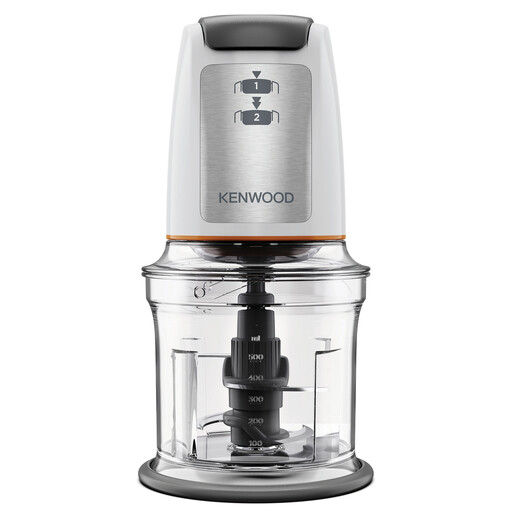
Why this product suits this profile: This electric mini chopper combines a 0.5-litre container with 500 watts and two speed settings. It is a good fit for smaller kitchens and everyday portions.
The clearly stated two speeds and defined capacity make it easier to assess than products with vague advertising claims.
500-watt motor; compact 0.5-litre container; two speed settings.
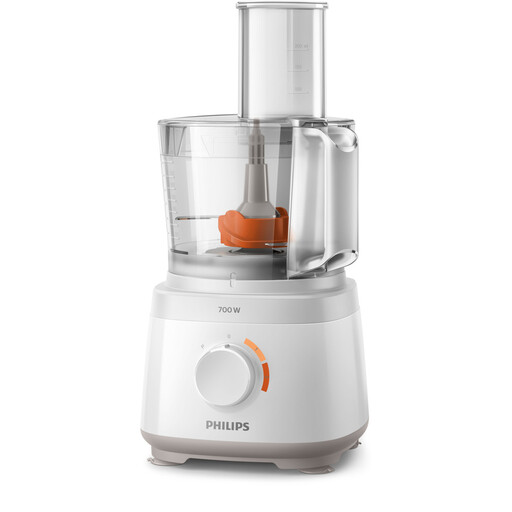
Why this product suits this profile: This food processor offers a 2.1-litre bowl capacity, 1.5-litre working volume, 700 watts, slicing and grating discs, plus a kneading tool.
Stating the bowl capacity and working volume separately makes the usable capacity easier to understand. According to the product information, the removable parts are dishwasher-safe.
700 watts; two speeds plus pulse function; slicing, grating, kneading and chopping.
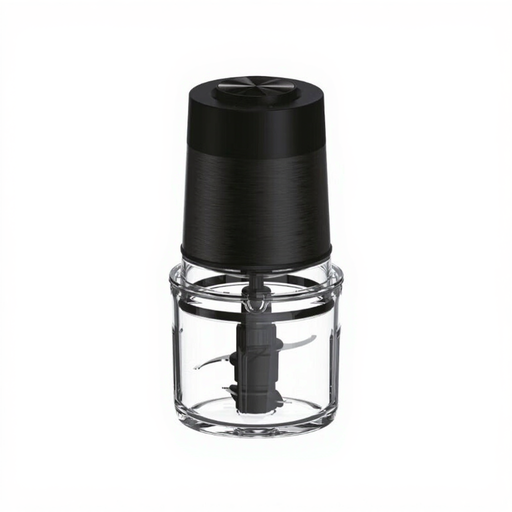
Why this product suits this profile: This food chopper has 550 watts, four stainless steel blades and a 0.5-litre glass container. According to the product description, the container and blades are dishwasher-safe.
The removable components reduce cleaning effort. Two speed settings with a pulse function allow for short processing intervals.
550 watts; four stainless steel blades; glass container with a 0.5-litre capacity.
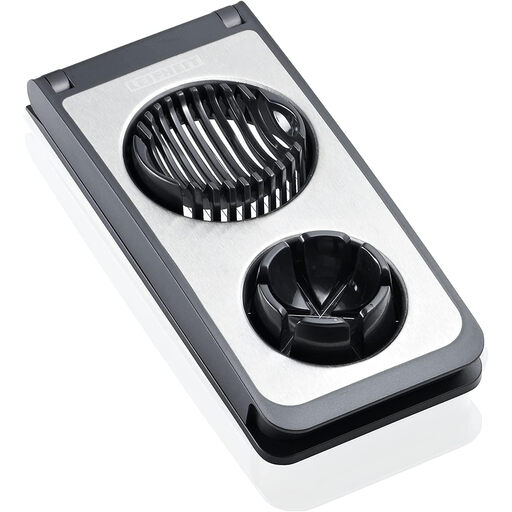
Why this product suits this profile: If you want to cut eggs, kiwis or boiled potatoes into slices, oval pieces or wedges, you do not necessarily need an electric kitchen chopper.
The three intended cutting styles are clearly described. This prevents a specialised manual tool from being confused with a universal food chopper.
Three functions; rust-resistant stainless steel wires; manual operation without a power connection.
We have put together a complete, regularly updated list of products that fully meet these strict selection criteria and the safety regulations applicable in the EU.
For garlic, herbs and small quantities of onions, 0.22 to 0.6 litres is often sufficient. For family portions or several ingredients processed one after another, a larger working volume and wider bowl are more practical. Always check whether the manufacturer’s stated capacity refers to the total or working volume.
Its service life depends on operating times, ingredients, cleaning and storage. Follow the breaks specified in the instructions and do not process any foods that are expressly excluded. Particularly hard ingredients, bones, ice or frozen foods can overload the blades and motor unless the model is approved for them.
With an electric appliance, the main running cost is electricity during its short periods of use. Efficient operating intervals and the right container size are more important than wattage alone. A manual chopper uses no electricity, but requires more physical effort. When considering the total cost, you should also check whether replacement parts such as blades, seals or containers are available.