Which food dehydrator is right for you?

For class organisers preparing lots of apple slices

If you need to prepare a larger quantity, check how many slices will fit on the usable area with space between them, and whether one or more batches will work with your class schedule. Rommelsbacher lists a drying area of 0.6 m² and six stainless steel trays for the DA 900.

For class organisers on a tight schedule

If you’ll be demonstrating the settings and need to check the apple pieces in good time, factor slice thickness and checking into your plans. The Federal Centre for Nutrition notes that drying time depends on the size and thickness of the pieces.

For small cookery classes

For a small demonstration batch with limited worktop space, size, tray area and storage are important considerations. WMF describes the KÜCHENminis Snack to go food dehydrator as compact and lists five drying racks as included.

What should you look for when buying?

What you need What to check before buying Who it matters most to
Enough space for the class quantity Compare the rack dimensions with the quantity of apples you plan to dry, and leave space between the slices. If I want to lay out lots of slices in one batch, the usable area is what matters to me. Around 36% of consumers put having enough space for the class quantity first.
A predictable process Check the temperature control and timer on the specific model, and allow time for slice thickness and checking. If the apple rings are part of a demonstration, I want to be able to check how dry they are rather than rely on the timer alone. Around 29% of consumers prioritise a predictable drying and demonstration process.
Worktop space and storage Compare the appliance and rack dimensions with your worktop and the space available between classes. If I’m only drying a small demonstration batch, the appliance needs to fit during the class and be easy to put away afterwards. Around 21% of consumers prioritise space and storage.
Cleaning and preparing food together Read the material details and cleaning instructions for the exact model, and allow time to clean the racks you use. If several people are handling the food, I want to know how to clean the parts used after the class. Around 14% of consumers put cleaning and handling food prepared together first.

Avoid planning mistakes when dehydrating

  • Assuming the number of racks means there’s enough capacity for your class

    What matters is how many apple slices will fit on the usable area with space between them. A high rack count alone doesn’t tell you whether the planned quantity will fit in one batch.

    Compare the quantity you have in mind with the dimensions of the included racks, and allow for extra batches if needed.

  • Assuming the timer guarantees ready-to-eat apple rings

    The Federal Centre for Nutrition explains that drying time depends on the size and thickness of the pieces. A timer sets the running time, not how dry the food actually is.

    Cut the pieces as evenly as possible, check them while they’re drying, and don’t plan around the timer display alone.

  • Overlooking the extra time needed for your class

    Additional drying cycles and cleaning the racks you’ve used can take extra time.

    Factor batches, running time and cleaning into your class plans, rather than assuming dehydrating will automatically cost less than other preparation methods.

Brands and models to consider

Rommelsbacher

The DA 900 is an option if a larger drying area is important for your class.

  • Rommelsbacher lists a 0.6 m² drying area, six stainless steel trays, an adjustable temperature of 35–75 °C and a 24-hour timer.
  • These manufacturer specifications don’t confirm how many class portions will fit. Remember to consider the space required and cleaning the trays.

WMF

The KÜCHENminis Snack to go food dehydrator could suit demonstration batches and limited worktop space.

  • WMF lists five drying racks, a temperature range of 30–70 °C and a timer of up to 24 hours.
  • The number of racks alone doesn’t tell you whether there’s enough space for the quantity planned for your group.

Stöckli

The Dörrex 0076.72M is a specific model you may want to consider when choosing an appliance.

  • In its test, updated on 9 October 2026, the F.A.Z. Buying Guide named this exact model the winner.
  • The award applies to the model listed and doesn’t tell you whether its features and capacity are right for a particular class size. Check which version of the model is on offer.

Severin

The OD 2940 is relevant to a demonstration focused on apples.

  • Severin lists fruit, vegetables and herbs as suitable foods and offers spare parts for the OD 2940.
  • For your class, check how much will fit on the racks and whether any spare parts you might need are available.

Food dehydrators at Joybuy

These appliances could suit different class plans, from models with several drying racks and adjustable running times to compact designs with temperature control.
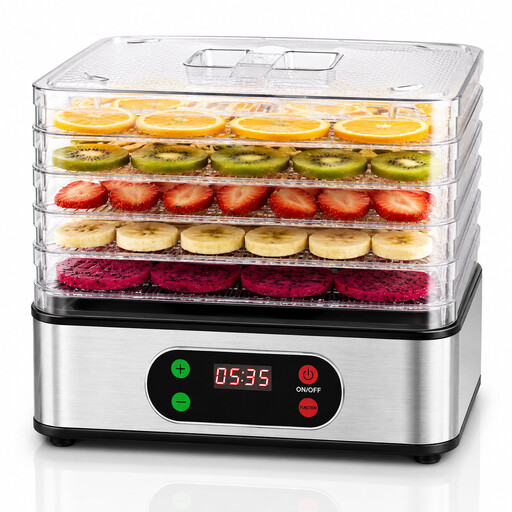
Food dehydrator with LED display and 35–70 °C temperature control

Food dehydrator with LED display, 35–70 °C and 0.5–72-hour timer

A possible choice if you want to set the temperature and running time for a planned drying cycle.

The product title lists 35–70 °C, a timer from 0.5–72 hours in 30-minute increments and 350 W.

View at Joybuy

Havenwell food dehydrator with ten stainless steel trays

Havenwell food dehydrator with 10 stainless steel trays

The number of trays may be useful when planning several drying areas; check their dimensions against the quantity you need for your class.

The product title lists 10 stainless steel trays, variable temperature control, a 48-hour timer, 10 programmes and 850 W.

View at Joybuy
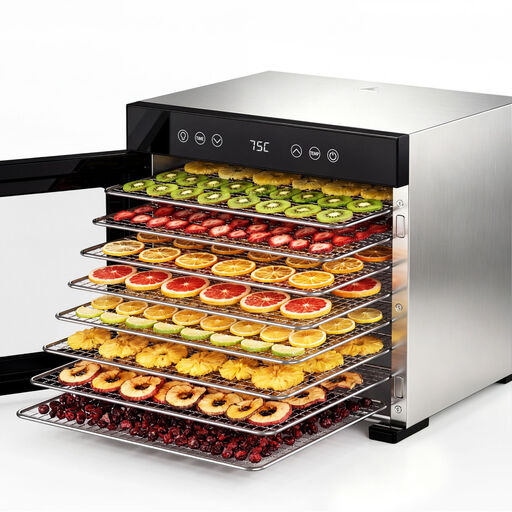
Havenwell food dehydrator with eight stainless steel drying racks

Havenwell food dehydrator with 8 stainless steel drying racks

The eight racks give you several levels to plan around; compare the usable area with the quantity you need for each batch.

The product title lists 35–85 °C, a 48-hour timer, 650 W, a touch display and interior lighting.

View at Joybuy
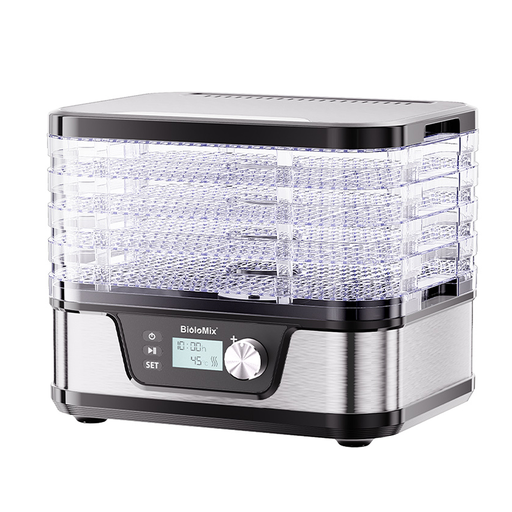
BioloMix BFD1300 with five drying trays

BioloMix BFD1300 with 5 drying trays

This model could suit a setup using several trays; also consider how much time you have for the planned drying cycles.

The product title lists an adjustable temperature range of 35–75 °C and a 24-hour timer.

View at Joybuy

Frequently asked questions about dehydrating apple slices

How can I tell when apple rings are ready?

The Federal Centre for Nutrition describes them as slightly pliable, but with no juice coming out when pressed firmly. Check the pieces while they’re drying, as the right amount of time depends, among other things, on their thickness and size.

Do all the apple rings need to be ready during the class?

No. For a short demonstration, you could use rings you prepared earlier: according to the Federal Centre for Nutrition, size and thickness affect drying time. A timer sets the running time, but doesn’t show how dry the food actually is.

What should I bear in mind if children are attending the class?

Follow the instructions for the specific model. According to the instructions for the WMF KÜCHENminis, children aged eight and over may use the appliance only under supervision or after being instructed in its safe use. Children must not play with the appliance.

Who should I contact if the appliance is faulty?

You should make a statutory warranty claim to the seller; a manufacturer’s guarantee is different and is voluntary. The Consumer Advice Centre explains the distinction. You can also check the relevant manufacturer’s spare parts range for replacement racks or other parts.

What hygiene and allergen rules apply to a cookery class?

That depends on how the class is run. The European Commission sets out basic hygiene requirements for food businesses; the term ‘weekend cookery class’ alone doesn’t establish whether those requirements apply. According to information from Lebensmittelklarheit, intentionally added allergens that must be declared are relevant when food is offered unpackaged as part of a food business. This doesn’t mean the same commercial requirements apply to a purely private class.