
Lieferung heute & morgen

Qualitätsgarantie

Willkommens-Angebote freischalten: KOSTENLOSE Lieferung | Bis zu 80 % RABATT | Kostenlose 30-Tage-JoyPlus-Testphase
App herunterladen
A food dehydrator can preserve fruit, vegetables, herbs, meat and even homemade pet treats while taking up very little space. In practice, however, wattage and the number of trays are not the only factors that determine whether a model is suitable. Uneven drying, a timer that is too short or trays that are difficult to clean often mean that the appliance is barely used after just a few sessions.
This guide explains which specifications are relevant before buying an electric food dehydrator and which solutions suit different households.
The number of trays alone says little about the actual usable area. What matters is the size of the drying racks, the space between the levels and whether the trays can be loaded evenly. Very small trays can be impractical for larger slices of fruit or strips of meat.
A food dehydrator with temperature control should distribute warm air as evenly as possible across all levels. Otherwise, the upper and lower trays may dry at different speeds. An adjustable temperature is therefore only useful if the appliance also has a well-designed circulating-air system.
Depending on their water content and thickness, foods require different drying times. If you can only set a short timer, you will often have to restart the process manually. A food dehydrator with a timer and a longer run time is better suited to extended drying cycles, provided the instruction manual recommends it for the intended application.
Lower temperatures may be sufficient for herbs and thin slices of fruit. Vegetables, mushrooms and meat have different requirements. An electric food dehydrator with a clearly specified temperature range offers more flexibility than a model with just one fixed heat setting.
The WOOX 5-Tray Food Dehydrator is specified as offering digital settings from 35 to 75 °C. This allows you to set different drying profiles. The precise temperature and duration should always be selected based on the manufacturer's instructions and current food hygiene recommendations.
Important: drying meat does not automatically guarantee safe reduction of harmful bacteria. When making beef jerky at home, you should consider suitable cuts of meat, hygienic preparation, sufficient heating and safe storage. The same basic hygiene principles apply to a food dehydrator for dog food. Homemade treats should be allowed to cool completely and stored in a dry place.
A timer is particularly useful if you do not want to supervise the appliance constantly. Look for:
According to the product information, the WOOX food dehydrator has a timer ranging from 30 minutes to 72 hours. This covers both short herb-drying cycles and longer applications. Automatic switch-off should not be considered a substitute for checking the food being dried.
360-degree air circulation can help distribute heat more evenly throughout the interior. Even so, food should not be packed too closely together, and the manufacturer's instructions on positioning should be followed.
Noise levels also matter when using the appliance in the kitchen, utility room or living area. The WOOX model is specified as producing an operating noise level of no more than 45 dB. This is the advertised figure and may be perceived differently depending on where the appliance is placed and the surrounding environment.
Removable, easy-to-clean parts reduce the effort required for maintenance. The WOOX model is described as having dishwasher-safe components and an additional odour-filter tray. Even so, you should check before buying which parts are actually suitable for the dishwasher.
The following products meet various requirements for preserving food. Only the first product is a food dehydrator; the other items are designed for dry, organised storage of the dehydrated food.
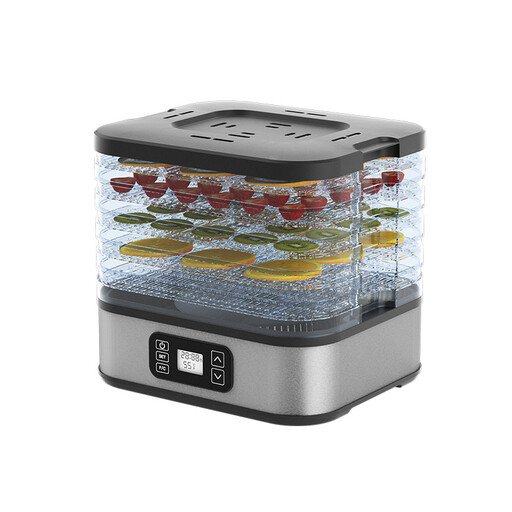
Why this product suits this profile: This model combines five removable levels with digital temperature selection, making it suitable for households that want to try drying a range of different foods.
The 30-minute to 72-hour timer reduces the need for manual restarts. The specified tray dimensions of 280 × 235 mm make the usable area clear.
35–75 °C temperature range, five removable drying trays and 360-degree air circulation according to the product information.
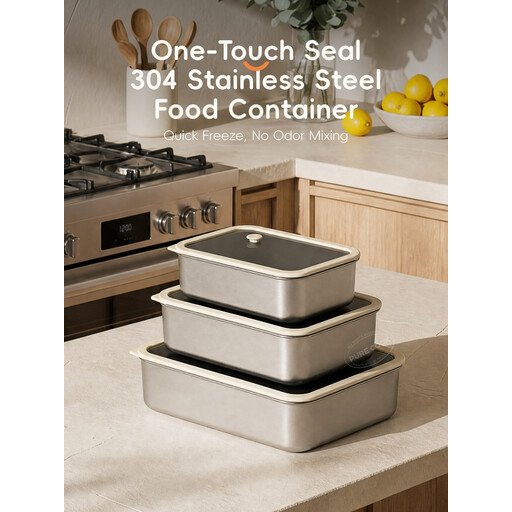
Why this product suits this profile: These containers complement a food dehydrator when dried foods need to be stored separately, protected and in a space-saving way.
The containers do not rely on short-term plastic packaging. The glass lid with silicone ring provides clearly visible, airtight storage.
304 stainless steel body, three sizes of 1,000, 1,800 and 3,000 ml, plus a stackable and nestable design.
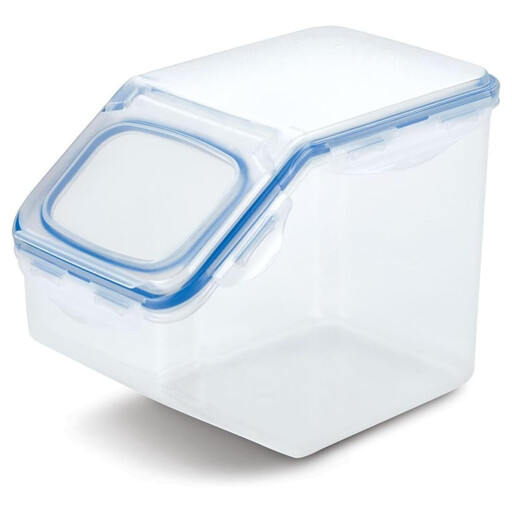
Why this product suits this profile: The transparent box is suitable for larger quantities of dry ingredients or homemade dehydrated food, particularly when pet food and kitchen supplies need to be organised separately.
The contents remain visible through the transparent container. The lid has safety clips and a double seal; according to the product information, the box is not intended for liquids or use in the microwave.
5-litre capacity, transparent polypropylene, flip-top lid and dishwasher cleaning according to the product description.
We have put together a complete, regularly updated list of products that fully meet these strict selection criteria and the safety regulations applicable in the EU.
Consumption depends on the power rating, run time and selected temperature. A longer drying cycle uses correspondingly more energy than a short session. For a realistic estimate, multiply the electrical power in kilowatts by the run time in hours. The actual cost is based on this consumption and your electricity tariff.
This depends on the food, its residual moisture content, the packaging and the storage conditions. Fruit, vegetables, herbs and meat should be completely cool and dry before being stored. There is no universally reliable shelf-life period; check the dehydrated food regularly and dispose of it if you notice an unusual smell, mould or moisture.
A food dehydrator with 5 trays may be suitable for normal household quantities and several small batches. Whether the capacity is sufficient depends on the dimensions of the racks and the foods being used. For larger harvests, compare not only the number of trays but also the usable area and maximum run time.