Which buying criteria matter for a class?
First, check how many slices you can place on each batch with space between them. Then consider scheduling, counter and storage space, and the effort involved in cleaning and finding replacement parts. The Federal Centre for Nutrition points out that airflow and slice thickness affect the drying process.
| Consideration |
What to look for when buying |
Who is it most relevant to? |
| Batch size and airflow |
Compare the usable area and tray dimensions with the way you plan to cut the fruit; allow space between slices in a single layer. |
If I need lots of slices for a class on a set date, I want to be able to arrange them loosely on the trays without losing track of the planned quantity. Around 36% of consumers put a large class batch first. |
| Preparing for a class |
Check the temperature range and timer; plan a trial run with visual and touch checks. |
When the class date is fixed, I need a schedule that allows for the timer and a follow-up check. Around 29% of consumers prioritise scheduling. |
| Counter and storage space |
Check the specific model’s external dimensions and storage requirements against the batch size you have in mind. |
When storage space is limited, I want to know whether I can put the appliance away between classes. Around 21% of consumers prioritise limited counter and storage space. |
| Cleaning and ongoing upkeep |
Check the cleaning instructions and whether replacement trays are available for the specific model. |
For regular classes, I want to be able to clean the trays easily and check that spare parts are available for the model. Around 14% of consumers prioritise care and ongoing upkeep. |
Joybuy products for citrus slices and class batches
This selection from Joybuy includes food dehydrators for fruit with different numbers of trays and timer settings, so you can compare the appliances against the quantity you plan to prepare and your schedule.
 No image available
Havenwell Stainless Steel Dehydrator with 10 stainless steel trays
The ten trays give you a useful starting point when planning a larger batch of fruit. The number of slices that will fit also depends on how you cut them and the space between them.
10 stainless steel trays; variable temperature control; timer up to 48 hours; 10 programmes; 850 W.
View at Joybuy
 No image available
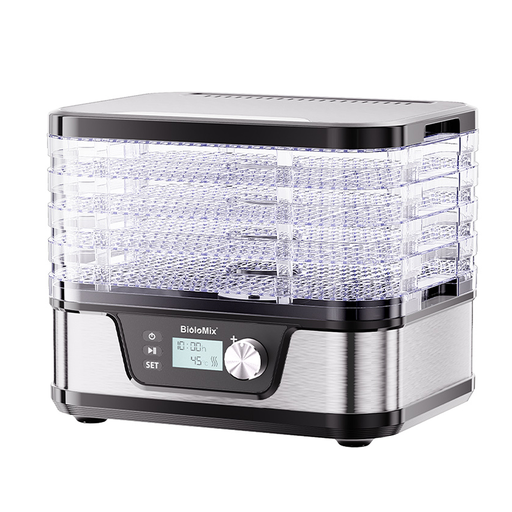
BioloMix BFD1300 food dehydrator with five trays
The five trays give you an idea of the capacity for a smaller batch. Consistent slice thickness and enough space between slices are still important when planning.
Five trays; temperature range of 35–75 °C; adjustable timer up to 24 hours; 360° hot air circulation.
View at Joybuy
 No image available
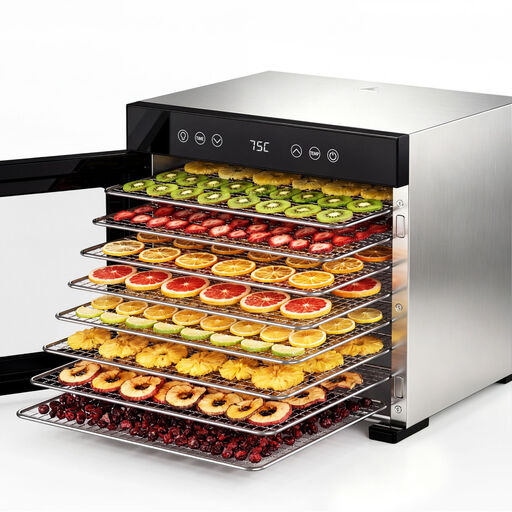
Havenwell Food Dehydrator with 8 stainless steel drying racks
Eight drying racks give you a useful guide when planning batches. Also check how many slices will fit on each rack with enough space between them.
Eight stainless steel drying racks; 650 W; temperature range of 35–85 °C; timer up to 48 hours; touch display and interior light.
View at Joybuy
 No image available
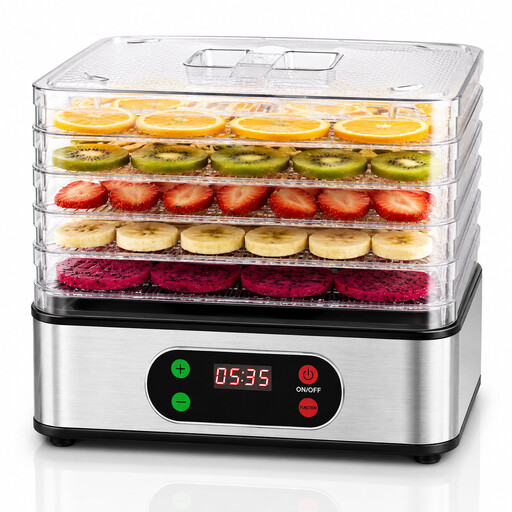
Food dehydrator with LED display
Described as compact, this appliance could suit smaller quantities and limited storage space. Consistent slice thickness and a trial run will help you plan the drying time.
Temperature range of 35–70 °C; timer from 0.5 to 72 hours in 30-minute increments; 350 W.
View at Joybuy
Frequently asked questions about dehydrating food for a cookery class
How should I plan a trial run with citrus slices?
Before the class, test the slice thickness you actually plan to use and check the slices as they dry. Rommelsbacher’s drying guide gives a recipe using 5–7 mm-thick slices, 55–60 °C and 5–9 hours, with repeated visual and touch checks. These are the manufacturer’s recipe specifications, not guaranteed timings for other appliances or slice thicknesses. The Federal Centre for Nutrition notes that drying time depends on the size and thickness of the food.
Can I use dried citrus slices with the peel in a class?
If you’ll be eating the peel or using it in cooking, the consumer advice centre recommends organic citrus fruit. Conventionally grown fruit labelled ‘untreated’ may still have been treated with pesticides while growing. Wash the fruit before preparing it; there’s no proven evidence that dehydrating removes residues.
How should I store prepared slices?
Check the slices as they dry. According to the Federal Centre for Nutrition, fruit is ready when no juice comes out under firm pressure. Rommelsbacher recommends letting food dry completely and cool before packing it, and using clean, airtight containers. Don’t treat damp or mouldy food as suitable for long-term storage.
What requirements apply to the appliance’s trays in Germany?
Materials and articles intended to come into contact with food on the EU market are subject to Regulation (EC) No 1935/2004, which sets out basic requirements for safety and inertness. Check the information about food-contact parts in the specific product listing; mentioning a model in this article is not an individual certificate of conformity.


