What should you look for when choosing one?
First, work out how many pear slices you want to dry in each batch and where you can safely keep the appliance during your renovation. This will make it easier to decide which controls matter and whether a separate appliance is worthwhile for the way you plan to use it.
| Consideration |
What to check before buying |
Who should pay particular attention |
| Capacity per batch |
Check the usable drying area, how many trays are actually included and how much space you’ll need to clean them. |
If I want to dry several portions of pear slices, I need to know how much will actually fit on the trays. For around 36% of consumers, batch size is the main consideration. |
| Space for use and storage |
Consider the appliance’s dimensions, cable routing and the safe clearance from other objects specified in the instructions. |
During the renovation, I want to know whether I can keep the appliance somewhere clean and safe, and put it away afterwards. Available space is the priority for around 29% of consumers. |
| Controls and cleaning |
Check the temperature range, timer and cleaning instructions for the trays and appliance base separately. |
If I need to fit the drying process around other jobs, settings that are easy to plan and straightforward cleaning are important to me. Ease of use comes first for around 21% of consumers. |
| Buying a new appliance or using the oven |
Weigh up how often you’ll use it, whether the oven is available and the energy use for batches of a similar size. |
For one small batch, I want to know whether my existing oven will do; if I use it often, a dedicated appliance may be more practical. For around 14% of consumers, this cost comparison is the main consideration. |
Food dehydrators at Joybuy
The Joybuy products below are food dehydrators for fruit and other foods. Compare the listed number of trays, temperature ranges and timer settings with the quantity of pears you want to dry and the space you have available.
 No image available
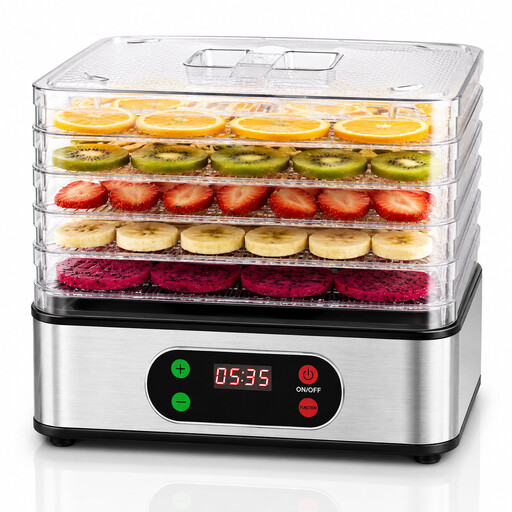
Food dehydrator with LED display, 35–70 °C and timer
Temperature control and a timer are useful for planning how long to dry pear slices.
The product name lists a temperature range of 35–70 °C, a timer from 0.5 to 72 hours in 30-minute increments, 350 W and BPA-free materials.
View at Joybuy
 No image available
Havenwell stainless steel food dehydrator with 10 stainless steel trays
The ten trays may suit anyone who wants to spread pear slices across several levels; check that you have enough space for the appliance.
The product name lists a timer of up to 48 hours, ten programmes and 850 W.
View at Joybuy
 No image available
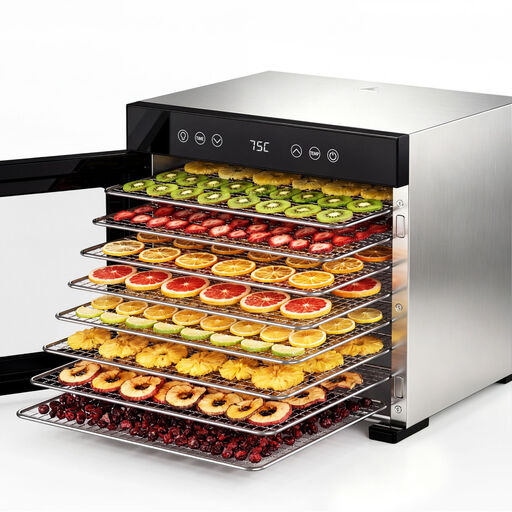
Havenwell food dehydrator with 8 stainless steel racks
The eight racks and listed temperature settings are useful when planning how to dry pear slices.
The product name lists a temperature range of 35–85 °C, a timer of up to 48 hours, 650 W, a touch display and an interior light.
View at Joybuy
 No image available
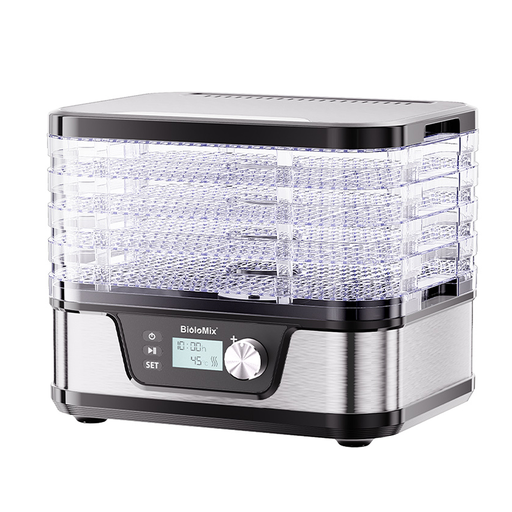
BioloMix BFD1300 food dehydrator with 5 racks
The product name describes a food dehydrator with five racks, making it a useful comparison for smaller batches of pears.
Listed features include a temperature range of 35–75 °C, a timer of up to 24 hours and 360° hot-air circulation.
View at Joybuy
Frequently asked questions
How do I prepare pears for drying, and how can I tell when they’re ready?
Wash the pears, remove the cores and cut them into thin, evenly sized slices. The Bundeszentrum für Ernährung recommends checking how dry they are: the pears should still be slightly pliable and shouldn’t release any juice when pressed firmly. Also follow the appliance instructions.
Can I run a food dehydrator during a kitchen renovation?
Only use it in a suitable, clean place and according to the instructions for the specific model. The Stöckli Dörrex instructions warn that surfaces can get hot and that you shouldn’t place tea towels or flammable objects over the appliance. A dusty work area isn’t suitable for food left uncovered.
How should I store dried pears?
Store them in a well-sealed container, as the Verbraucherzentrale recommends for dried fruit. First, check that the slices are dry enough, as any remaining moisture can affect how long they keep.
Who should I contact if my food dehydrator is faulty?
The retailer, not the manufacturer, is generally responsible for putting a fault right, as the Verbraucherzentrale explains. This is separate from a voluntary manufacturer’s guarantee, which is subject to its own terms and conditions.
What do the CE mark and the crossed-out wheeled bin symbol mean?
For electrical appliances covered by the relevant EU product rules, the manufacturer uses the required CE marking to declare that the product meets those requirements. As the European Union explains, it isn’t an independent product test. Electrical appliances that have reached the end of their life must also be collected separately, rather than put in mixed household waste.


