
Lieferung heute & morgen

Qualitätsgarantie

Willkommens-Angebote freischalten: KOSTENLOSE Lieferung | Bis zu 80 % RABATT | Kostenlose 30-Tage-JoyPlus-Testphase
App herunterladen
A food mixer with a bowl can make mixing, whisking and kneading much easier. However, a high wattage does not automatically mean the machine is right for you. For home bakers, families and beginners, the actual dough capacity, design, accessories and cleaning requirements are especially important.
Joybuy’s product recommendation team therefore filters the relevant information from product descriptions and presents it clearly for comparison. This helps you avoid common buying mistakes without relying solely on marketing claims.
Some appliances prominently advertise their peak power. However, this does not necessarily indicate the power at which the motor operates continuously. For example, the Monsga SM100 is listed with 1,000 watts peak power and 600 watts rated power. For making your decision, the rated power combined with the permitted dough quantity is more informative.
A food mixer with 1,600 watts is not automatically suitable for every type of dough, either. Yeast dough puts different demands on the motor than cream or runny cake batter. You should therefore look for information on the maximum dough capacity and any guidance on the recommended operating time.
A 6-litre bowl does not automatically hold 6 litres of dough. Manufacturers often distinguish between the total capacity and the recommended working quantity. The Monsga SM100, for example, is listed with a total capacity of 6 litres but a recommended usable capacity of 5 litres. The permitted quantity is usually considerably lower for bread dough.
A food mixer with a stainless steel bowl should also stand securely on the worktop. Non-slip feet, a lockable bowl base or a sturdy stand are more important when working with firm dough than an eye-catching exterior design.
For a food mixer for baking, three attachments are particularly important:
A stand blender with a blade attachment, on the other hand, is primarily designed for smoothies, soups or chopping. It cannot fully replace a food mixer. A hand mixer is also flexible and space-saving, but it requires a separate bowl and must be guided while operating.
Several speed settings make it easier to adjust the machine to different ingredients. A low setting reduces splashing when you start, while higher settings are suitable for whisking. A pulse function can deliver short, powerful bursts, but it should not be confused with continuous high-performance operation.
For a dough mixer, you should also consider a suitable dough hook, a sturdy drive system and clear manufacturer information about the maximum dough quantity. When working with very firm bread dough, follow the operating instructions and do not run the machine for longer than recommended.
A bowl of around 4 litres is often sufficient for smaller households. Families or users who regularly bake bread, pizza or several cakes may benefit from a capacity of 5 to 7 litres. However, size alone says little about the minimum quantity: with some large bowls, a small portion may not fully reach the tool’s mixing area.
A tilt-head design makes it easier to change the bowl and attachments. A front-mounted control can be practical beneath low wall cupboards. Before buying, check the dimensions with the head raised, as well as the storage space needed for the accessories.
A stainless steel bowl is robust, largely odour-resistant and usually easy to clean. Whether the accessories are dishwasher-safe should be stated explicitly in the product data. The motor housing must never be immersed in water and should be cleaned with a damp cloth.
Look for clear safety information such as overload and overheating protection, a head or bowl lock, and details about the electrical specification. For Germany, information on the mains voltage, plug and responsible person in the EU is particularly relevant. A CE mark alone is no substitute for checking the operating instructions and product information.
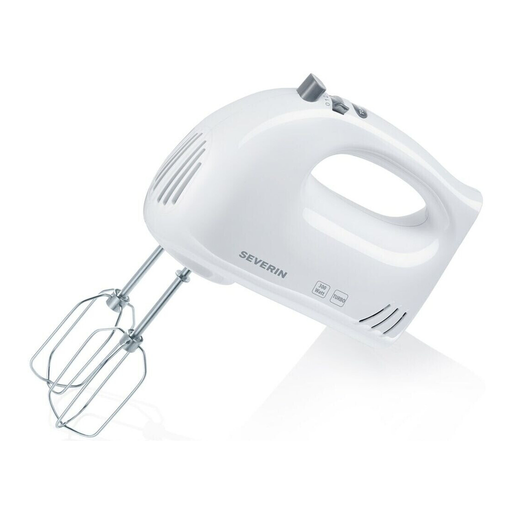
Why this product suits the profile: This compact hand mixer is suitable for small quantities, occasional baking and households with limited storage space.
The specifications state 300 watts, five speed settings plus Turbo, as well as separate beaters and dough hooks. The power is not promoted alongside an oversized bowl.
Weight of 798 grams, ergonomic handle and removable stainless steel attachments.

Why this product suits the profile: This machine is aimed at users who bake frequently and want integrated functions as well as the option to use different bowl sizes.
The product data lists 1,200 watts, a 7-litre bowl and a 5-litre bowl, as well as specific attachments for kneading, mixing and whisking.
Integrated EasyWeigh scales, variable speed control and accessories including a Flexi beater and ThermoResist glass bowl.
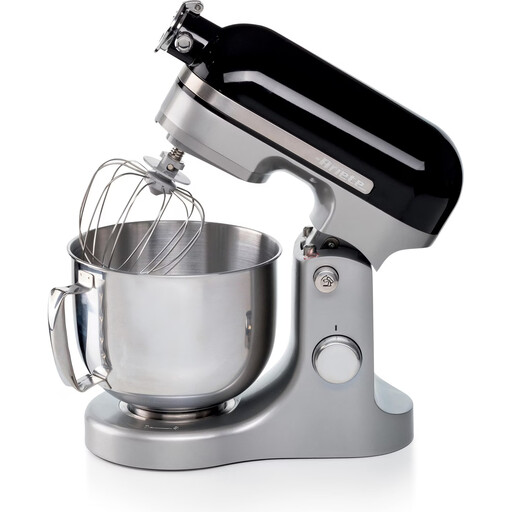
Why this product suits the profile: For regular bread, pizza and cake doughs, this model offers a large bowl and a wide range of manually selectable settings.
Alongside 1,600 watts, the specifications state a maximum dough quantity of 1.40 kilograms, a bowl capacity of 5.5 litres and 11 speed settings.
3D planetary mixing system, stainless steel bowl, dough hook, whisk, flat beater and dishwasher-safe parts.
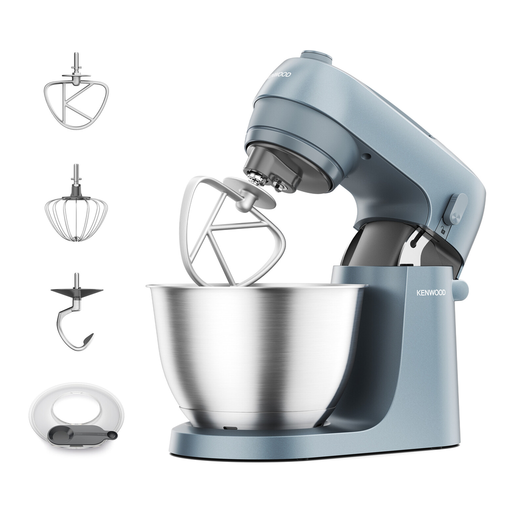
Why this product suits the profile: Its compact height makes it suitable for smaller kitchens, without sacrificing a fixed bowl and essential baking attachments.
The height of 30 centimetres and the 4-litre stainless steel bowl are clearly stated. This makes it easier to plan the required worktop and storage space.
800-watt motor, six settings plus pulse function, metal housing, K-beater, whisk and dough hook.
Electricity consumption depends on the actual power draw and operating time. An appliance with a higher wattage may use less energy during a short session than a less powerful model that runs for considerably longer. For household use, the combination of recipe quantity, operating time and motor power is therefore what matters.
Clean the bowl and attachments immediately after use. Dried-on dough makes cleaning more time-consuming. Dishwasher-safe parts can save time, while coated tools should be treated according to the manufacturer’s instructions. Always unplug the appliance before changing attachments or cleaning it.
We have put together a complete, regularly updated list of products that fully meet these strict selection criteria and the safety regulations applicable in the EU.
4 litres is often enough for smaller quantities. Families and regular bread bakers may prefer 5 to 7 litres. The maximum dough quantity specified by the manufacturer is also important, not just the bowl capacity.
Generally, yes, provided the dough hook is designed for the model and you stay within the permitted dough quantity. You should usually process firm yeast dough at a low or medium speed and follow the recommended operating time.
A hand mixer is a sensible choice if you have limited space, prepare smaller portions and want the flexibility to use the appliance with different bowls. A stand mixer is more practical if you regularly knead larger quantities or want both hands free while mixing.