
Lieferung heute & morgen

Qualitätsgarantie

Willkommens-Angebote freischalten: KOSTENLOSE Lieferung | Bis zu 80 % RABATT | Kostenlose 30-Tage-JoyPlus-Testphase
App herunterladen
Preparing fresh and varied meals can be a challenge, especially when time and kitchen space are limited. Juggling different appliances for different tasks—from smoothie makers to choppers—takes up valuable storage and complicates your workflow. An all-in-one kitchen machine that combines multiple functions can be a practical solution.
This article serves as your guide. We will introduce various models with different specialities and explain the key features to consider when making your choice. Our goal is to provide you with a solid basis for an informed decision, helping you find the perfect appliance for your needs.
To find the right appliance for your needs, it's helpful to understand a few technical aspects. The following points are important when deciding on a multi-functional kitchen machine.
The power of a motor, measured in Watts (W), is an indicator of the appliance's ability to handle demanding tasks. While a moderate power level is often sufficient for blending soft fruits or chopping vegetables, kneading heavy dough or crushing ice requires a more powerful motor. Models with variable speed settings or a pulse function offer additional control when processing different ingredients. A good all-in-one kitchen machine should therefore offer performance that matches your most common cooking applications.
The true value of a multi-functional kitchen machine lies in its versatility, which is largely determined by its accessories. Pay attention to which attachments are included:
The capacity of the work bowls (measured in litres) should match the size of your household. For families, larger bowls of 1.5 litres or more are often more practical, while more compact models may suffice for individuals or couples.
The daily usability of a kitchen appliance heavily depends on how easy it is to clean. Check if the removable parts, such as the bowl, lid, and attachments, are marked as dishwasher-safe. This significantly reduces manual washing. Intuitive operation, a stable design, and easy assembly of accessories also contribute to a positive user experience.
Based on the criteria mentioned, we have compiled a selection of appliances that cover a range of needs—from compact efficiency to comprehensive versatility.

What makes this appliance stand out: The Kenwood MultiPro Go is designed for maximum space-saving without compromising on the core functions of a food processor. Its most notable feature is the Express Serve attachment, which allows you to slice and grate ingredients directly into a bowl or pan. This keeps the main bowl clean and minimises washing up.
Features:
Who it's for: This model is an excellent choice for individuals with limited kitchen space, such as in city apartments or smaller households. It is suitable for users who want a straightforward and fast helper for daily meal prep, especially for slicing and grating vegetables.
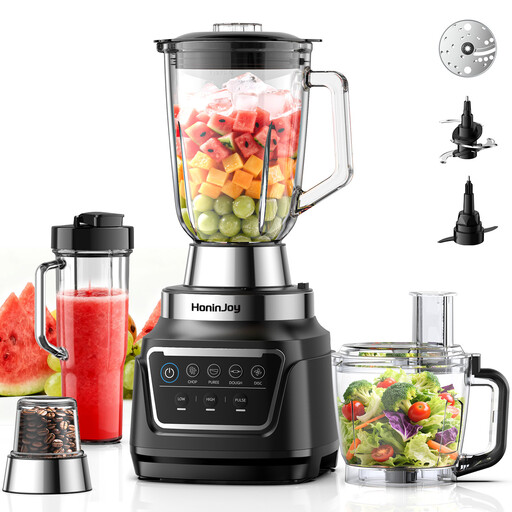
What makes this appliance stand out: This model from HoninJoy is designed as a comprehensive all-in-one kitchen machine. With a powerful motor and a wide range of accessories, it covers almost every task—from blending and chopping to grinding and kneading. The preset programs (CHOP/PUREE/DOUGH/DISC) further simplify operation.
Features:
Who it's for: This appliance is aimed at home cooks and families looking for a single, powerful machine for a variety of tasks. Anyone who regularly makes smoothies, bakes, prepares vegetables for salads, and even wants to grind coffee or spices will find a suitable all-in-one solution here.
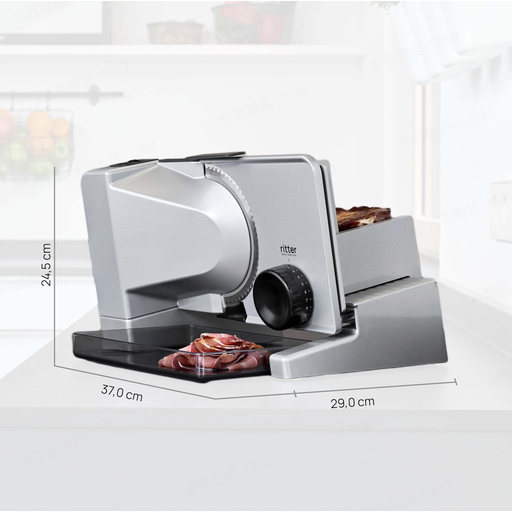
What makes this appliance stand out: The ritter serano? is not a classic blender and chopper but a specialised, full-metal food slicer. It focuses on a single task: precision slicing. With its electronic speed control and two different blades (serrated and smooth), it delivers exact cuts from paper-thin to 23 mm thick.
Features:
Who it's for: This appliance is for users who place the highest value on perfect, uniform slices—whether for charcuterie boards, carpaccio, or thinly sliced vegetables. It is a complementary tool for kitchens where precision slicing is a higher priority than multi-functional processing.
If the models presented here don't quite meet your expectations or if you are specifically interested in specialised slicing devices, you can find more alternatives in our broader category.
Discover More Kitchen Slicers Here
1. What is the difference between a kitchen machine and a food processor? The term "kitchen machine" is often used as an umbrella term. Classic kitchen machines (like those with a tilting head) are primarily designed for mixing and kneading dough. A "food processor" (or compact kitchen machine) is typically specialised for chopping, slicing, and grating ingredients. Many modern appliances, like those featured here, combine functions from both categories.
2. How many watts should a good food processor with a blender have? For general tasks like blending smoothies or chopping vegetables, 500–700 watts is often sufficient. If you plan to regularly knead heavy dough or crush ice, a model with 1000 watts or more is a worthwhile choice, as it offers more power reserves and protects the motor.
3. Can you knead dough with a food processor? Yes, many multi-functional food processors are suitable for dough preparation, provided a corresponding dough hook is included. The ability to handle heavy yeast or bread doughs depends heavily on the motor power and the stability of the appliance. Check the product description to ensure the model is designed for the type of dough you want to make.