
Lieferung heute & morgen

Qualitätsgarantie

Willkommens-Angebote freischalten: KOSTENLOSE Lieferung | Bis zu 80 % RABATT | Kostenlose 30-Tage-JoyPlus-Testphase
App herunterladen
A high-quality food processor can significantly simplify food preparation, from kneading dough to making smoothies. However, the market is flooded with appliances whose marketing promises often don't match their actual performance. Many buyers quickly discover their new device is noisy, fails on heavy-duty tasks, or has accessories that wear out quickly. As your Joybuy Product Recommendation Officer, I'll help you spot these pitfalls and make an informed decision.
Before we dive into the important features, let's look at the typical marketing traps that often lead to disappointment.
To avoid a bad purchase, you should focus on objective and verifiable criteria. The following three aspects are crucial for the longevity and functionality of your food processor.
The heart of any food processor is its motor and gearbox unit. For demanding tasks like kneading heavy bread or pizza dough, a machine with a robust planetary mixing action is essential. This system ensures that the mixing attachment not only rotates on its own axis but also moves along the edge of the bowl, incorporating all ingredients evenly. Such a stand mixer or dough mixer requires a gearbox that transfers the motor's power efficiently and without excessive heat buildup. Look for models with metal gearboxes, as they offer greater durability than plastic versions.
The quality of the components that come into direct contact with food is non-negotiable.
The size of the mixing bowl should suit your household. For a family of four that regularly bakes bread or cakes, a capacity of 4.5 to 6 litres is a good benchmark. For occasional smoothies or small quantities, a compact countertop blender or smoothie maker with a 1 to 1.5-litre capacity will suffice. Stability is equally important. Machines generate considerable force, especially when processing heavy doughs. A substantial unit weight and non-slip suction feet are crucial to ensure the appliance remains stable on the countertop and doesn't "walk."
Instead of making a one-size-fits-all recommendation, we have selected models tailored to specific user profiles.
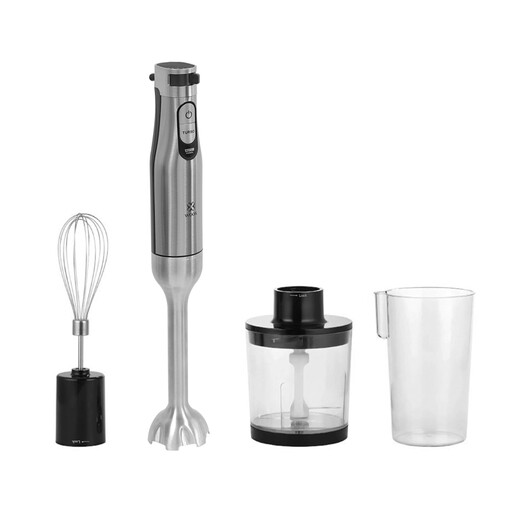
Why It's a Good Fit: Ideal for users who need a flexible tool for quick tasks like puréeing soups, preparing baby food, or blending smoothies directly in the pot or cup. It's space-saving and ready to use instantly.
This set avoids the "all-in-one" trap by focusing on clearly defined hand blender functions. It doesn't try to replace a heavy-duty stand mixer but offers solid attachments for puréeing, chopping, and whisking.
The 1200-watt motor delivers ample power for its intended tasks. The accessories, including blades and attachments, are made of 304 stainless steel, ensuring good durability and food safety.
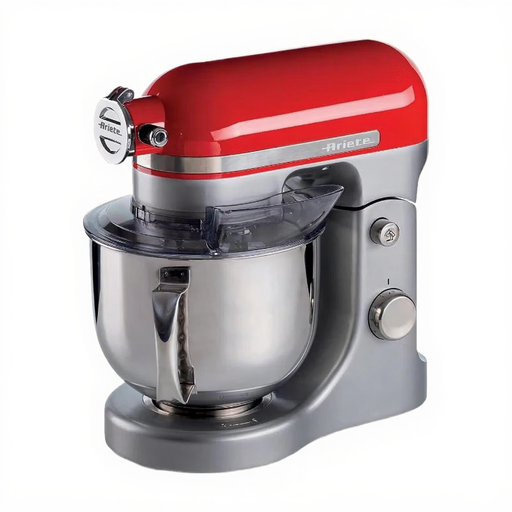
Why It's a Good Fit: Designed for home bakers who regularly prepare heavy doughs for bread and pizza, as well as lighter batters for cakes. Its high power and large volume are tailored for demanding baking projects.
This model focuses on its core competency as a kneading and mixing machine. It bypasses the wattage myth by combining its high 1600-watt power with a robust mixing system that effectively translates that power into action.
The large 5.5-litre stainless steel bowl and 11 speed settings offer flexibility and capacity for large batches. The three specialised attachments (dough hook, whisk, beater) are optimised for their respective tasks.

Why It's a Good Fit: A solution for families who want a single, powerful appliance for a wide range of tasks, including kneading, blending, chopping, and even meat grinding.
While this model is multifunctional, it avoids the trap of low-quality attachments by integrating dedicated, robust components like a meat grinder and a blender jar that are built for performance.
The 1300-watt motor provides the necessary power for all functions. The combination of a food processor with a meat grinder and a blender in one unit, complete with a 6-litre stainless steel bowl, makes it a true workhorse for the family kitchen.
We have compiled a complete, up-to-date list of products that fully meet these strict selection criteria and relevant safety standards.
1. How many watts does a good food processor really need? The raw wattage is not the most important criterion. More crucial are the quality of the motor and the efficiency of the gearbox. For most household applications, including kneading dough, a well-engineered machine with a power rating between 800 and 1200 watts is typically more than sufficient. Focus on features like a planetary mixing action and a metal gearbox rather than just a high wattage number.
2. Can I knead heavy doughs like bread or pizza dough in any food processor? No. Only kitchen machines explicitly designed as a dough mixer or stand mixer with a robust dough hook and a planetary mixing action are suitable for heavy doughs. Simple hand mixers, countertop blenders, or food processor models are not designed for this task and can be damaged by the high strain.
3. What's the most effective way to clean my food processor and its accessories? Before purchasing, check which parts are dishwasher-safe. Typically, the stainless steel bowl and most accessories like whisks, dough hooks, and beaters can be cleaned in the top rack of the dishwasher. The motor unit itself must never be submerged in water; instead, wipe it down with a damp cloth only.
Sincerely, Your Joybuy Product Recommendation Officer