
Lieferung heute & morgen

Qualitätsgarantie

Willkommens-Angebote freischalten: KOSTENLOSE Lieferung | Bis zu 80 % RABATT | Kostenlose 30-Tage-JoyPlus-Testphase
App herunterladen
Getting a new food processor can make preparing meals significantly easier. But the market is crowded and full of marketing promises that often disappoint more than they deliver. Many appliances end up unused in a cupboard after a short time because they fail to meet basic expectations. As your Joybuy Product Recommendation Officer, I'll help you recognise the typical pitfalls and make an informed decision that fits your actual needs.
Before you invest, you should be aware of two common marketing myths that often lead to poor purchasing decisions.
The Watt Myth: More Power Isn't Always Better A high wattage is often touted as the main selling point for a food processor's performance. In practice, however, this value is only a limited indicator. The actual power delivered to the mixing bowl depends critically on the quality of the gearbox and the type of drive system. A robust appliance with an efficient 300-watt direct drive can often handle a heavy bread dough more reliably than a 1200-watt model with a low-quality plastic gearbox that overheats or wears out quickly under load.
The All-in-One Illusion: One Appliance for Everything? A multifunction food processor that promises to do everything from kneading to blending to juicing sounds tempting. The reality is often different: many of these all-rounders are compromise solutions. The blender attachment leaks, the electric chopper is too weak for nuts, or the dough kneading function can barely handle 500 grams of flour without wobbling. Instead of a versatile helper, you end up with an appliance that doesn't perform any of its tasks particularly well and whose accessories are difficult to clean and store.
Focus your selection on objective criteria that determine the longevity and functionality of your appliance.
The mixing system determines how evenly ingredients are processed. A planetary mixing action is the standard for high-quality appliances. With this system, the mixing tool not only rotates on its own axis but also moves along the edge of the bowl. This ensures all ingredients are incorporated from the bottom and sides for a homogeneous mix. This is especially crucial when using it as a dough mixer for consistent doughs. Also, look for a metal gearbox, as it is more durable and resilient than plastic versions.
A powerful food processor generates significant forces when processing heavy doughs or hard ingredients. A die-cast all-metal body ensures a secure footing and prevents the appliance from "walking" on the countertop. It is also more robust and durable than plastic housings. The mixing bowl and the main tools (dough hook, flat beater, whisk) should be made of stainless steel. This material is hygienic, dishwasher-safe, does not absorb odours or discolourations, and is extremely resilient.
Check the included accessories and the potential for expansion. A good food processor or a kitchen machine with a blender attachment is distinguished by high-quality accessories. A blender attachment made of glass or robust Tritan is preferable to a thin-walled plastic container. Make sure the accessories are suitable for your typical use cases (e.g., baby food, smoothies, dough) and that they are easy to assemble and clean. Some manufacturers offer a broad ecosystem of purchasable accessories that can turn the machine into a true all-rounder.
Instead of making a blanket recommendation, we have identified models that meet specific requirements and avoid the pitfalls mentioned.
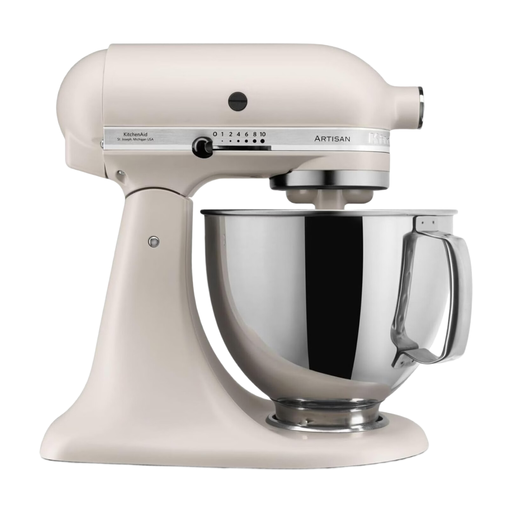
Why this model is a good fit: Ideal for anyone who regularly prepares heavy yeast or bread doughs. The all-metal body ensures maximum stability, while the planetary mixing action guarantees exceptionally thorough ingredient incorporation. It is designed as a specialised dough kneading machine.
This model debunks the watt myth. The 300-watt direct-drive motor transfers power efficiently and without loss, which is more important for kneading dough than a high but inefficient nominal power rating.
The robust all-metal construction and proven planetary mixing action stand for durability and consistent results. The power hub also allows for a wide range of expansions.
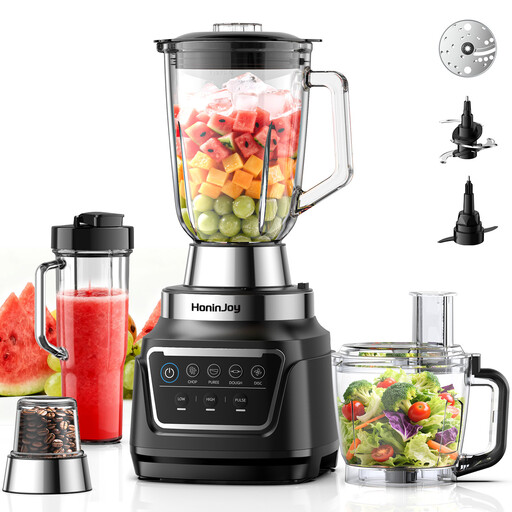
Why this model is a good fit: For households looking for a true all-in-one solution. It combines a blender, a food processor, and a kneading function with generously sized attachments (e.g., 1.5L glass blender jar, 2L processing bowl) that are practical for everyday family use.
This appliance sidesteps the "all-in-one illusion" by providing dedicated, full-sized attachments for each function, rather than relying on compromised mini-accessories. The power is tailored to each specific task.
The comprehensive accessory set covers the most common applications—from smoothies and salad prep to dough. Preset programs (CHOP/PUREE/DOUGH) simplify operation.
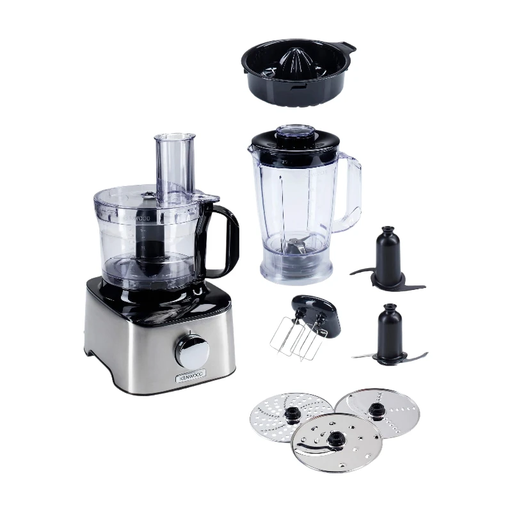
Why this model is a good fit: A compact and space-saving solution for kitchens with limited space. It focuses on the core functions of a food processor: chopping, grating, slicing, and blending in smaller quantities. Ideal for quick, daily meal prep.
This appliance doesn't promise to be a high-performance dough mixer. It's an honest, compact food processor that reliably performs its core competencies, thus avoiding the "jack-of-all-trades, master-of-none" trap.
The all-in-one system with a single base unit saves space and time. The included discs and blender attachment cover many basic tasks, and the dishwasher-safe parts make cleanup easy.
We have compiled a complete, up-to-date list of products that fully meet these strict selection criteria and German safety regulations.
1. How many watts does a good food processor really need? Wattage alone is not the deciding factor. For most household applications, including kneading up to 1 kg of bread dough, an appliance with a high-quality metal gearbox and an efficient motor (often between 300 and 1000 watts) is completely sufficient. Focus more on the build quality and mixing system than on a high watt rating.
2. Can a food processor completely replace a stand blender or chopper? Some high-quality multifunction food processors with specialised attachments can perform these functions well. However, a dedicated blender is often more powerful for puréeing very fibrous ingredients or crushing ice. A small, separate electric chopper can be more convenient for quickly chopping herbs or onions. Your choice depends on whether you prioritise convenience and space-saving or specialised high performance.
3. What's the most effective way to clean my food processor and its accessories? Always read the manufacturer's instructions. Most stainless steel bowls and tools are dishwasher-safe. If plastic parts are dishwasher-safe, they should be cleaned in the top rack to avoid heat-related warping. The motor housing itself must never be submerged in water; wipe it with a damp cloth instead. Cleaning immediately after use prevents dough and food residues from drying on.