
Lieferung heute & morgen

Qualitätsgarantie

Willkommens-Angebote freischalten: KOSTENLOSE Lieferung | Bis zu 80 % RABATT | Kostenlose 30-Tage-JoyPlus-Testphase
App herunterladen
A modern food processor promises to be a time-saving and versatile tool, handling everything from kneading heavy bread dough to chopping vegetables for quick weeknight meals. But the market is flooded with appliances whose marketing promises often suggest more than the technology can deliver. Many buyers soon find their new gadget gathering dust in a cupboard because it's impractical, noisy, or breaks after just a few uses.
This guide will help you navigate the common pitfalls. We focus on the critical technical features that truly matter, showing you how to find a model that perfectly matches your cooking habits.
Before we dive into key performance features, you should be aware of the most common marketing traps that often lead to disappointing purchases.
To make an informed decision, you should focus on three core technical aspects. These determine whether a food processor will deliver in daily use.
The raw wattage is only half the story. What's crucial is how that power is transferred. Models with a direct-drive motor are often more efficient and durable, as less power is lost through complex gear mechanisms. For regular kneading of bread or yeast dough, an appliance should combine solid motor power (often 1000 watts and up) with a robust planetary mixing action or a metal gearbox. For lighter tasks like chopping vegetables or blending liquids, an electric chopper or a blender with 300 to 600 watts is usually perfectly adequate.
The mixing bowl is the heart of the machine. Most models come with bowls made of stainless steel, glass, or plastic.
The capacity, measured in litres, should match your household size. For singles or couples, 2–3 litres is often sufficient. Families processing larger quantities should consider a model with a capacity of at least 4.5 litres.
A true multi-functional food processor is distinguished by its high-quality, modular attachments. A food processor with a meat grinder should have a sturdy metal attachment that is easy to assemble and clean. The same applies to an electric vegetable slicer or an attachment for preparing baby food. Ensure that the attachments are not only functional but also dishwasher-safe, or at least easy to clean by hand. Being able to effortlessly swap accessories saves valuable time in daily use.
Not everyone needs the same appliance. We've matched a few models to typical use cases.
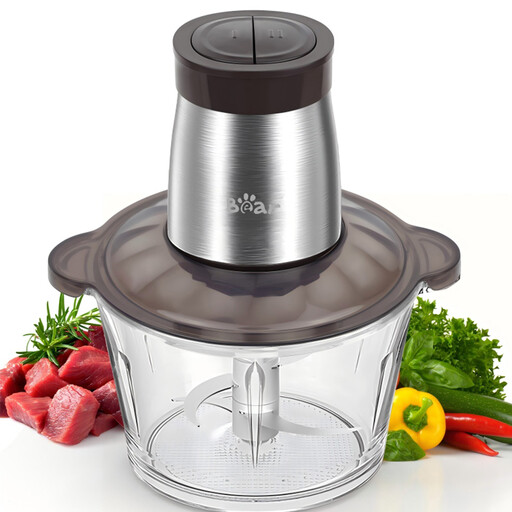
Why this appliance is a match: Ideal for quick, daily kitchen tasks. This compact multi-chopper specialises in one core function: efficiently chopping vegetables, herbs, or small amounts of meat. Its simple two-speed operation and glass bowl make it the perfect assistant for rapid meal prep.
This appliance avoids the "accessory overload" trap by focusing on the essentials. It doesn't try to do everything, but it performs its main task reliably.
The 2-litre glass bowl is hygienic, resists odours, and allows for visual monitoring. The 300-watt motor is perfectly adequate and energy-efficient for these tasks.
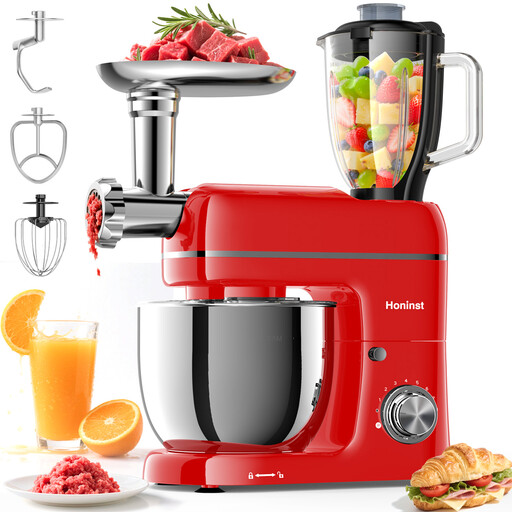
Why this appliance is a match: This model is a central workstation for families. It combines a powerful dough mixer with a meat grinder and a blender. The large 6.2-litre bowl is ideal for preparing meals for the whole family, from homemade sausages to smoothies.
It addresses the "wattage trap" with a 1300-watt motor designed for demanding tasks like kneading and grinding. The integrated functions are robust and not just gimmicks.
Combining several full-featured appliances into one saves space and money. The tilt-head design and safety lock enhance usability and safety.
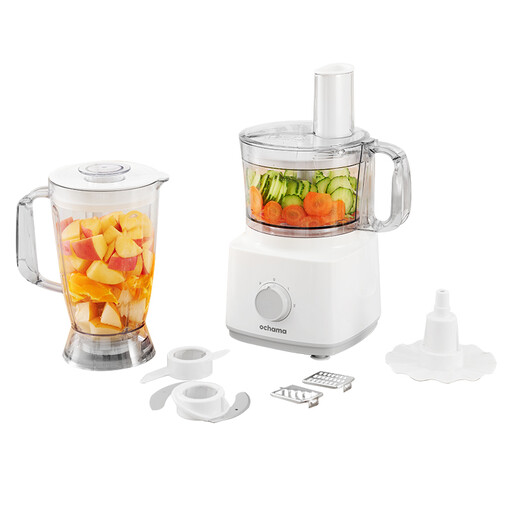
Why this appliance is a match: Perfect for small kitchens, singles, or as a secondary appliance. This device combines the functions of a chopper, blender, and grinder in a minimal footprint. It's excellent for smoothies, sauces, or preparing baby food without taking up valuable counter space.
This model avoids the trap of overblown promises. It is clearly positioned as a compact, multi-functional device for lighter tasks, not as a high-performance dough mixer.
Its greatest advantage is the space-saving design. The detachable parts are easy to clean, which makes everyday use extremely straightforward.
We have compiled a complete, up-to-date list of products that fully meet these strict selection criteria and German safety regulations.
The required wattage depends heavily on the intended use. For regular kneading of heavy dough, a power rating of 1000 watts or more, combined with a robust gearbox, is a good benchmark. For lighter tasks like chopping vegetables or making smoothies in a blender, 300 to 600 watts is often perfectly sufficient. More important than the raw wattage is the quality of the motor and gearbox, which ensure efficient power transfer.
Dishwasher suitability varies by manufacturer and material. High-quality stainless steel mixing bowls and some mixing tools are often dishwasher-safe. However, sharp blades from choppers, meat grinder components, or parts with plastic gears should often be cleaned by hand to maintain sharpness and material integrity. Always check the manufacturer's specific instructions before purchasing and before the first cleaning.
A high-quality, multi-functional food processor with the right attachments can often replace these appliances, saving kitchen space. However, a dedicated blender may have an edge when it comes to making ultra-smooth smoothies, while a small multi-chopper can be more convenient for quickly chopping onions or herbs. The decision depends on your primary cooking needs and available space.