
Lieferung heute & morgen

Qualitätsgarantie

Willkommens-Angebote freischalten: KOSTENLOSE Lieferung | Bis zu 80 % RABATT | Kostenlose 30-Tage-JoyPlus-Testphase
App herunterladen
A food processor should knead dough, whip cream, chop ingredients or blend smoothies. In practice, however, it is often only after buying one that you find out whether it suits your kitchen and your actual usage habits. Home bakers need different functions from households that mainly prepare soups, sauces and shakes.
A high wattage rating sounds convincing at first. However, it does not on its own indicate how well an electric food processor can handle heavy dough. Power transmission, the gearbox design, the permitted dough quantity and the recommended operating time are also important.
So look for specific details such as the maximum bread or cake dough quantity, overheating protection and guidance on continuous use. A machine with a lower rated output may be sufficient for smaller quantities, while a larger household may benefit from a powerful food processor with a higher capacity.
A meat grinder, chopper or blender attachment is only useful if it is used regularly in everyday life and can be fitted and cleaned easily. Check the following before buying:
A food processor with accessories can replace several individual appliances. For occasional smoothies, however, a jug blender or hand blender may be sufficient.
A stated capacity of five or six litres usually describes the volume of the bowl, not the maximum permitted dough quantity. With yeast dough, firm bread dough or heavy mixtures, the recommended quantity is often considerably lower. The information in the operating instructions is therefore more important than the litre figure alone.
For a food processor for dough, a stable base, a suitable dough hook and effective power transmission are particularly important. A planetary mixing system moves the tool around the inside of the bowl, allowing it to reach different areas of the mixture. However, this does not remove the need to check the maximum dough quantity.
A stainless-steel bowl is resistant to common kitchen ingredients and is often easy to clean. Also look for a splash guard, a tilting or lift-up motor unit and a safety lock.
Several speed settings allow you to adjust more precisely to stirring, whipping and kneading. A pulse function operates in short intervals and is suitable, for example, for controlled chopping or brief bursts of power. For smooth creams or whisking egg whites, variable control is more useful than a single turbo setting.
In small kitchens, the height matters just as much as the footprint. A machine kept beneath wall cupboards must be easy to operate or move for storage. Cable storage, a carry handle and controls on the front can make everyday use easier.
If you mainly want soups, sauces and a blender for smoothies, you should instead consider the size of the blending container, the blade arrangement and how easy it is to clean. A stick blender takes up less space, while a jug blender with a bowl or container is more suitable for larger quantities.
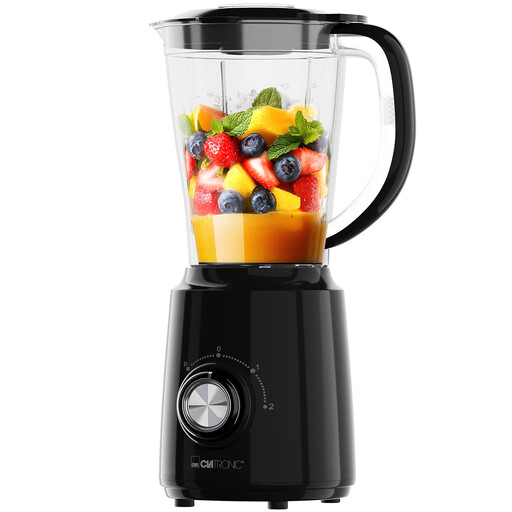
Why this product suits the profile: This multifunctional blender is designed for smoothies, sauces, soups and smaller chopping tasks. The 1.5-litre container is suitable for several portions.
The product details clearly state the motor power, container capacity, speed settings and ice-crushing function. The container is removable and the blades can be removed for cleaning.
500-watt motor, four speed settings, BPA-free 1.5-litre container and rust-resistant stainless-steel blades.
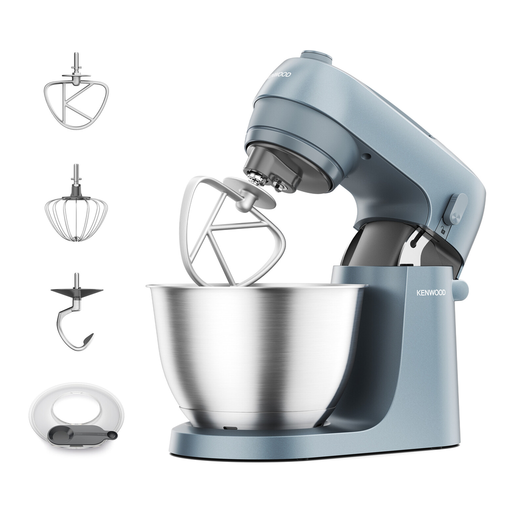
Why this product suits the profile: This compact food processor for baking is aimed at users with limited worktop space who want to stir, whip and knead regularly.
At 30 cm high, with front controls and a carry handle, its storage requirements are easier to plan. The stated capacities help prevent unrealistic expectations about large quantities of dough.
800 watts, 4-litre stainless-steel bowl, six speed settings, pulse function and three mixing attachments.
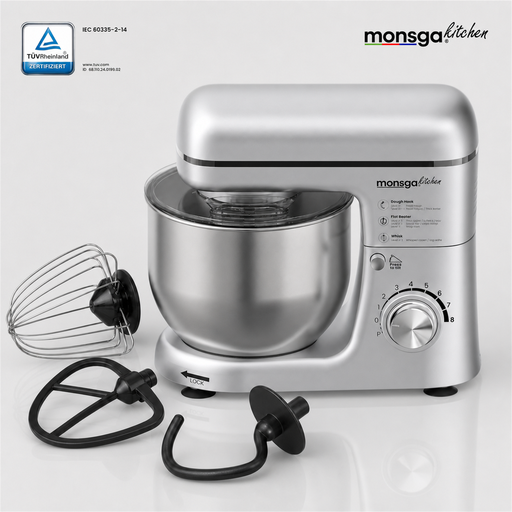
Why this product suits the profile: The large bowl and eight speed settings are ideal for families and frequent users who regularly prepare bread, cakes, biscuits or whipped cream.
The recommended usable quantity of five litres is stated alongside the maximum bowl capacity of six litres. Overload and overheating protection are also specified.
6-litre stainless-steel bowl, eight settings, planetary mixing system, plus dough hook, whisk and flat beater.
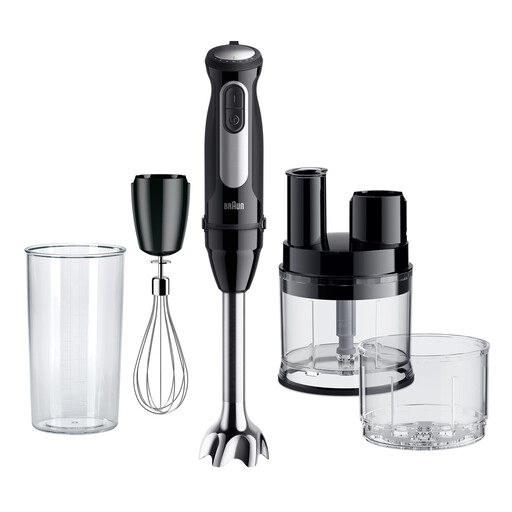
Why this product suits the profile: This hand blender takes up very little worktop space and can process smoothies, dips, sauces and ingredients for smaller portions.
The accessories are clearly listed and can be changed using the EasyClick Plus system. 25 speed settings plus turbo allow for precise adjustment.
1000-watt motor, 25 settings plus turbo, whisk, chopper, slicing and grating disc, plus measuring beaker.
We have put together a complete, regularly updated list of products that fully meet these strict selection criteria and the safety regulations applicable in the EU.
Before using the appliance for the first time, clean the bowl, blades and mixing attachments in accordance with the instructions. The motor housing must never be immersed in water. When using a chopper or meat grinder, handle sharp blades and mincing discs with care and dry them completely after washing.
Power consumption and actual running time are the key factors when it comes to electricity costs. A 1,000-watt appliance uses approximately 0.167 kWh during ten minutes of operation. The actual cost depends on the current electricity tariff. For short blending sessions, consumption is correspondingly lower. So rather than focusing on a general wattage figure, it is more important to choose an appliance that suits the task and your usual portion size.
Look for a specified dough hook, a sturdy construction, an automatic safety cut-off and a clearly stated maximum bread or flour quantity. The manufacturer’s stated limit should not be exceeded. A compact dough mixer is sufficient for occasional small quantities of dough, while a larger bowl can be useful if you bake frequently.
That depends on how you intend to use it. A stand food processor works hands-free and is suitable for regular stirring, whipping and kneading. A hand mixer is easier to store and is often more practical for smaller quantities. For soups, sauces and smoothies, a stick blender is often the most space-saving solution.
There is no reliable single answer for the expected lifespan. It depends on the level of use, cleaning, storage and adherence to the maximum quantities. Overheating protection, spare-parts availability, stable feet and clear operating instructions are practical criteria to check before buying.