
Lieferung heute & morgen

Qualitätsgarantie

Willkommens-Angebote freischalten: KOSTENLOSE Lieferung | Bis zu 80 % RABATT | Kostenlose 30-Tage-JoyPlus-Testphase
App herunterladen
An electric food chopper can process onions, herbs, vegetables, fruit, meat or nuts in next to no time. But impressive wattage figures and large bowls don’t automatically mean better results. What matters is whether the appliance suits the quantities and ingredients you use, and how you like to clean up afterwards.
A powerful motor sounds impressive, but wattage alone tells you little about the results. Blade shape, the number of blades, how full the bowl is and the permitted running time all affect how ingredients are processed. A model with two speed settings may work well for soft ingredients, while hard ingredients may need short pulses and breaks.
So don’t just look at the wattage. Check:
The stated bowl size doesn’t always reflect the recommended working capacity. If you overfill the bowl, the ingredients at the bottom may become too finely chopped while larger pieces remain at the top. For families, a food chopper with a 1.5 to 3-litre bowl may be a good choice. For herbs, onions or small portions, a mini chopper with a capacity of around 0.5 litres is often enough.
Non-removable blades, hard-to-reach crevices or a permanently attached power cable can make everyday use more difficult. Unplug the appliance before removing the sharp blades for cleaning, and handle them with care. Never immerse the motor housing in water.
Useful features include:
An electric multi-chopper with two speed settings usually makes it easier to adapt to different ingredients. Low speeds or short pulses are often suitable for soft foods such as onions, garlic or fruit. Carrots, nuts or meat may need a higher speed.
Check the instruction manual: some appliances should only run for a few seconds at a time and need a cooling break afterwards. This is especially important with an electric meat chopper, as tough ingredients can put more strain on the motor.
A chopper with a glass bowl makes it easy to see how the ingredients are being processed and generally absorbs fewer odours than some plastic bowls. However, glass is heavier and can be damaged by sudden changes in temperature. Stainless steel is opaque, durable and often resistant to odours. Plastic can be lightweight, but it should be suitable for food contact and robustly made.
A classic vegetable chopper uses rotating blades and is suitable for chopping, mixing or puréeing. An onion chopper doesn’t necessarily need lots of extra features. If you want to slice, cut into strips or grate, a model with interchangeable cutting inserts is a better fit. A nut chopper should be specifically designed for hard ingredients; not every model is suitable for ice, coffee beans, bones or frozen foods.
Also check that the product and safety information required in the EU is provided. A CE marking relates to the applicable EU product requirements, but it doesn’t replace reading the instruction manual. Information about food contact, voltage and suitable ingredients should be clearly available.
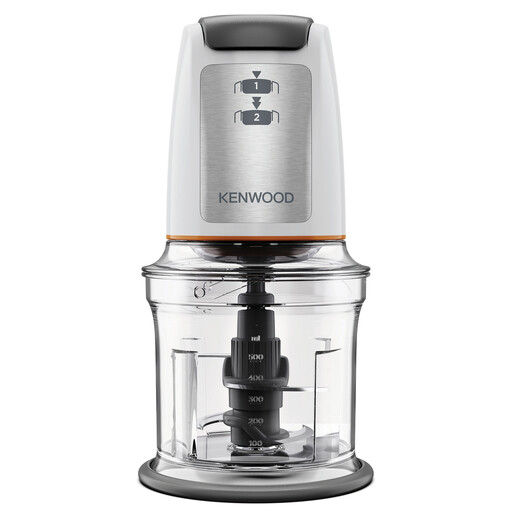
Why this product suits this profile: This electric mini chopper has a 0.5-litre bowl, 500 watts of power and two speed settings, making it a handy choice for everyday small portions.
Its compact size reduces the risk of small portions being unevenly distributed in an oversized bowl.
0.5-litre working bowl, 500 watts and two speed settings.
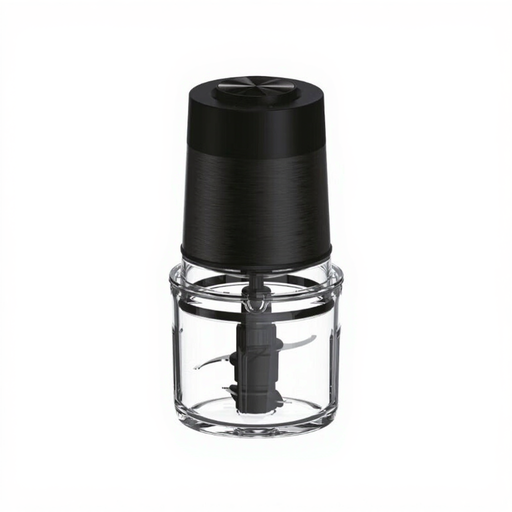
Why this product suits this profile: This model combines a 0.5-litre glass bowl with four stainless steel blades, 550 watts of power and a pulse function.
The bowl material and blade details are clearly stated, and both the bowl and blades are described as dishwasher-safe.
Glass bowl, four stainless steel blades, two speed settings and a pulse function.
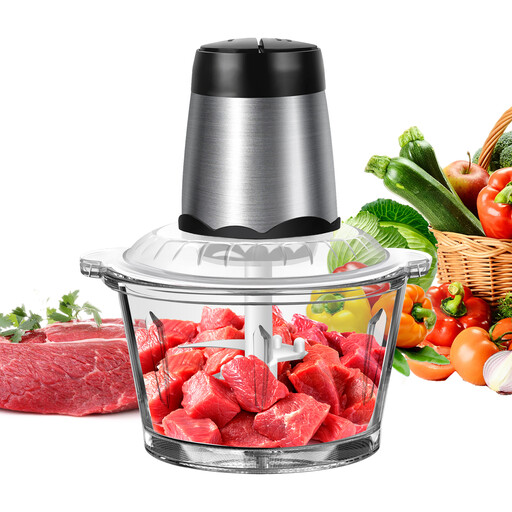
Why this product suits this profile: The 2-litre glass bowl and 300 watts of power are designed for preparing larger quantities of meat, vegetables, fruit or baby food at home.
Two speeds and a pulse function make it easier to control whether ingredients are chopped coarsely or finely.
2-litre glass bowl, four stainless steel blades, two speed settings and removable dishwasher-safe parts, according to the product description.
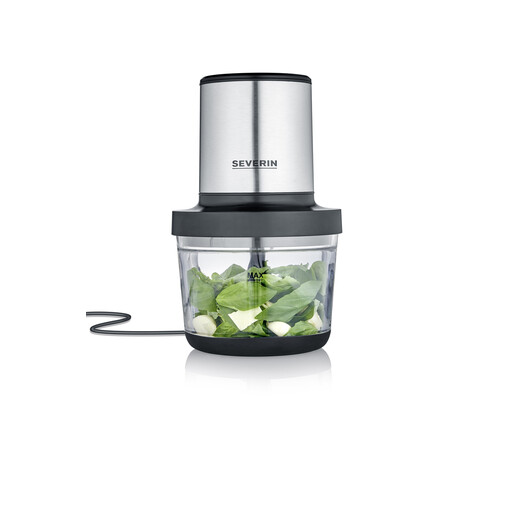
Why this product suits this profile: According to the product description, this electric all-purpose chopper is designed for coarse and fine chopping, as well as for cheese, nuts, herbs and other tasks.
Its range of stated uses helps you choose an appliance based on what it’s designed to do, rather than wattage alone.
Suitable for coarse and fine chopping; the product description also lists cheese, nuts and crushed ice among its intended uses.
We’ve put together a complete, regularly updated list of products that meet these strict selection criteria and fully comply with the safety regulations in force in the EU.
It depends on what you’ll use it for. Compact models may be enough for onions, herbs and soft fruit. If you regularly process meat, carrots or nuts, also check that the blades and speed settings are suitable and look at the permitted running time. Wattage alone isn’t a reliable way to compare models.
Its lifespan depends on how it’s used, cleaned and stored, and whether it’s overloaded. Stick to the recommended operating intervals, don’t process ingredients the appliance isn’t designed for, and clean the blades carefully. Overfilling the bowl and running the appliance for too long can put unnecessary strain on the motor and coupling.
Electricity costs per use are usually modest, as chopping often takes just a few seconds. For a more precise estimate, convert the motor’s power rating to kilowatts, then multiply it by the actual running time and your electricity tariff. The purchase price, replacement parts and cleaning effort often have a greater impact.