
Lieferung heute & morgen

Qualitätsgarantie

Willkommens-Angebote freischalten: KOSTENLOSE Lieferung | Bis zu 80 % RABATT | Kostenlose 30-Tage-JoyPlus-Testphase
App herunterladen
A food processor can knead dough, chop vegetables, blend ingredients or save time when cooking every day. At the same time, unclear power ratings, excessive accessories and difficult-to-clean components can quickly lead to the wrong purchase. What matters is not the longest list of functions, but the combination of intended use, capacity, operation and cleaning requirements.
A high wattage initially sounds impressive, but it mainly describes the appliance’s electrical power consumption. On its own, it says little about how well a machine handles dough or chops ingredients. The maximum speed of a blender is not automatically relevant for every application either: when kneading, power transmission and the gearbox matter; when chopping, it is the blade design; and when blending, it is the shape of the container.
You should therefore consider the entire drive system, the intended functions and the quantities specified by the manufacturer.
A food processor with a blender can handle several tasks, but it usually requires more worktop space and cleaning time than a single hand mixer or stick blender. A food processor is particularly practical for slicing, grating and chopping. For cream, whipped egg whites and cake batter, however, a stand mixer or baking-focused food processor is more suitable.
Before buying, you should establish which tasks you regularly need to perform. A set with lots of attachments is only worthwhile if you will actually use them and have somewhere to store them cleanly.
The stated bowl capacity does not always correspond to the maximum working quantity. For example, the Kenwood MultiPro Go has a bowl capacity of 1.3 litres, while the stated working quantities for dry and liquid ingredients are both 0.75 litres. With a baking-focused food processor, differences between the amount of flour, dough weight and whipped egg whites are also relevant.
A compact food processor may be sufficient for a small household. If you regularly prepare bread or pizza dough, you should compare the maximum permitted dough quantity with your own requirements.
A powerful blender with 1,600 watts and a high rotation speed is not automatically a suitable dough mixer. Conversely, a baking-focused food processor does not necessarily need a high-speed blending attachment.
Stainless steel is standard for blades and grating discs. For bowls and blending containers, look for material details such as stainless steel or BPA-free Tritan. Safety locks prevent the appliance from operating if the lid or bowl has not been fitted correctly.
You should also look for:
Hot liquids require particular care. An appliance with a soup function should only be used in accordance with the manufacturer’s instructions. Steam, splashes and hot containers can cause scalding.
Removable, dishwasher-safe parts reduce the effort involved, but they do not remove the need to check seals, blade mounts and hard-to-reach areas. The motor housing must never be immersed in water.
Measure the available space before buying. A compact food processor needs to fit not only in terms of height, but also depth and width. For appliances stored in a cupboard or drawer, weight, cable storage and the effort required to set up and put away the appliance each day are also important.
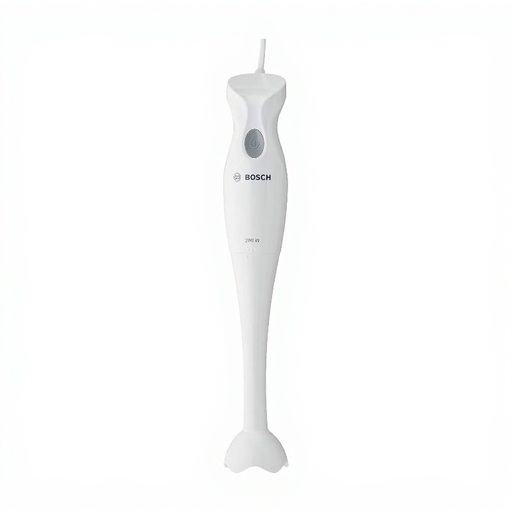
Why this product suits the profile: For small kitchens and occasional soups, sauces or purées, a lightweight stick blender with a manageable range of accessories is sufficient.
Its functions are clearly focused on puréeing, blending and chopping, rather than promoting attachments you do not need.
280-watt motor, turbo button, splash guard and dishwasher-safe blending foot, with a weight of 0.6 kg.
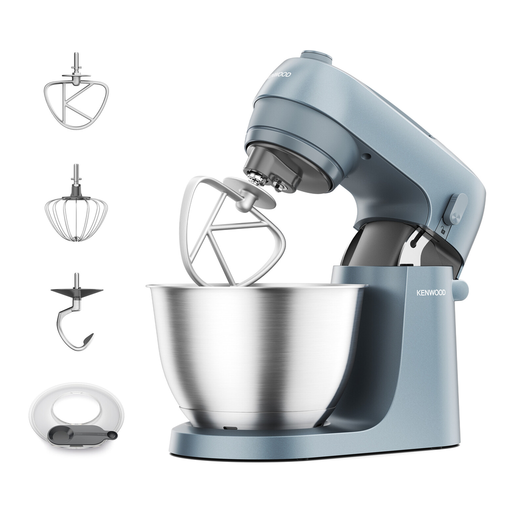
Why this product suits the profile: Keen bakers get a 4-litre stainless steel bowl, a planetary mixing system and three essential mixing attachments.
The dimensions of 33.5 × 18 × 30 cm and front-mounted controls help when space is limited, without leaving the bowl capacity unclear.
800-watt motor, six speed settings, pulse function and metal housing; according to the product information, removable parts are dishwasher-safe.

Why this product suits the profile: If you frequently prepare soups, sauces, mayonnaise, smoothies or small quantities of chopped ingredients, a stick blender can handle several tasks.
Variable speed and a turbo function allow controlled processing instead of forcing you to use a fixed, one-speed setting.
1,200-watt motor, XL blending foot, whisk, 500-ml chopper and emulsifying disc; removable tools are dishwasher-safe.

Why this product suits the profile: This appliance is designed for households that want to slice, grate, purée and occasionally prepare dough without keeping a large machine permanently on the worktop.
Its compact design and ability to slice directly onto a plate or into a pan help reduce both storage and washing-up requirements.
650-watt motor, 1.3-litre bowl, 4-mm slicing and grating disc, pulse function and dishwasher-safe accessories.
We have put together a complete, regularly updated list of products that fully meet these strict selection criteria and the safety regulations applicable in the EU.
For regular kneading, a dough mixer with a sturdy bowl, planetary mixing system and suitable dough hook is a sensible choice. Do not compare wattage alone; also check the maximum permitted flour and dough quantities. A 4-litre bowl may be sufficient for typical home baking quantities, provided the manufacturer’s dough weight specifications are suitable.
A countertop blender processes larger quantities in a sealed container and is suitable for smoothies or puréed soups. A stick blender can be used directly in a saucepan or tall container and generally requires less storage space. For small portions and quick cleaning, a stick blender is often more practical; for larger quantities, a countertop blender provides its own container.
Its lifespan depends on the materials, usage, care and compliance with the specified quantity and operating-time limits. Overloading, blocked blades and insufficient cooling breaks place strain on the motor. Clean removable parts after every use, dry seals thoroughly and store sharp attachments safely. An under-sink food waste disposer is a separate appliance and must only be used for suitable food waste.