
Lieferung heute & morgen

Qualitätsgarantie

Willkommens-Angebote freischalten: KOSTENLOSE Lieferung | Bis zu 80 % RABATT | Kostenlose 30-Tage-JoyPlus-Testphase
App herunterladen
A modern food processor promises to automate kneading, chopping, and mixing, saving you precious time in the kitchen. But the market is overwhelming, and many appliances don't live up to their advertising claims. As your Joybuy Product Recommendation Officer, I'll help you recognise the common pitfalls and make an informed decision that fits your actual needs.
Before you invest, you should know the marketing gimmicks that often lead to disappointment. Many devices look convincing at first glance but reveal their weaknesses only in daily use.
To avoid a bad purchase, focus on the technical fundamentals that distinguish a good food processor from a mediocre one.
Raw wattage is only half the story. The crucial factor is torque—the actual force the appliance delivers. A stand mixer with planetary mixing action and a robust direct-drive motor can effortlessly handle heavy doughs even with less wattage. Pay attention to the specified dough capacity for the device. For occasional baking and light tasks, a model with a belt-drive motor is often sufficient, while a direct-drive motor is the more reliable choice for regular bread baking.
The bowl is the heart of any food processor.
The capacity should match your household size. For a 2-person household, 3 to 4 litres is often enough. Families who bake regularly or prepare larger quantities should choose a bowl with at least 4.5 to 5 litres.
A multifunctional food processor thrives on its accessories. Instead of focusing on the sheer number, you should pay attention to the quality of the standard tools:
Additional attachments like a chopper for cutting vegetables or a meat grinder can offer real value if they are solidly built and easy to clean. Check if the accessories are dishwasher-safe to minimise cleaning effort.
Here are some recommendations tailored to specific needs that avoid the pitfalls mentioned.
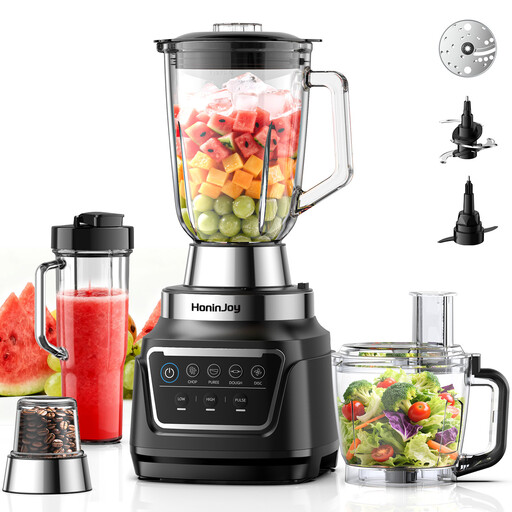
Why it's a good fit: This appliance combines a blender and a food processor with a large 2-litre bowl. It's ideal for families who want to prepare everything from smoothies to chopped vegetables to dough with a single device.
It bypasses the "accessory overload" by offering a well-thought-out set for everyday tasks (blending, chopping, kneading, grinding) instead of being cluttered with useless niche attachments.
All-in-one versatility with 1300W peak power and user-friendly presets for chopping, puréeing, and dough. All removable parts are dishwasher-safe.
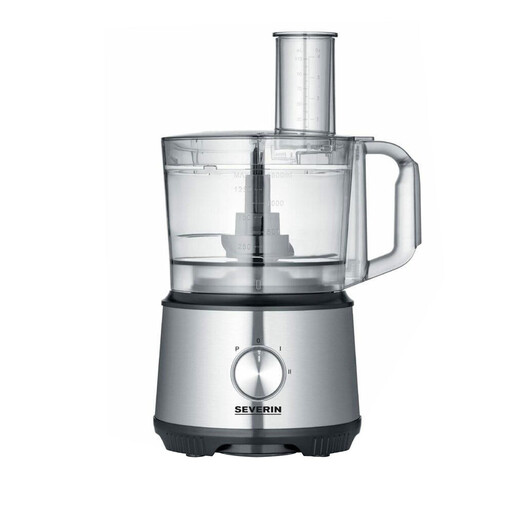
Why it's a good fit: As a classic food processor, this device is compact yet powerful. It's perfect for anyone primarily looking for a reliable helper for chopping, grating, slicing, and handling lighter doughs.
It avoids the trap of poor material quality with a solid housing and dishwasher-safe parts. It focuses on the core functions of a food processor and performs them reliably.
Compact design with a 1.5-litre bowl and extensive, practical accessories (3 disc inserts, grinding attachment, dough hook). The 1200-watt power is very well-sized for an appliance of this size.
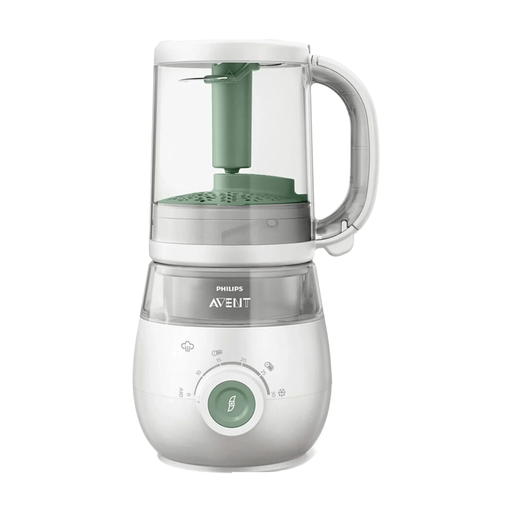
Why it's a good fit: This device is specifically designed for preparing baby food. It steams and purées in the same container, which extremely simplifies the process and minimises washing up.
It's a highly specialised tool and doesn't try to be a "jack-of-all-trades." It perfectly solves a specific problem (making healthy baby food easily) instead of performing many functions only moderately well.
Unique 4-in-1 function (steam, blend, defrost, reheat). The process from cooking to blending is done by simply flipping the jar, which is very hygienic and practical.
We have compiled a complete, up-to-date list of products that fully meet these strict selection criteria and safety regulations.
1. How much wattage does a good food processor really need? For most household tasks, including kneading light to medium doughs, a machine with a real motor power of 500 to 800 watts combined with a good gearbox is completely sufficient. For very heavy bread doughs or processing large quantities, a power of around 1000 watts can be useful. However, focus more on the build quality and the gearbox than on the raw wattage number.
2. Can a food processor completely replace a stand blender or chopper? A multifunctional food processor or a food processor can take over many functions of these individual devices. For specialised tasks, such as blending very fine green smoothies or grinding spices, a dedicated high-performance blender or a coffee grinder can often deliver better results. Combination devices are a good compromise to save space and money, but they rarely achieve the perfection of a specialist.
3. What's the most effective way to clean a food processor and its accessories? The key is to clean immediately after use so that food residues don't dry on. Before buying, check which parts are dishwasher-safe—this usually includes the mixing bowl and most accessories made of stainless steel or plastic. The motor housing itself must never be submerged in water; simply wipe it with a damp cloth. For hard-to-reach areas on blades or mixing tools, a small cleaning brush can be helpful.