
Lieferung heute & morgen

Qualitätsgarantie

Willkommens-Angebote freischalten: KOSTENLOSE Lieferung | Bis zu 80 % RABATT | Kostenlose 30-Tage-JoyPlus-Testphase
App herunterladen
Investing in a new food processor can significantly simplify meal preparation. However, the market is flooded with appliances whose marketing promises often suggest more than the technology can deliver. As your Joybuy Product Recommendation Officer, I'll help you identify the crucial features and avoid common purchasing traps, ensuring you find a model that truly fits your needs.
Many buyers are disappointed with their new appliance after a short time. This is often due to overlooked weaknesses hidden behind impressive numbers.
To make an informed decision, you should focus on the technical fundamentals rather than on pure marketing claims.
The type of motor and drive system determines the efficiency and longevity of your food processor. Models with a pure copper motor often offer more stable performance and better heat dissipation. For a stand mixer, a planetary mixing action is standard, ensuring the mixing tools reach the entire contents of the bowl evenly. Pay attention to the combination of motor quality and drive system, not just the advertised wattage.
The mixing bowl is your primary work container.
The capacity (in litres) should match your household size. For a family of four that bakes regularly, a bowl with a 5 to 6-litre volume is a good choice. For the occasional preparation of dips or chopping vegetables, a smaller mini-chopper with 0.5 to 1.5 litres is sufficient.
The terms are often used interchangeably but refer to different devices:
Consider which task you will perform most frequently to select the right type of appliance.
Here are some models tailored to specific user profiles that avoid the pitfalls mentioned.
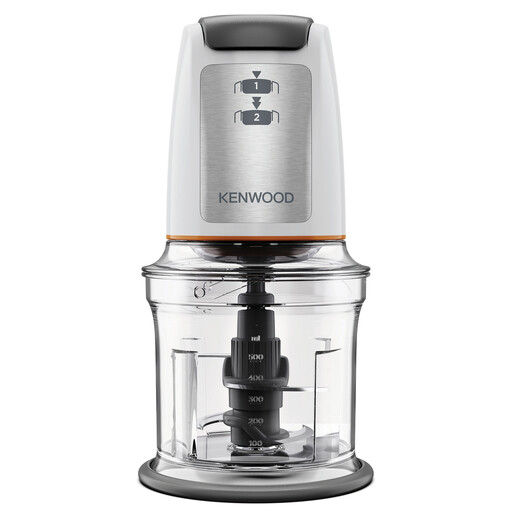
Why This Fits Their Persona: Ideal for users who primarily need a reliable helper for chopping onions, herbs, or nuts and don't require a large, complex machine. Perfect for small kitchens and quick prep work.
This device bypasses the accessory trap by focusing on one core function and performing it reliably. Its compact size also solves common storage problems.
Two speed settings to control texture; 500-watt motor for efficient chopping; compact design and easy cleaning.
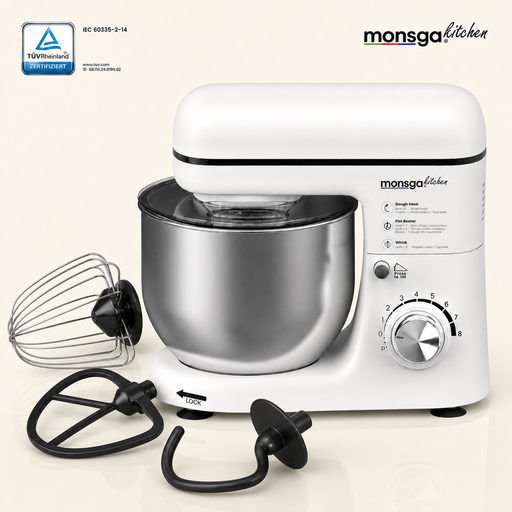
Why This Fits Their Persona: Designed for demanding tasks like kneading heavy bread or pizza dough. The large 6-litre bowl and powerful motor are tailored to the needs of passionate bakers.
This model debunks the wattage myth by combining a 1000-watt copper motor with a 360° planetary mixing action. The suction feet ensure stability and prevent it from "walking" on the countertop.
Large 6.0-litre stainless steel bowl; non-stick coated dough hook (Teflon) for easy cleaning; 8 speed settings for precise control.
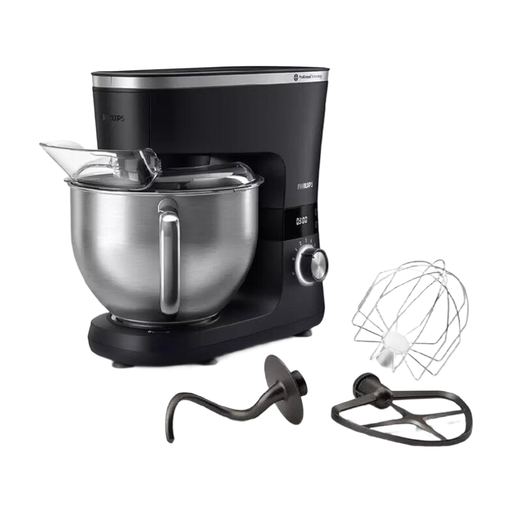
Why This Fits Their Persona: A true multifunctional appliance that combines kneading, blending, and processing in one. Ideal for families who prepare a wide range of dishes—from cake batter and smoothies to grated vegetables.
As a high-quality combination device from an established brand, it avoids the trap of cheap all-in-one solutions. The 1000-watt motor is designed to handle all functions reliably.
Large 5.5-litre bowl plus a 1.5-litre blender attachment; 8 speed settings for precise control; dishwasher-safe parts for easy cleaning.
We have compiled a complete, up-to-date list of products that fully meet these strict selection criteria and German safety regulations.
Wattage alone is not a meaningful metric. A high-quality food processor for home use often has a power rating between 400 and 1200 watts. However, the quality of the motor (e.g., a copper motor), the gearbox, and the efficiency of the drive system are more important. A well-engineered 800-watt device can handle heavy dough better than a poorly built 1500-watt model.
No. Kneading heavy dough is one of the most demanding tasks. For this, you need a dedicated stand mixer with a powerful motor, a robust metal housing for stability, and a special dough hook. A simple food processor or mini-chopper is generally not designed for this task and can overheat or become damaged.
When buying, make sure that as many accessories as possible, such as the mixing bowl, dough hook, and whisk, are listed as dishwasher-safe. This significantly simplifies cleaning. The motor block itself must never be immersed in water and should only be wiped with a damp cloth. Always read the manufacturer's cleaning instructions.