
Lieferung heute & morgen

Qualitätsgarantie

Willkommens-Angebote freischalten: KOSTENLOSE Lieferung | Bis zu 80 % RABATT | Kostenlose 30-Tage-JoyPlus-Testphase
App herunterladen
A food processor should knead dough, mix ingredients and, depending on its equipment, also slice, grate or chop. In practice, however, not every model is suitable for every household. Before buying, it is therefore worth checking how you will actually use it, how much space you have available and what is included.
A high wattage rating may sound convincing at first. However, it does not on its own indicate how well a food processor can handle firm bread dough or large quantities of ingredients. The gearbox, power transmission, speed control and maximum permitted dough quantity are equally important.
A 1200-watt food processor is sufficient for many households. If you regularly prepare heavy yeast doughs, you should also check the manufacturer's specifications for the maximum quantity of flour or dough.
A large bowl is not automatically suitable for every recipe quantity. The stated capacity usually refers to the total volume, rather than the maximum recommended quantity for dough, whisked egg whites or liquids.
A food processor with a bowl should therefore be selected according to the size of your household:
A multifunctional food processor can be used for a wide range of tasks with slicing, grating, grinding or blending attachments. However, these functions also increase the amount of storage space and cleaning required. If you mainly bake bread, pizza or cakes, you will often primarily need a dough hook, a beater and a whisk.
When choosing a food processor with accessories, check whether the attachments genuinely suit the way you cook and whether replacement parts are available.
For a food processor for kneading, controlled power transmission is more important than the highest possible top speed. Several speed settings and a pulse function make it easier to adapt the appliance to delicate ingredients, cake mixtures or firm blends.
You should also check the information on the maximum operating time. An appliance should not be left running continuously without breaks during intensive use. After extended kneading or blending, it may need time to cool down.
A food processor with a stainless-steel bowl is generally resistant to discolouration and suitable for many applications. A secure fit, a splash guard and a sufficiently large opening for adding ingredients are also important.
The appliance's height is another consideration in small kitchens. A compact model may be easier to store in a cupboard, while larger appliances need a permanent space on the worktop.
Removable, dishwasher-safe parts can make cleaning easier. The motor housing must not be submerged in water. Unplug the appliance before changing hooks, blades or discs.
For slicing and grinding attachments, locking mechanisms, a stable base and a pusher are important features. A stand blender or food processor with sharp blades should never be refilled using your fingers.
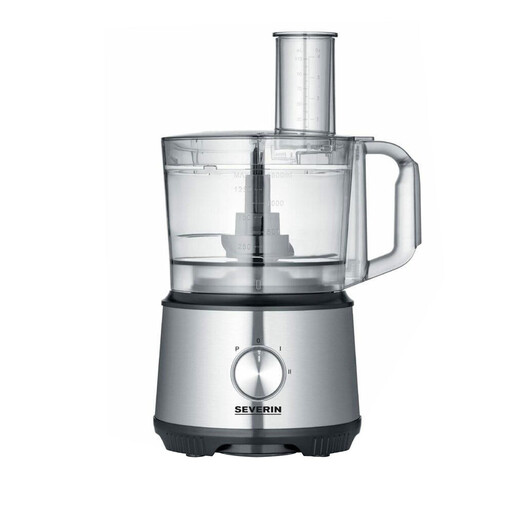
Why this product suits the profile: This model combines kneading, mixing, slicing, grating, chopping, grinding and emulsifying in one compact appliance. The 1.5-litre bowl is suitable for smaller portions and limited storage space.
The contents list the individual attachments clearly: three slicing discs, a grinding attachment, a dough hook and an emulsifying disc. Dishwasher-safe parts reduce the amount of cleaning required.
1200 W, a 1.5-litre bowl and several preparation options. According to the product details, the removable parts are dishwasher-safe.
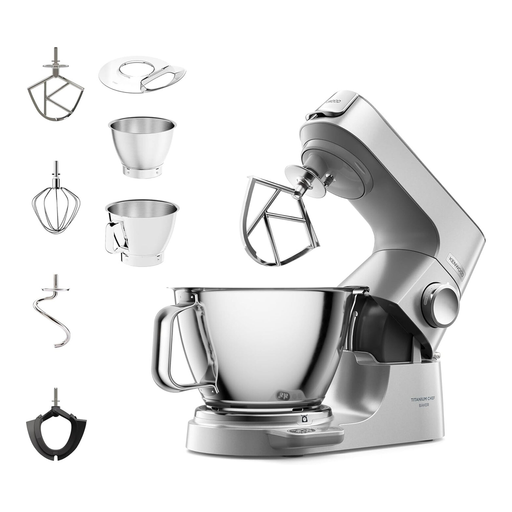
Why this product suits the profile: This machine comes with a 5-litre bowl and a 3.5-litre bowl, as well as an integrated EasyWeigh scale. This is useful when you want to prepare different recipe quantities without needing an additional measuring bowl.
Rather than focusing solely on motor power, buyers get two bowl sizes and several matching mixing tools. The technical specifications state 1200 W and variable speed control.
DuoBowl with 5 and 3.5 litres, integrated scales, dough hook, K-beater, whisk and Flexi beater.

Why this product suits the profile: The 5.5-litre stainless-steel bowl, seven speed settings and pulse function are aimed at households that prepare larger quantities of baking and firm doughs.
The large bowl is accompanied by precise dimensions of 28.5 × 42.5 × 38.5 cm. This allows you to check whether you have enough worktop space before buying.
5.5-litre stainless-steel bowl, three attachments, splash guard, non-slip feet and seven speed settings with pulse function.
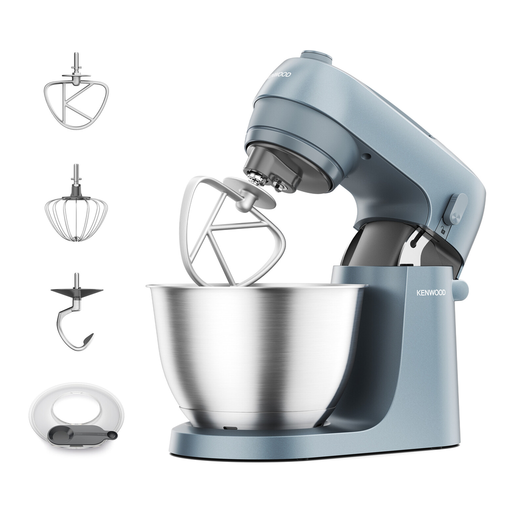
Why this product suits the profile: Standing 30 cm high, with a 4-litre stainless-steel bowl and front controls, this machine is designed for limited worktop space and storage in low cupboards.
The compact height and weight of 6.3 kg are stated clearly. This makes it easier to assess your storage space and how often you will need to move the appliance.
800 W motor, 4-litre stainless-steel bowl, six speed settings, pulse function and dishwasher-safe parts according to the product details.
We have put together a complete, regularly updated list of products that fully meet these strict selection criteria and the safety regulations applicable in the EU.
For bread dough, a suitable dough hook, sturdy construction, adjustable speed and a manufacturer-stated dough capacity are important. Wattage alone is not enough to make the right choice. If you bake regularly, a larger bowl and variable speed control can be useful.
For individuals or smaller recipe quantities, 3 to 4 litres is often sufficient. Families and regular bakers generally benefit from 5 to 5.5 litres. The permitted usable quantity for the intended application is what matters, not just the nominal capacity.
Power consumption depends on the motor output, operating time and selected speed setting. An appliance with a higher wattage does not automatically use more electricity every time it is used, although it may require greater connected power for longer or more demanding tasks. Short operating times, suitable quantities and breaks during intensive use help keep consumption predictable.