
Lieferung heute & morgen

Qualitätsgarantie

Willkommens-Angebote freischalten: KOSTENLOSE Lieferung | Bis zu 80 % RABATT | Kostenlose 30-Tage-JoyPlus-Testphase
App herunterladen
A powerful kitchen machine can significantly simplify meal preparation, from quickly chopping vegetables to effortlessly kneading heavy bread dough. But the market is flooded with appliances whose marketing promises often suggest more than the technology can deliver. Many buyers invest in a device that ends up unused in a cupboard after a short time because it fails to meet basic expectations. This guide will help you identify the crucial features and avoid common purchasing traps.
Before we dive into the technical details, it's important to understand the most common issues that lead to disappointment.
To make an informed decision, you should focus on three objective criteria that determine the longevity and functionality of a kitchen machine.
Instead of pure wattage, the type of motor and the quality of the gearbox are decisive. Planetary mixing systems, used in high-quality stand mixers, ensure that the dough hook or whisk rotates not only on its own axis but also along the edge of the bowl. This guarantees homogeneous mixing and dough kneading without constant manual scraping. For a food processor, a direct-drive motor is often more efficient and quieter, as it transfers power directly to the blades.
The mixing bowl is a central component. Stainless steel is robust, durable, odourless, tasteless, and usually dishwasher-safe. Glass bowls allow for visual monitoring but are heavier and more fragile. Plastic bowls are lightweight but can discolour or absorb odours over time. The capacity (in litres) should suit your household. For example, a 5-litre bowl is suitable for processing up to 1 kg of flour, which is sufficient for most families. For quickly chopping vegetables, a smaller electric chopper with a volume of 0.5 to 1.5 litres is often enough.
Pay attention to the quality of the standard accessories. A dough hook should be heavy and robust, ideally made of metal (possibly with a non-stick coating). A whisk should have many sturdy wires to efficiently incorporate air. With a food processor, the quality of the slicing discs and the S-shaped blade is crucial for clean cuts. Check whether the parts that come into contact with food are dishwasher-safe to simplify cleaning.
Instead of making a one-size-fits-all recommendation, we have selected models tailored to specific user profiles.
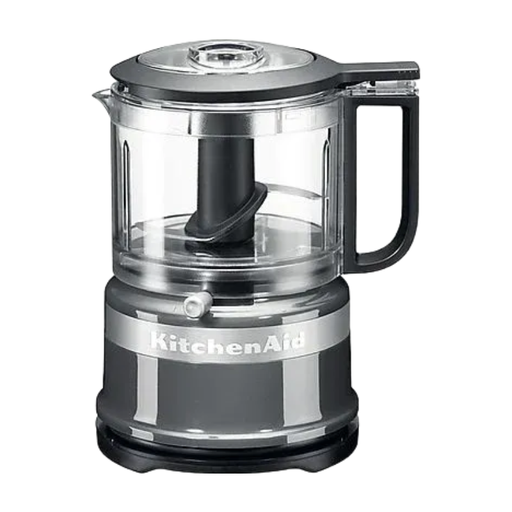
Why it's a good fit: Ideal for quick, daily use in one to two-person households. Perfect for chopping herbs, onions, making pesto, or small batches of baby food without taking up much counter space.
This device avoids the "all-in-one" dilemma by specialising in one core function: efficient chopping in small quantities. It doesn't promise to knead dough or make juice.
Compact Design: With its small footprint and integrated cord storage, it fits into any kitchen. Simple Operation: Two speed settings and a pulse function offer precise control.
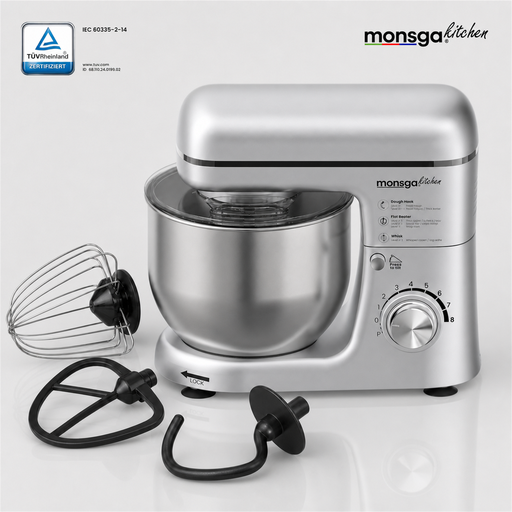
Why it's a good fit: Designed for people who bake regularly and process large quantities of dough or batter. The powerful motor and planetary mixing action are built for kneading and mixing.
This model addresses the unstable construction pitfall with four silicone suction cups that ensure a secure footing. The wattage illusion is debunked by combining 1000W of power with a 360° planetary mixing action, ensuring efficient power transfer.
Large Capacity: The 6-litre stainless steel bowl is suitable for preparing family-sized recipes. Specialised Tools: The Teflon-coated dough hook reduces dough sticking and simplifies cleaning.
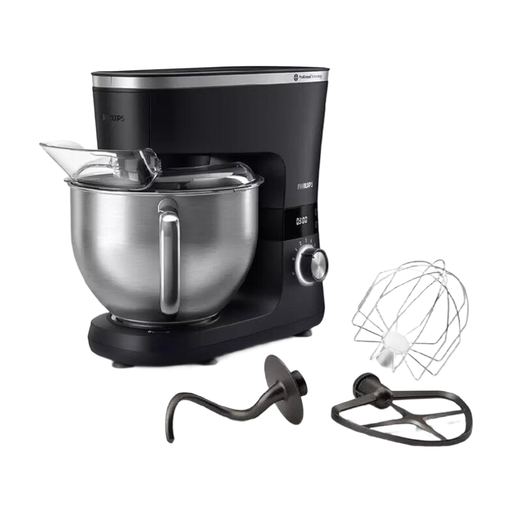
Why it's a good fit: A true all-rounder for families, functioning as a stand mixer, a powerful food processor, and a blender. Ideal for diverse, daily meal prep, from dough and smoothies to chopped vegetables.
This system escapes the "all-in-one" trap through high-quality construction and a strong 1000-watt motor that provides sufficient power for each function (kneading, blending, chopping). The accessories are robust and functionally designed.
High Power and Capacity: A 1000W motor, 5.5L bowl, and a 1.5L blender attachment can handle large quantities. Versatility: Covers a wide range of tasks, from kneading and grating to blending and chopping, making it a central kitchen workhorse.
We've compiled a complete, up-to-date list of products that fully meet these strict selection criteria and UK safety regulations.
Wattage alone is not a meaningful metric. The motor type and gearbox quality are more important. As a rough guide: for kneading heavy doughs in a stand mixer, models from 1000 watts upwards are recommended. For a compact electric chopper that mainly processes vegetables and herbs, 250 to 500 watts is usually more than sufficient.
No, the motor unit must never be submerged in water or cleaned under running water. Most removable parts like bowls, lids, and accessory attachments (e.g., dough hooks, whisks, blades) are dishwasher-safe today. However, it is always wise to check the manufacturer's specific instructions, as some materials or coatings last longer with hand washing.
Although the terms are sometimes used interchangeably, they generally refer to two different types of appliances. A stand mixer is primarily designed for mixing, whipping, and kneading, often using a planetary mixing action. It is the specialist for baking projects. A food processor (or multi-chopper) is designed for quickly chopping, slicing, shredding, and puréeing ingredients, and works with a fast-rotating blade at the bottom of the bowl. It is the go-to helper for preparing cooking ingredients.