Preparing hard cheese
You’re planning several portions of cheese and want to find a suitable grating disc and workflow that means you don’t have to keep transferring it to another container.


First, choose a grating disc designed for your hard cheese and the texture you want. Then pick a workflow that suits you: direct feed can make it easier to collect several portions, while a work bowl is a good choice if you also want to process other ingredients. Bowl capacity doesn’t tell you how much cheese the processor can handle at a time, so check the specifications and instructions for the exact model.
You’re planning several portions of cheese and want to find a suitable grating disc and workflow that means you don’t have to keep transferring it to another container.
You regularly want to prepare other ingredients as well as hard cheese, so you’re weighing up the bowl, accessories and cleaning requirements.
You already own a kitchen machine and want to check whether a hard-cheese attachment that’s explicitly compatible with it will do the job before buying a new appliance.
Start by comparing the grating disc and the texture you want, then consider how the cheese will be collected. Cleaning, storage space and other functions can help you decide between a compact appliance, a work bowl or a suitable attachment for a machine you already own.
| What matters | What to check before buying | Who should consider it? |
|---|---|---|
| Grating disc and texture | Check that the grating disc is designed for the hard cheese and texture you want, and that it fits the exact model. | I want the disc to deliver the result I’m looking for, rather than relying on a general ‘grating’ claim. Around 36% of consumers put the disc’s suitability for hard cheese first. |
| Multiple portions | Compare the collection bowl with direct feed, and check the instructions for the appliance’s maximum continuous operating time. | If I’m grating several portions in a row, I want to collect the cheese without having to transfer it frequently. Around 29% of consumers prioritise a smooth workflow for multiple portions. |
| Cleaning and space | Check the cleaning instructions for the discs and container, as well as the appliance dimensions and the storage space needed for its accessories. | I want to be able to clean and store the appliance easily after grating, even if that means working with a smaller batch. Around 21% of consumers look first at cleaning and storage requirements. |
| Other tasks | Check whether the accessories fit your existing machine and whether you’ll actually use the extra functions. | If I regularly prepare other ingredients as well as cheese, or already own a base machine, I want to avoid buying things I don’t need. Around 14% of consumers prioritise other kitchen tasks and compatible accessories. |
A capacity in litres describes the bowl’s volume, not the amount of hard cheese you can process at a time.
Check the instructions for the exact model, and don’t plan your workflow by converting litres into portions of cheese.
A general grating function doesn’t confirm that an appliance is suitable for very hard cheese or will give you the texture you want. Bosch lists Parmesan disc 00463720 for the MUZ8DS1 continuous shredder.
Check the full model number, the specific disc, what’s included and, where relevant, E-Nr. compatibility.
Collecting the grated cheese in a separate container doesn’t remove the operating limits of the appliance.
Follow the break guidance in the instructions for your exact model. Kenwood recommends letting the MultiPro Go rest after two minutes of continuous use.
The product lines mentioned here use different workflows: the MultiPro XL Weigh+ FDM72.990SS works with a bowl, while the MultiPro Go is described as having direct feed.
The Food Processor 5KFP1319EAC is aimed at buyers who want to grate hard cheese and use a range of other functions too.
The MultiTalent range includes grating functions, while the disc specifically listed for Parmesan is designed for a particular Bosch continuous shredder.
These food processors are described as grating directly onto a plate or into a separate container. If you’re using very hard cheese, check the guidance for the specific model and disc.
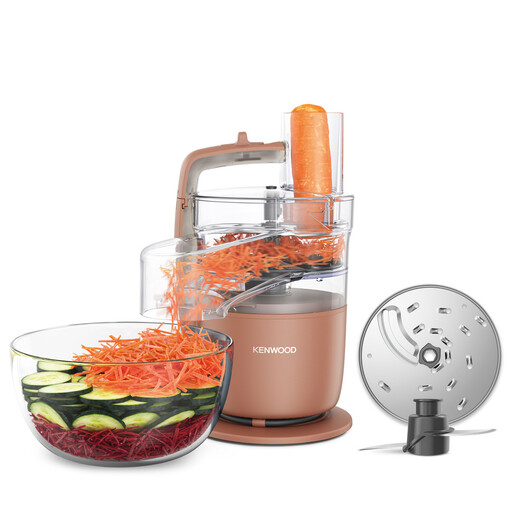 No product image available
The direct-feed design described can be handy if you want to grate several portions straight into a separate container. For very hard ingredients, the product description recommends working carefully to avoid overloading the appliance.
Features listed include a 1.3-l bowl and a reversible 4 mm slicing and grating disc. The accessories are described as dishwasher-safe.
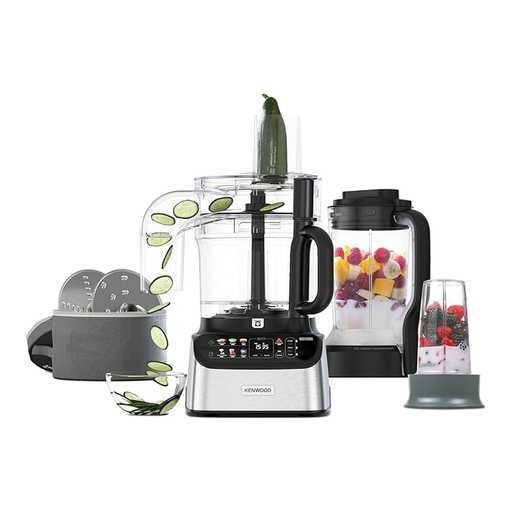 No product image available
The direct-feed design described is suited to buyers who want to grate cheese straight onto a plate or into a pan, while also making use of other food preparation functions.
Features listed include a 3-l bowl, several slicing and grating discs, and functions for weighing, kneading, puréeing, slicing and blending.
Not necessarily: a general grating function doesn’t confirm that it will produce the texture you want or suit every model. KitchenAid lists hard cheese as a suitable use for the 5KFP1319EAC; Bosch specifically describes disc 00463720 as a Parmesan cheese disc and lists it for the MUZ8DS1 continuous shredder. Check the specific disc and its compatibility.
With a model designed for direct feed, place a suitable container under the outlet and follow the instructions. Kenwood describes direct feed for the MultiPro Go and recommends a rest after two minutes of continuous use. This guidance doesn’t automatically apply to other models.
Follow the chilling guidance on the packaging and keep the cheese appropriately cold. Germany’s Federal Institute for Risk Assessment advises storing cheese in the fridge in line with the packaging recommendations; chilling slows the growth of most bacteria.
No. Your statutory rights for faulty goods are against the seller; a guarantee is an additional voluntary service, subject to its own terms and conditions.
Relevant electrical products must meet the applicable EU conformity requirements, including the required CE marking. Parts intended to come into contact with food are also subject to the requirements of Regulation (EC) No 1935/2004. The European Commission explains that the manufacturer is responsible for meeting the applicable requirements; CE marking is not independent proof of grating performance.