Batch mixer
You want to make a larger batch of bars without having to transfer the mixture repeatedly. Compare your recipe quantity with the permitted amount for the specific model, not just the bowl capacity.


If you want to mix a whole batch for the freezer in one appliance, a food processor with enough usable capacity could be a good fit. A compact chopper is better suited to chopping individual ingredients, which you can then mix elsewhere. The key factors are the recipe quantity and the permitted load and running time for the specific model: bowl capacity alone doesn’t prove that it can handle a sticky oat mixture. WMF lists nuts as a use for its chopper. KitchenAid says its 3.1-litre model can chop and knead, but doesn’t specify a maximum quantity for your recipe.
You want to make a larger batch of bars without having to transfer the mixture repeatedly. Compare your recipe quantity with the permitted amount for the specific model, not just the bowl capacity.
You mainly want to chop ingredients such as nuts, then mix the bar mixture separately. WMF specifically lists nuts as a use for the Kult X chopper.
You want to chop and mix in one appliance that takes up little worktop space, and you’re happy to process the batch in several portions if needed. Kenwood lists a 1.3-litre bowl for the MultiPro Go FDP22.140GY.
| Consideration | What to look for when buying | Who is it most important for? |
|---|---|---|
| Batch size | Compare your recipe quantity with the permitted amount and bowl capacity of the specific model. | If I’m making a whole batch for the freezer, I want to transfer it as few times as possible and know the permitted processing quantity. Around 36% of consumers put batch size first. |
| Processing the whole mixture | Check whether the manual says the appliance only chops ingredients or can also mix or knead, and pay attention to load limits and running time. | If I want to combine the sticky mixture in the appliance, I need more than proof that it can chop individual ingredients. For around 29% of consumers, processing the whole mixture is the main priority. |
| Cleaning | Check which parts can be removed and read the cleaning instructions for the specific model. | After making a sticky mixture, I want to be able to clean all the parts that come into contact with food thoroughly. Around 21% of consumers pay particular attention to how much effort cleaning involves. |
| Space and portions | Compare the appliance’s dimensions and storage space with its bowl capacity and the number of batches you may need to make. | If worktop or storage space is limited, I’m more likely to accept making several batches than buying a larger appliance. Around 14% of consumers prioritise the space it takes up. |
Bowl capacity alone doesn’t tell you how much of a dense or sticky mixture the appliance can process. For the FDM72.990BK, Kenwood specifies a maximum dough load of 1 kg, as well as limits on processing and cooling times. These figures don’t automatically apply to other models or recipes.
Compare the weight of your recipe with the instructions for the exact model, and plan to make several batches if needed.
Several batches may take extra time and require you to transfer the mixture repeatedly.
WMF’s statement that one of its models chops nuts doesn’t prove that it can also mix a full batch of sticky bar mixture.
Before buying, decide whether you only want to prepare ingredients or also combine the whole mixture in the appliance. Check the functions and manual for the specific model.
If the appliance only prepares ingredients, you may need an extra bowl for mixing.
Where an appliance falls under harmonised EU rules that require it, CE marking is mandatory. It is the manufacturer’s declaration of conformity, not an independent test of the bar recipe. A voluntary warranty is also not the same as your statutory rights.
Check the conformity information, the instructions and load limits for the specific model, and the warranty terms separately. The European Commission explains the requirements for CE marking; the Consumer Advice Centre explains the difference between a warranty and statutory rights.
The MultiPro Go range is aimed at smaller kitchens, while Kenwood says the MultiPro XL Weigh+ combines weighing and processing.
The 3.1-litre food processor may suit buyers who want a larger bowl.
The MultiTalent 3 MCM3501M is a compact food processor with service documents for the specific model.
The Kult X Chopper Edition may suit buyers who mainly want to chop individual ingredients.
The appliances below cover different tasks: chopping ingredients and stirring or kneading mixtures. For sticky oat mixtures, check the permitted recipe quantity and running time in the manual for each model.
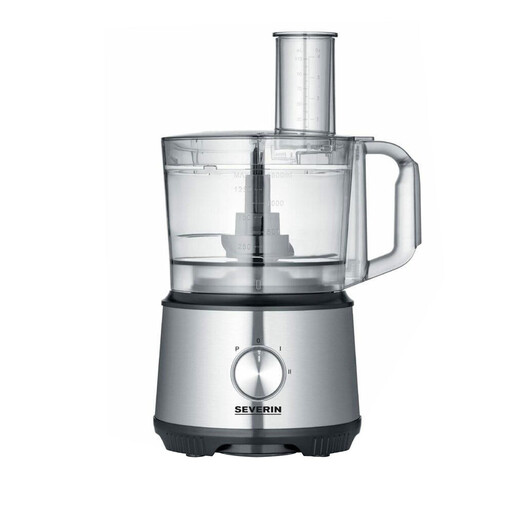 No image available
Could suit you if you want to chop ingredients and stir or knead a mixture in the same appliance.
1.5-litre bowl and dough hook. The product details also list chopping, mincing, kneading and mixing.
 No image available
For ingredients you want to chop and mix in the appliance’s bowl; this doesn’t prove it can handle a whole batch of sticky bar mixture.
Three stainless steel bowls: 2.5 l, 2.2 l and 1.8 l. The product description lists pulse operation for up to 30 seconds per cycle.
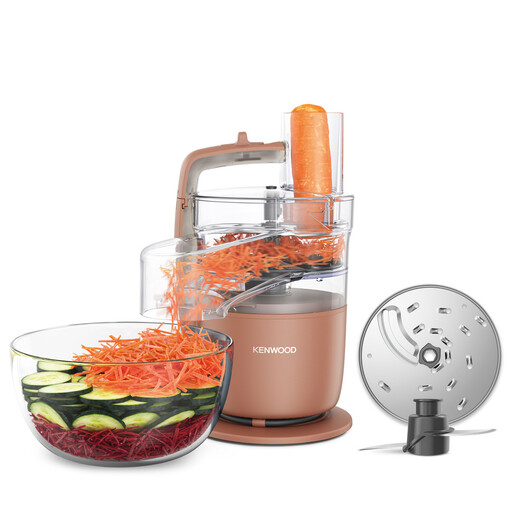 No image available
A better fit if you want a compact appliance for chopping ingredients and kneading.
1.3-litre bowl; 0.75 l working capacity for dry or liquid ingredients. The product description lists chopping, puréeing and kneading, as well as drawer storage and dishwasher-safe parts.
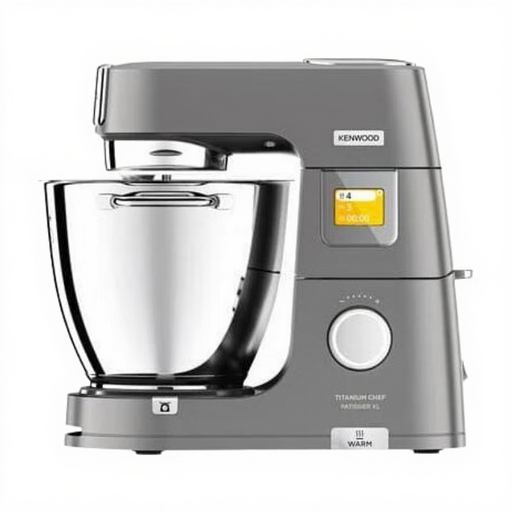 No image available
Could suit you if you mainly want to stir or knead a mixture; the listed functions don’t include chopping ingredients.
Two bowls, 7 l and 5 l; K-beater, dough hook and Flexi beater. An integrated scale is also listed.
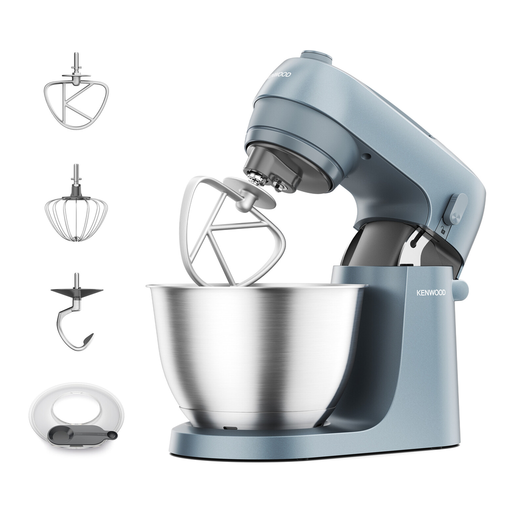 No image available
This may suit you if you want to stir or knead a mixture; the listed details don’t mention a chopping function.
4-litre bowl, K-beater and dough hook; the product description lists a pulse function and a height of 30 cm. It says the appliance can be stored in a cupboard or drawer.
No, you can’t tell from the bowl capacity alone. Check the permitted quantity of ingredients or dough and the running time for the exact model. For example, Kenwood lists a maximum dough load of 1 kg and other processing limits for the FDM72.990BK; these details don’t automatically apply to other models or recipes.
Clean all parts that come into contact with food according to the appliance instructions, and handle the mixture hygienically. The Federal Institute for Risk Assessment notes that hygienic handling and suitable temperatures during storage and freezing are important; this doesn’t mean every bar recipe has the same shelf life.
No. The Consumer Advice Centre explains that your statutory rights apply to faults and are exercised against the seller, whereas a warranty is an additional voluntary promise with its own terms.
Yes, if the specific appliance falls under harmonised EU rules that require CE marking. It is the manufacturer’s declaration of conformity, not an independent quality mark or proof that the appliance is suitable for a particular recipe. The European Union’s Your Europe website explains the requirements for CE marking.