If you have limited worktop space and make small batches of shortcrust pastry, a compact food processor with a blade and pulse function is a sensible starting point. For larger quantities, a stated maximum dough capacity matters more than bowl capacity alone. Measure the space available on your worktop and in your cupboards, and check the accessories and operating limits for the specific model. A KitchenAid pâte brisée recipe uses chilled butter and short pulses; it describes a preparation method, not an independent performance comparison.
Which type of appliance is right for you?
Making shortcrust pastry with limited space
If you have only a small area of free worktop space and make small batches, check for a pulse function, the appliance’s footprint and a suitable batch size. Kenwood and KitchenAid list a blade and pulse function for their respective models.
Preparing larger batches of pastry
If you often make larger quantities of pastry at once and can clear some worktop space, look for a stated maximum dough capacity rather than relying on bowl capacity alone. Bosch and Philips list different capacity details for their models.
Storing and cleaning accessories
If you also use your food processor for other kitchen tasks, compare what’s included and how the parts can be stored for the specific model. Bosch and KitchenAid describe ways to store accessories in the bowl.
What should you look for when buying?
When choosing a food processor for shortcrust pastry and a compact worktop, different priorities come into play: texture, space, batch size and how easy the accessories are to manage.
| Priority |
What to check when buying |
Who it matters most to |
| Short, crumbly texture |
Check that the specific model includes a pulse function and a suitable blade. |
If you want to process cold butter and flour briefly, a blade and pulse function are important features to check. Around 36% of consumers put controlled processing and a crumbly texture first. |
| Worktop and storage space |
Measure the available width, depth and height; also allow room for filling and storing the appliance. |
If worktop space is limited, you’ll want to know whether the appliance will fit where you plan to use it and whether it’s easy to store. Around 29% of consumers prioritise footprint and storage space. |
| Dough quantity per batch |
Compare your recipe quantity with a stated maximum dough capacity; don’t convert litres into kilograms. |
If you want to make a larger batch at once, a stated dough capacity matters more than bowl capacity alone. Around 21% of consumers put batch size first. |
| Storage and cleaning |
Compare what’s included, storage options and cleaning instructions for the specific model. |
If you want to avoid having lots of loose accessories to tidy away after baking, check how easy they are to store and clean. Around 14% of consumers focus on these points when choosing an appliance. |
Common buying mistakes
-
Assuming bowl capacity equals dough capacity
Bowl capacity and maximum dough capacity are two different specifications. For example, Bosch lists a 2.3 l bowl capacity and a maximum dough capacity of 0.8 kg for the MultiTalent 3 MCM3230W.
Compare the quantity in your recipe with a stated dough limit instead of converting litres into kilograms without any basis.
Depending on the quantity in your recipe, you may need to process the dough in several batches.
-
Measuring just the bowl, not the whole appliance
Bowl size doesn’t tell you whether the appliance will fit on your worktop or in its intended storage space. Bosch lists the full appliance dimensions; Kenwood’s 30 cm measurement refers only to the height when assembled.
Measure the width, depth and available height where you plan to use it, and check any missing dimensions before buying.
-
Assuming more accessories automatically mean better shortcrust pastry
Extra tools expand the range of tasks an appliance can do, but they don’t prove that it will make better shortcrust pastry. KitchenAid’s pâte brisée recipe uses a blade and short pulses.
Check which tool you need for your recipe and which extra functions you’re actually likely to use.
Extra parts need storage space and have to be cleaned.
Key brands to consider
Kenwood
The MultiPro Go FDP22.140GY is a compact option for small batches and limited space.
- Kenwood lists a height of 30 cm when assembled, a 1.3 l bowl, a stainless steel blade and a pulse function for this model.
- The bowl size isn’t a confirmed maximum capacity for shortcrust pastry. Kenwood’s quick-start guide limits the dough processing described there to a maximum of 30 seconds; this isn’t a shortcrust pastry recipe.
KitchenAid
The Food Processor 5KFP0719EBM is aimed at buyers who want a separate dough blade and a way to store the accessories in the bowl.
- KitchenAid lists a multipurpose blade, a dough blade, two speeds and a pulse function. Its own pâte brisée recipe describes how to prepare it using chilled butter and short pulses.
- The recipe demonstrates a preparation method, but it isn’t an independent performance comparison of the model. The bowl capacity isn’t a stated maximum quantity for shortcrust pastry.
Bosch
The MultiTalent 3 MCM3230W is an option for buyers who want to compare a stated maximum dough capacity with the appliance dimensions.
- Bosch lists a maximum dough capacity of 0.8 kg, appliance dimensions of 375 × 220 × 260 mm (H × W × D), a pulse setting and a way to store the accessories in the bowl.
- The stated dough capacity doesn’t indicate how well it handles shortcrust pastry texture. The dimensions show how much space you’ll need where you plan to use it.
Philips
The Viva HR7530/10 is worth considering if you regularly want to chop and slice as well as prepare dough.
- Philips lists kneading, an S-blade and a 2.1 l bowl with a maximum capacity of 1.5 l. Philips recommends speed setting 1 for pastry dough.
- The volume specifications don’t confirm a maximum quantity for shortcrust pastry. The speed setting is a manufacturer recommendation, not independent proof of the result.
Food processors at Joybuy
This selection includes compact food processors and kitchen machines with blades or pulse functions for short bursts of processing. For each option, compare the details on batch capacity, space needed and accessories.
 No image available
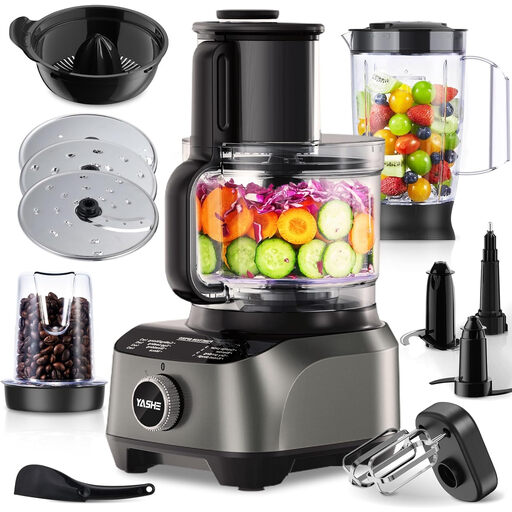
YASHE HGM-410 multifunctional food processor, 2.5 l bowl and 1.5 l glass jug
The product description lists a pulse function, a chopping blade and a dough hook for a range of kitchen tasks.
2.5 l main bowl and 1.5 l glass jug; 3 speeds and pulse function; safety lock; 1300 W.
Volume specifications alone don’t tell you what quantity of shortcrust pastry the appliance can handle. Check that the appliance and its accessories will fit in your available worktop and storage space.
View at Joybuy
 No image available
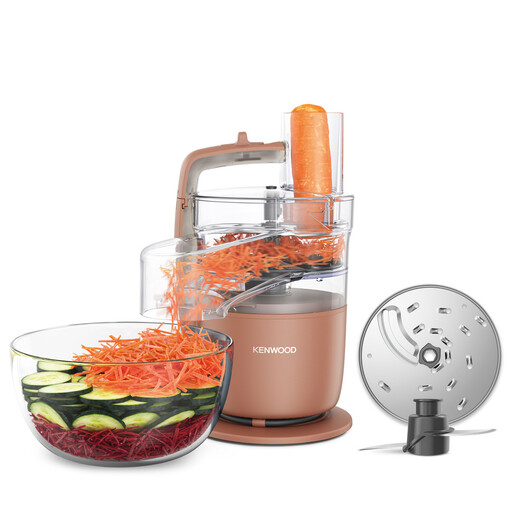
Kenwood MultiPro Go FDP22130RD, Clay Red
The product description lists a blade, a pulse function and a dough-processing function for short bursts of use.
1.3 l bowl; 0.75 l working capacity for dry and liquid ingredients.
Bowl capacity and working capacity are different specifications. Compare the quantity in your recipe with the details for the specific model.
View at Joybuy
 No image available
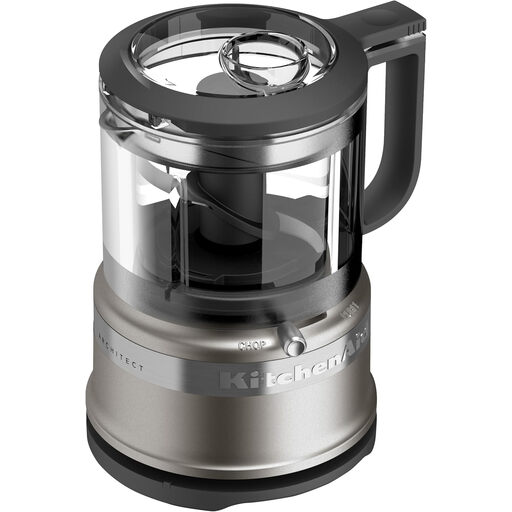
KitchenAid 5KFC35616ECU mini food processor, 240 W, Contour Silver
The listed pulse function and multipurpose blade are worth checking if you want to process your ingredients in short bursts.
0.83 l working bowl; dimensions 17.8 × 14.3 × 22.2 cm; two speeds; 240 W; integrated cord storage.
Check whether the working bowl is large enough for your recipe; you can’t determine a stated maximum quantity for shortcrust pastry from its volume.
View at Joybuy
Frequently asked questions
How do you use a food processor to make shortcrust pastry?
A KitchenAid pâte brisée recipe uses the blade, chilled butter cut into cubes, ice-cold water and short pulses. It warns against processing the mixture until it forms a ball of dough. Also follow the quantity and operating instructions for your specific appliance.
Is the bowl capacity in litres enough to plan a batch of dough?
No. Bowl capacity alone doesn’t tell you how much dough an appliance can process. Alongside the 2.3 l bowl capacity, Bosch explicitly lists a maximum dough capacity of 0.8 kg for the MCM3230W; Philips lists bowl capacity and maximum capacity separately. Compare like with like.
What are your rights when buying online in Germany?
For a qualifying distance purchase from a trader, you generally have a 14-day right to cancel, starting from delivery. Exceptions and possible return costs apply, as explained by the European Union’s Your Europe website. If goods are faulty, you’re also generally entitled to a legal guarantee of at least two years from the seller. The Verbraucherzentrale points out that this is separate from a voluntary manufacturer’s guarantee.
Can you put an old food processor in the household rubbish?
No. Waste electrical equipment must be taken to an authorised collection point. Germany’s Federal Ministry for the Environment lists local authority collection points, as well as manufacturers and retailers that accept returns under the applicable take-back conditions.


