
Lieferung heute & morgen

Qualitätsgarantie

Willkommens-Angebote freischalten: KOSTENLOSE Lieferung | Bis zu 80 % RABATT | Kostenlose 30-Tage-JoyPlus-Testphase
App herunterladen
Anyone looking to buy a food processor or blender is faced with a wide range of options: countertop blenders, smoothie makers, hand mixers, stick blenders and dough mixers differ considerably in design, intended use and cleaning requirements. An appliance that is suitable for smoothies will not necessarily process yeast dough reliably. The key consideration is therefore not the longest list of features, but how well the appliance matches your own kitchen habits.
A high wattage rating may sound convincing at first. However, it primarily describes the electrical power input and, on its own, says little about the blade design, gears, motor cooling or permitted operating time. A high-performance blender should therefore also provide details of the maximum fill level, operating time and ingredients it is designed to process.
Suitable blades and the right operating function are also important for ice, frozen fruit and nuts. An ice-crush function should not be taken to mean that the appliance is suitable for every hard ingredient without restriction.
The size of the container is not always the same as the recommended working capacity. For example, the Ninja Professional Blender has a 2.1-litre container, but the maximum liquid capacity is specified as 1.9 litres. A food processor with a stainless steel bowl may hold 6 litres, while a lower recommended capacity applies to certain types of dough.
If you regularly cook or bake for several people, you should therefore pay attention to the usable capacity, rather than just the printed litre figure. For a single-person household, on the other hand, a compact smoothie maker with a capacity of 0.6 to 0.9 litres may be the more practical choice.
Removable blades, dishwasher-safe accessories and an easily accessible bowl make everyday use easier. At the same time, sharp blades must be cleaned with care. The motor housing must not be immersed in water.
Accessories also need to be checked carefully: a food processor for baking should have at least a dough hook, flat beater and whisk. A food processor, by contrast, needs suitable slicing or grating discs. A stick blender with a chopper and whisk can replace several individual appliances, but it generally processes smaller quantities.
For occasional smoothies and soft fruit, 300 to 500 watts may be sufficient, provided the blades and container are suitably designed. Models with 900 to 1,300 watts offer more power reserve for frozen ingredients or larger quantities. For food processors used for kneading, torque at low speed is also important.
More speed settings allow for finer adjustment, but they are not a quality feature in their own right. Stable speed control, a pulse or turbo function and clear information about the maximum operating time are more important. Some personal blenders may only be operated for short intervals.
A blender with stainless steel blades should have rust-resistant, firmly secured blades and a safe blade assembly. Removable blades can make cleaning easier, but they must be fitted correctly afterwards. BPA-free containers are important to many shoppers; nevertheless, you should check the manufacturer’s specific material information.
Also look out for:
Hot soups cannot automatically be processed in every countertop blender. The instruction manual specifies whether warm ingredients are permitted and under what conditions.
A large countertop blender needs sufficient clearance above it to open the lid. A food processor with a stainless steel bowl often remains permanently on the worktop, as its weight makes regular repositioning difficult. Compact appliances such as the Kenwood Go are designed for smaller kitchens, with a height of 30 centimetres.
Also allow space for the bowl, lid, blades and accessories. An appliance with numerous attachments is only practical if they can be stored neatly and kept within easy reach.
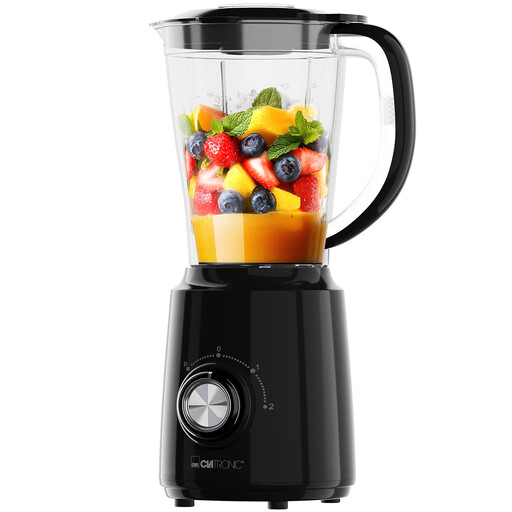
Why this product suits the profile: This countertop blender has a 1.5-litre container, three speed settings and a pulse/turbo function for everyday blending tasks.
The product details clearly specify the container size, BPA-free material, removable stainless steel blades and an ice-crush function.
500-watt motor, 1.5-litre container and rust-resistant four-blade stainless steel assembly.
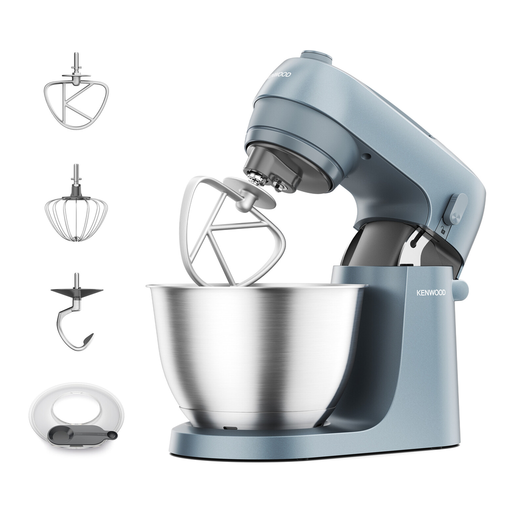
Why this product suits the profile: This compact food processor for baking combines a metal housing with a 4-litre stainless steel bowl and six speed settings.
The stated maximum quantities for cake and bread dough help you assess the bowl based on its actual capacity, rather than its litre rating alone.
800-watt motor, planetary mixing system, dough hook, K-beater and whisk.
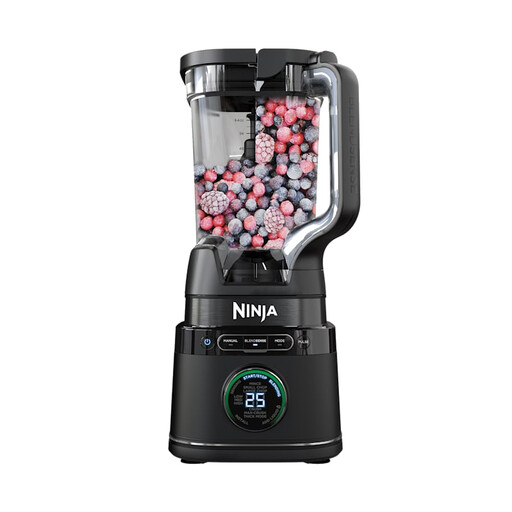
Why this product suits the profile: This countertop blender is designed for larger portions, frozen ingredients and different consistencies.
The product details distinguish between the total capacity of 2.1 litres and the maximum liquid capacity of 1.9 litres.
1,000-watt motor, six stainless steel blades, three speeds plus pulse function and dishwasher-safe parts.
We have put together a complete, regularly updated list of products that fully meet these strict selection criteria and the safety regulations applicable in the EU.
A blender works more efficiently when hard ingredients are cut into smaller pieces and liquids are added first. Never exceed the MAX marking and always follow the specified operating time. If you are blending several batches, take breaks to allow the motor to cool down.
When it comes to electricity costs, actual usage time is more important than wattage alone. An appliance rated at 1,000 watts that runs only briefly may use less energy in everyday use than a less powerful model with longer operating times. A food processor used for baking will also require longer kneading or mixing times.
A countertop blender with a larger container is suitable for several portions and different consistencies. A smoothie maker with a drinking container saves space and reduces the need to transfer the drink. The larger capacity is generally more practical for families, while the compact design is ideal for individual portions.
For bread dough, a dough mixer or food processor with a dough hook, stable base and specified dough capacity is a sensible choice. Check the recommended flour or dough quantity and the maximum operating time. A basic blending function is no substitute for a suitable dough hook.
The service life depends on how the appliance is used, cleaned and stored, as well as whether the manufacturer’s instructions are followed. Overloading, excessively long operating intervals and incorrectly fitted blades can put strain on the motor and gears. Regular cleaning, dry storage and using the specified accessories all help ensure reliable operation.