
Lieferung heute & morgen

Qualitätsgarantie

Willkommens-Angebote freischalten: KOSTENLOSE Lieferung | Bis zu 80 % RABATT | Kostenlose 30-Tage-JoyPlus-Testphase
App herunterladen
Homemade pasta starts before you even roll out the dough – it begins with choosing the right kitchen equipment. If you regularly want to prepare bread, pizza, cakes, lasagne, spaghetti, tagliatelle or ravioli, you will need either a food processor with a bowl, a suitable attachment or a standalone pasta maker, depending on the recipe.
Marketing promises alone are not much help when making your choice. The key factors are the design, accessories, materials, compatibility and the amount of space the appliance actually requires. The following advice from the Joybuy Product Recommendation Officer explains which points you should check before buying.
A food processor with a 450 W motor may be sufficiently equipped for many dough-making and baking applications. However, wattage alone does not automatically indicate how well an appliance handles heavy doughs. Torque at low speeds, the gearbox design, overheating protection and stability are equally important.
A stand mixer with a dough hook should not slide across a smooth worktop when kneading bread or pizza dough. Suction feet or another anti-slip design can be useful here. Nevertheless, you should always follow the manufacturer's quantity recommendations and usage instructions.
A whisk, beater and dough hook cover typical baking tasks. For pasta, however, you need a pasta attachment or a separate pasta maker. Check the following before buying:
For example, the KitchenAid Pasta Attachment 5KSMPSA is designed for KitchenAid multifunction food processors. It is therefore not a universal solution for appliances from other brands.
With a manual stainless steel pasta maker, food-contact materials, build quality and cleaning instructions are important selection criteria. Flour residue and moist dough can become trapped in the rollers and gaps.
You should also read the care instructions carefully for attachments. For KitchenAid accessories, the product description states that the lasagne roller must not be immersed in water. Before using the attachment for the first time, compare the information on dishwasher suitability and manual cleaning with the instructions provided.
A 6-litre bowl offers more room for larger quantities of dough than smaller bowls. This can be useful for families or households that prepare several portions of bread or pizza dough at once. At the same time, an appliance of this size requires sufficient space on your worktop.
According to the product specifications, the AUCMA stand mixer 6L features a 6-litre SUS304 stainless steel bowl, a tilting motor head and dimensions of 40.7 × 26.8 × 33.2 cm. Before buying, check whether there is enough clearance beneath your wall units when the motor head is raised.
Different speeds are useful for cake batter, whisking egg whites and working with heavy yeast doughs. An appliance with several settings and a pulse function allows you to adapt the speed more flexibly to the recipe. With a stand mixer with dough hook, the dough hook should be suitable for firm doughs and the machine should remain stable during operation.
According to the product specifications, the AUCMA ASM1559 has six speed settings plus a pulse function. The manufacturer also states that it has a 450 W copper DC motor as well as overheating and overload protection. These details come from the product description and do not replace an individual assessment of the recommended dough quantity.
With a lasagne roller, the maximum dough width is a useful point of comparison. According to the product data, the KitchenAid Pasta Attachment 5KSMPSA offers a pasta-sheet width of up to 14 cm and eight adjustable settings. This allows you to adjust the dough thickness for lasagne, filled pasta or other pasta sheets.
A standalone machine, on the other hand, may combine several rollers in one set. Check whether the accessories for spaghetti, tagliatelle and ravioli are actually included and whether the handle and rollers can be fitted securely.
The following selection categorises three solutions according to typical requirements. It is not intended to identify one overall winner, but takes equipment, compatibility and intended use into account.
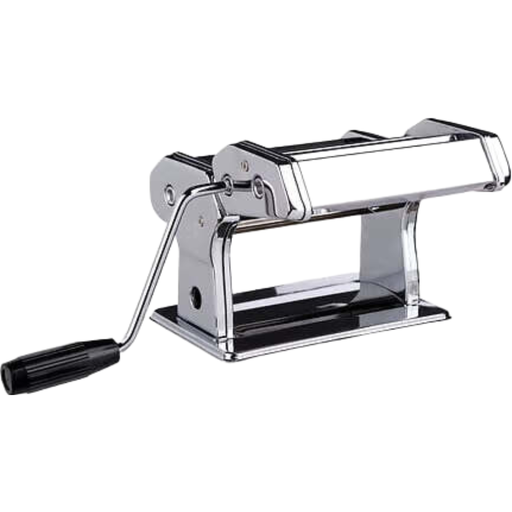
Why this product suits this profile: This set combines a standalone manual pasta maker with rollers for tagliatelle, spaghetti and ravioli. It does not require an existing food processor and is suitable for households that want to try out different types of pasta to begin with.
The three included components are clearly listed. This means you do not have to buy suitable pasta rollers later on. Bear in mind that the machine requires assembly and should be cleaned after every use.
Standalone use without a branded food processor; set comprising pasta, tagliatelle/spaghetti and ravioli rollers.
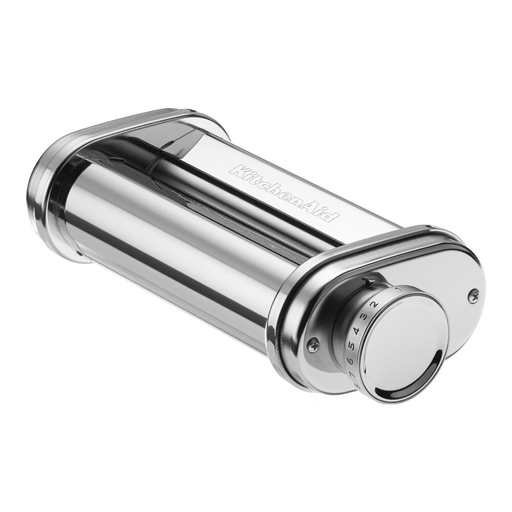
Why this product suits this profile: If you already own a compatible KitchenAid food processor, you can use the multifunction attachment hub to roll out pasta sheets. The attachment is designed for the food processor you already have and saves you from having a separate hand-cranked machine taking up space on your worktop.
Check compatibility before buying. According to the product details, model 5KSMPSA is designed for KitchenAid multifunction food processors, not for brands in general.
Stainless steel lasagne roller; eight adjustment settings and pasta sheets up to 14 cm wide according to the product data.

Why this product suits this profile: Hobby bakers and families who prepare bread, cakes, pizza or pastries as well as pasta get a food processor with a bowl and three standard attachments. To roll out pasta, you will also need a separate pasta maker or a compatible attachment.
The appliance's limitations are clear: the package includes a whisk, dough hook, beater and splash guard, but no pasta roller. This allows you to add the accessories you need.
6-litre SUS304 stainless steel bowl; six speeds plus pulse function and dough hook for baking and dough applications according to the product details.
We have put together a complete, regularly updated list of products that fully meet these strict selection criteria and the safety regulations applicable in the EU.
Choose a food processor for baking if you often work with larger quantities of cake batter, yeast dough or pizza dough. A standalone pasta maker is a sensible choice if spaghetti, tagliatelle or ravioli are your main focus. If you already own a KitchenAid, a suitable lasagne roller can extend the functions of your existing appliance.
You should also pay attention to:
Yes, depending on the model and recipe, a food processor with a dough hook can knead pasta dough. However, you will need a pasta attachment or a separate pasta maker to roll it out afterwards. Follow the recommended dough quantity and operating time.
That depends on the specific model. Rollers should not automatically be placed in water or in the dishwasher. The manufacturer's instructions are the deciding factor. Flour residue can often first be removed dry using a brush or cleaning brush.
Power consumption depends on the motor output and the actual operating time. A 450 W appliance would theoretically use 0.45 kWh after one hour of operation, provided it runs continuously at this rated output. In practice, consumption may be lower. To calculate the running cost, multiply the actual consumption by your electricity tariff.