Small batches of dip
If you make pepper dip in small batches, compare the bowl size and the suitable blade or specified blending function.


For small batches of roasted pepper dip, a compact chopper with removable parts that are easy to clean is a natural starting point. If you also want to chop or grate vegetables regularly, a compact food processor with the right discs may be a better fit for your needs – but it also comes with more accessories and takes up more storage space. Compare the usable working capacity, attachments and cleaning instructions for the specific model. Bowl size and wattage alone do not guarantee a particular dip consistency.
If you make pepper dip in small batches, compare the bowl size and the suitable blade or specified blending function.
If you share work surfaces and appliances with others, check which food-contact parts can be removed and how they can be cleaned according to the instructions. The German Federal Institute for Risk Assessment recommends using separate kitchen utensils for raw, cooked and ready-to-eat foods.
If you regularly want to chop or grate vegetables as well as make dips, check whether the right accessories are included and can be stored easily.
First, think about the portion you usually make and whether you need any attachments beyond a chopping blade. You can then better assess the space needed and cleaning requirements for each model.
| Consideration | What to check when buying | Who should pay particular attention |
|---|---|---|
| Portion size and attachment | Compare the amount you plan to make with the usable working capacity, and check that the blade or blending attachment is suitable for your recipe. Kenwood lists a 1.3-l bowl and a working capacity of 0.75 l for liquids for the FDP23.140GY. | If I’m making a particular portion of pepper dip, I want to know how much the appliance can actually process and which attachment is designed for the job. Around 31% of consumers prioritise portion size and the consistency they want. |
| Cleaning and hygiene | Check the instructions for each part to see whether it can be removed and how it may be cleaned. The German Federal Institute for Risk Assessment recommends using separate utensils for raw, cooked and ready-to-eat foods. | When an appliance is shared, I want to know how to clean the food-contact parts between uses. Around 25% of consumers prioritise cleaning between uses. |
| Worktop and storage space | Allow for the appliance and space to store the blades, bowl and accessories. Bosch gives the MMR08A1 dimensions as 250 × 195 × 195 mm (H × W × D); Kenwood lists a width of 16.8 cm and a height of 29.7 cm for the FDP23.140GY. | If I share worktops and cupboards, I want to be able to store the appliance and accessories easily. Around 25% of consumers prioritise a small footprint. |
| Additional vegetable preparation | Check whether the slicing or grating discs you need are included with the specific model. Kenwood lists slicing and grating discs for the FDP23.140GY. | If I want to chop or grate vegetables as well as make pepper dip, I need the right attachments. Around 19% of consumers prioritise these additional tasks. |
Bowl size does not always tell you how much liquid the appliance can process at once. For the FDP23.140GY, Kenwood lists a 1.3-l bowl and a working capacity of 0.75 l for liquids.
Compare the stated working capacity for your recipe with the amount of dip you want to make.
This may refer to individual removable parts; it does not mean the motor unit can go in the dishwasher. In a shared kitchen, it’s still important to clean the food-contact parts according to the instructions.
Check the instructions for each part to see what can be removed and how it may be cleaned.
The wattage alone does not tell you what consistency a particular appliance will achieve with roasted pepper dip. The appliances listed have not been assessed in a comparative pepper dip test.
Choose an appliance based on portion size, attachments and ease of use. If a particular texture is important, look for a demonstration or a relevant product test for the specific model.
The details below relate to the specific product lines mentioned. The features are provided by the manufacturers and do not apply to every product from a brand.
The MMR08A1 universal chopper is a compact option for straightforward chopping tasks.
The MultiPro Go FDP23.140GY combines chopping with slicing and grating discs for other vegetable preparation tasks.
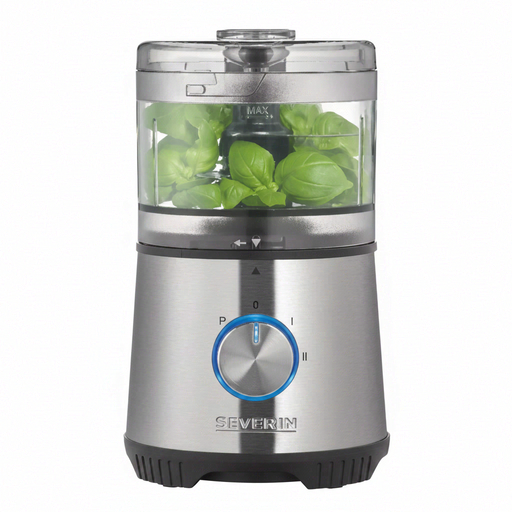
The KM 3865 is a compact multi-chopper with a 0.5-l bowl.
The MultiQuick 5 MQ50236M combines a hand blender with a separate chopper.
This selection includes compact choppers for smaller batches of dip and appliances with larger bowls for preparing other ingredients. For each model, compare the listed attachments, capacity and cleaning instructions.
 No image available
For small batches of dip, the compact bowl is worth considering; the product details also list an emulsifying disc for dips.
0.5 l capacity, 400 W, four-blade knife, two speeds and pulse function. Removable, dishwasher-safe parts are listed; do not immerse the motor unit in water and clean the blade with care.
 No image available
The product description mentions chopping and puréeing fruit and vegetables; check whether the stated bowl size suits your portion.
2-l glass bowl, four stainless steel blades and two speeds. Removable, dishwasher-safe parts are listed.
 No image available
The three stackable bowls have different stated capacities, making them suitable for preparing different quantities.
350 W, bowls with capacities of 1.8 l, 2.2 l and 2.5 l, two speeds and a three-blade knife. According to the description, pulse mode is designed for up to 30 seconds per cycle.
 No image available
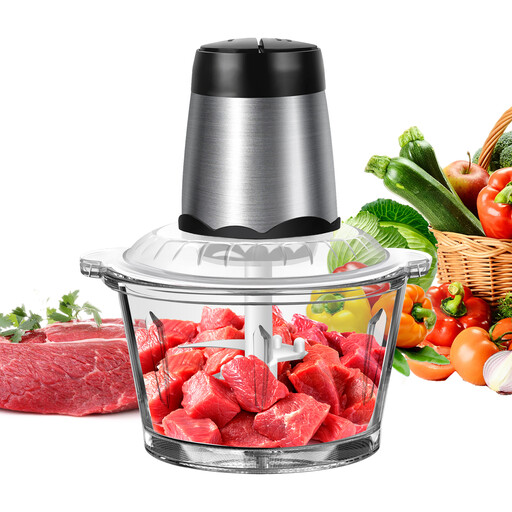
This appliance is described as a vegetable chopper; the clear glass bowl lets you see the food as it is being processed.
2 l, 300 W, two speeds and a four-blade knife made from 304 stainless steel. Maximum continuous running time is 40 seconds; do not immerse the motor unit in liquid and clean the blade with care.
 No image available
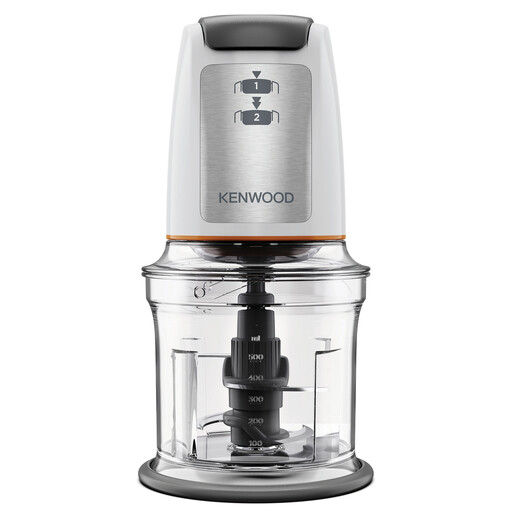
The product description lists dips and sauces as possible uses; the 0.5-l capacity provides a useful point of comparison for smaller portions.
0.5-l bowl, 500 W and two speeds. The description lists chopping and puréeing.
Compare the portion you plan to make with the stated working capacity for your recipe, rather than looking only at the bowl volume. For example, Kenwood lists a 1.3-l bowl and a working capacity of 0.75 l for liquids for the FDP23.140GY.
Clean the food-contact parts according to the instructions for the appliance. The German Federal Institute for Risk Assessment recommends using separate kitchen utensils for raw, cooked and ready-to-eat foods; the phrase “dishwasher-safe parts” does not automatically apply to the whole appliance.
Keep leftovers in the fridge and follow the German Federal Institute for Risk Assessment’s guidance on chilling prepared foods. The ingredients and how the dip is handled affect how long it keeps; appliance specifications cannot tell you its shelf life.
No. The German consumer advice centre distinguishes between the statutory warranty for defects, which applies to the seller in a consumer purchase in Germany, and an additional voluntary guarantee with its own terms and conditions.
Parts intended to come into contact with food must meet the relevant requirements of Regulation (EC) No 1935/2004. These relate to the materials and their placing on the market; they are not blanket proof that an individual appliance has been tested. The absence of a glass-and-fork symbol alone does not prove a breach of the law for an appliance clearly intended for food processing.