Scone bakers looking for short bursts of mixing
If you want to process the butter and flour in batches, a pulse function lets you control the process step by step. Good Food recommends short pulses for this stage.


You don’t necessarily need a food processor to make savoury picnic scones. For the occasional small batch, you can rub the butter into the flour by hand. If you do use a machine, a well-controlled pulse function is useful for short bursts of mixing. When making several batches, check the stated processing capacity of the specific model rather than relying on bowl capacity alone. Larger machines also tend to come with more accessories and need more storage space.
If you want to process the butter and flour in batches, a pulse function lets you control the process step by step. Good Food recommends short pulses for this stage.
If you’re planning to make more than one recipe’s worth, check the stated processing capacity against the quantity you need, and consider how much extra space the appliance will take up.
If you’d like to use your food processor for chopping or grating as well as making scones, check which tools are included and how you’ll store the appliance and accessories.
Good Food recommends short pulses for the flour and butter; in the recipe cited, the liquid is then mixed in separately, outside the food processor. Choose controls and a processing capacity to suit the steps in your recipe.
A good choice if: You want to process the butter and flour briefly, and use the appliance for chopping or grating too.
Bear in mind: Bowl size doesn’t tell you how much scone dough can be processed in one go. Larger recipes may need to be made in several batches.
A good choice if: You regularly make larger quantities and prepare other ingredients, and the processing capacity suits your recipe.
Bear in mind: The larger bowl and extra accessories need storage space and may mean more cleaning.
A good choice if: You only bake a small batch of scones occasionally or don’t want another appliance to store.
Bear in mind: Rubbing in the butter takes a little hands-on work. Good Food suggests this as an alternative to using a food processor.
| Buying priority | What to check | Who is it most relevant to? |
|---|---|---|
| Controlled mixing | Check the pulse control and the blade supplied for the task you have in mind. | If I only want to process the butter and flour briefly, I want to be able to stop the machine at each step. Around 36% of consumers prioritise control over mixing. |
| Quantity per batch | Check the processing capacity and instructions against the quantity of ingredients you plan to use, not just the bowl capacity. | If I’m making several batches for a picnic, I want to know whether the machine can handle enough in one go. Around 29% of consumers say batch size is their main priority. |
| Versatility and storage | Compare what’s included, the appliance’s dimensions and how the accessories can be stored. | If cupboard space is tight, I want to use the appliance to chop or grate ingredients too, and store the accessories neatly. Around 21% of consumers prioritise versatility when space is limited. |
| Cleaning | Check the instructions to see which individual parts are dishwasher-safe. | After baking, I want to know which of the parts I’ve used can go in the dishwasher. Around 14% of consumers say cleaning is their top priority. |
Bowl capacity and stated processing capacity may refer to different things. The capacity in litres alone won’t tell you whether a particular recipe quantity will fit in one go.
Check the quantity of ingredients against the specifications and instructions for the exact model.
If the quantity won’t fit in one suitable batch, you may need to make extra batches and spend more time preparing it.
Good Food’s recipe uses short pulses for the flour and butter, and warns against overmixing when the ingredients are combined afterwards. Having a kneading function doesn’t mean you should knead scone dough for a long time.
Keep the stages separate and follow the recipe and appliance instructions.
Storage matters too when you’re bringing perishable toppings and side dishes. The Federal Institute for Risk Assessment recommends keeping perishable foods as cold as possible until they’re eaten or prepared.
Plan suitable refrigeration for these items during storage and transport.
Keeping food properly chilled may take up extra room when you’re packing.
According to KitchenAid, the 5KFP0719EBM combines a 1.7-l bowl with a pulse function, multi-purpose and dough blades, and slicing and grating discs.
The PurEase FP3233SI is a compact food processor with a 2.1-l bowl, two speeds and a pulse function.
The MultiPro OneTouch FDM73.850SS combines a 3-l bowl with a dough tool and other accessories.
According to Severin, the KM 3892 combines kneading, chopping, slicing and grating, with a stated capacity of 1.5 l.
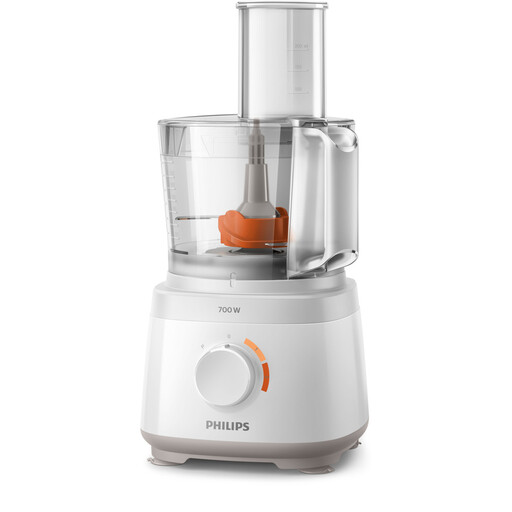
Food processors for short mixing steps with flour and butter, as well as preparing other ingredients.
 No image available
The stated pulse function and multi-purpose blade are suited to short, controlled bursts of mixing. Good Food describes this method for the flour and butter.
The bowl capacity is 2.1 l, while the working bowl capacity is stated as 1.5 l. According to the product information, the motor should run continuously for no longer than 3 minutes. Check the quantity in your recipe against the appliance instructions.
 No image available
The stated DOUGH preset is designed for making dough. The slicing and grating functions may also come in handy for other preparation tasks.
For scones, follow the individual steps in your recipe: Good Food recommends short pulses for the flour and butter, then mixing in the liquid separately, outside the appliance.
No, not with every recipe. Good Food’s buttermilk scone recipe processes the flour and butter in short pulses, then mixes in the liquid in a bowl. Follow your recipe and the appliance instructions.
No. Kenwood lists the bowl capacity and processing capacity separately for the MultiPro OneTouch FDM73.850SS. Check the quantity in your recipe against the specifications and instructions for the model you’re considering.
Check the instructions for each part you’ve used. Severin describes the attachments on the KM 3892 as dishwasher-safe, but that doesn’t mean the motor base or parts from other models can go in the dishwasher.
Electrical appliances must carry the CE marking where the relevant harmonised EU regulations require it. The CE marking is a manufacturer’s declaration, not an independent quality mark. Parts intended to come into contact with food are also subject to food-contact material rules. Check the documentation for the specific product.
There’s no blanket answer. The Federal Institute for Risk Assessment recommends keeping perishable foods as cold as possible until they’re eaten or prepared. Take the ingredients and their storage instructions into account during transport too.