Regular scone bakers
If you make savoury scones regularly, you’ll want to work cold butter in briefly and carefully rather than overworking the dough. Küchengötter recommends using the pulse function for short bursts.


A food processor with a blade and a well-controlled pulse function can be useful if you regularly want to work cold butter into flour quickly; for the occasional small batch, you can do this by hand. Then choose based on the number of portions you need, how much cleaning is involved and whether you’ll actually use slicing or grating attachments for other lunchbox ingredients. A dough tool or a large bowl alone is no reason to knead scone dough for a long time.
If you make savoury scones regularly, you’ll want to work cold butter in briefly and carefully rather than overworking the dough. Küchengötter recommends using the pulse function for short bursts.
If you prepare several portions and also want to use the appliance to grate or slice ingredients, consider the amount you plan to process and the attachments included with the specific model variant.
For small batches, weigh up whether the extra convenience is worth the worktop space, attachments and cleaning involved in adding another appliance.
A good fit if: You often want to work cold butter in quickly and prepare ingredients for other meals too.
The trade-off: The bowl and attachments take up space and need cleaning after use; bowl capacity alone doesn’t tell you how much dough the appliance can handle.
A good fit if: You only make a small batch occasionally and don’t need another appliance for slicing or grating.
The trade-off: You’ll do the work yourself, but won’t need another appliance or have its attachments to clean.
A good fit if: You regularly mix or knead other doughs, as well as making scones.
The trade-off: A dough hook won’t tell you when scone dough is mixed enough. This type of appliance isn’t automatically the best choice for the brief butter-and-flour step.
| What matters | What to check before buying | Who is it important to? |
|---|---|---|
| Briefly processing the dough | Check whether the specific model has a blade and a pulse function. For the scone step described, the blade briefly works the cold butter into the flour; the liquid is then added and mixed in briefly. | If I want to work the butter in carefully without processing the dough for too long, I look for a blade and pulse control. Around 31 % of consumers put brief dough processing first. |
| Portion size | Compare your recipe quantity with the maximum dough capacity specified for the exact model, if one is given. Bowl capacity and maximum dough capacity are two different measurements. | If I’m preparing several lunchbox portions, I want to know how much the appliance can actually process. Around 25 % of consumers base their choice mainly on portion size. |
| Cleaning and worktop space | Check the appliance dimensions, how the attachments can be stored and the cleaning instructions for the parts you plan to use. | When I’m making small batches, I don’t want to allow for more space and washing-up than the time saved is worth. Around 19 % of consumers focus mainly on cleaning and worktop space. |
| Other lunchbox ingredients | Check what comes with the complete model variant, especially the blade and any slicing and grating attachments. | If I also want to prepare ingredients for other meals with the same appliance, I want to know exactly which tools are included. Around 13 % of consumers prioritise this versatility. |
| Lunchbox storage | Plan preparation and storage separately. For perishable ingredients, follow the Federal Institute for Risk Assessment’s advice on chilling, transport and storage. | If I pack perishable ingredients in a lunchbox, I need to think about how they’ll be stored until they’re eaten; the kitchen appliance doesn’t take care of that. Around 12 % of consumers focus on safe storage. |
For the scone step described, cold butter and flour are briefly processed with the blade; the liquid is then mixed in only briefly. The aim isn’t to knead the dough for a long time.
Choose the appliance function to suit this step, and consider whether making your usual quantities by hand would be enough.
For the Bosch MCM3501M, the manufacturer specifies a bowl capacity of 2,3 l and a maximum dough quantity of 0,8 kg. These figures describe different things.
Compare your recipe quantity with the stated dough limit for the exact model; don’t estimate it from bowl capacity alone.
What’s included can vary between model variants. Details for one variant don’t prove that the same tools come with another model.
Before buying, check the full model number and the list of included attachments.
A food processor doesn’t affect how perishable ingredients should be stored or transported afterwards.
If your ingredients are perishable, plan to keep them properly chilled until they’re eaten. The Federal Institute for Risk Assessment highlights the importance of keeping food sufficiently cool during transport and storage.
The MultiTalent 3 MCM3501M is a useful comparison point for a compact food processor with a pulse function and a stated dough capacity.
According to the manufacturer, the MultiPro XL Weigh+ FDM72.990SS is designed for people who want to weigh ingredients directly in the appliance and use additional attachments.
The German product page for the Food Processor 5KFP1319EAC in Crème lists a 3,1-l bowl, pulse control and several slicing tools.
The Viva Collection HR7530/10 is worth considering for households that plan to use their appliance for slicing and chopping as well as dough preparation.
These Joybuy products include appliances whose product names mention food processor or kitchen machine functions, as well as attachments for preparing ingredients. Check the specific model name and listed features to see whether they suit the steps involved in making your scones.
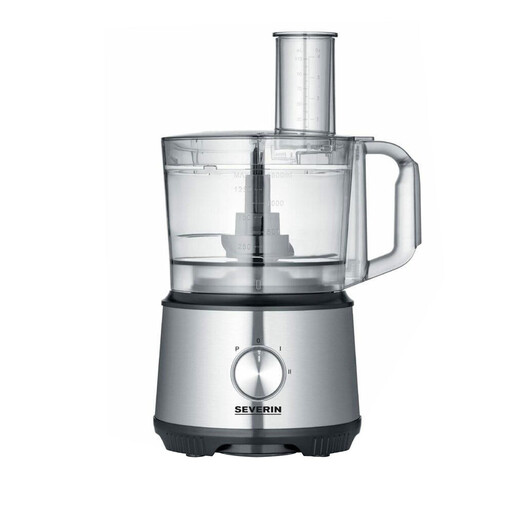 No image available
The product name describes this model as a food processor with tools for a range of food preparation tasks. Check whether the included parts suit the ingredients you use for your lunchbox.
 No image available
The product name mentions a pulse function, which may be useful for brief processing steps; it doesn’t tell you how much scone dough the appliance can handle.
Listed features include a 4,5-l stainless steel bowl, 1300 W and six speeds plus a pulse function.
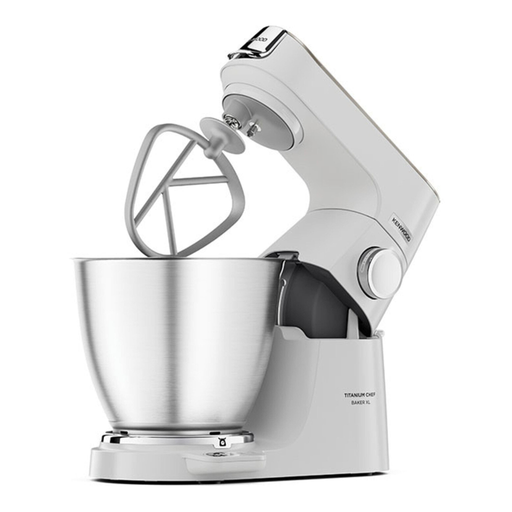 No image available
The product name mentions an integrated scale, which may be useful when weighing ingredients during preparation. Check the product details for the specific version to see whether it suits the steps involved in making your scones.
Listed features include a 7-l mixing bowl, 1200 W and a three-piece patisserie set.
No. For the scone step described, cold butter and flour are briefly processed with the blade; the liquid is then mixed in just enough to combine. Having a dough tool included doesn’t mean you need to knead this recipe for longer.
Check what’s included and read the instructions for the exact model variant. For the Bosch MCM3501M, the manufacturer lists dishwasher-safe attachments; this doesn’t mean that all parts of other models are suitable for the dishwasher.
That depends on the ingredients and how they’re stored. For perishable foods, the Federal Institute for Risk Assessment recommends keeping them sufficiently cool during transport and storage until they’re eaten. A food processor doesn’t replace these precautions.
No. The Verbraucherzentrale distinguishes between statutory consumer rights and a guarantee, which is an optional extra offered under its own terms. Check the guarantee terms for the specific offer separately.
Look for clear product and manufacturer details, as well as German-language instructions with the necessary warnings. The Federal Network Agency lists these as points to check for electrical appliances it oversees. CE marking is the manufacturer’s declaration that a product complies with relevant EU product rules; it isn’t an independent quality mark.