Scone bakers short on space
If you have limited worktop and storage space, compare the appliance’s dimensions, pulse control and usable bowl capacity with the quantity in your usual recipe.


For savoury scones in a small kitchen, a compact food processor with a pulse function is a good choice if you mainly want to briefly process the butter and flour. You can then work in the liquid by hand. Compare the usable bowl capacity and the space needed to use and store the appliance with the quantity in your recipe, rather than looking only at the stated capacity. Good Food describes both briefly processing butter and flour in the machine before bringing the mixture together by hand, and a Cheddar scone recipe made entirely by hand.
If you have limited worktop and storage space, compare the appliance’s dimensions, pulse control and usable bowl capacity with the quantity in your usual recipe.
If you want to grate cheese or chop savoury ingredients as well as prepare dough, check which discs come with the specific model and where you’ll store them.
If you prepare more than a small batch, compare the recipe quantity with the permitted processing capacity and the appliance’s dimensions, rather than looking only at the bowl’s stated capacity.
| What matters when buying | What to check | Who is this important to? |
|---|---|---|
| Mixing dough with control | Check for a pulse function, a suitable blade or dough tool, and the instructions for the specific model. | If I only want to briefly process the butter and flour, I want to control the mixture step by step and work in the liquid by hand if needed. Around 33% of consumers put controlled dough preparation first. |
| Saving worktop and storage space | Compare the appliance’s dimensions, the clearance beneath wall cabinets and where you’ll store the accessories. | With limited worktop and cupboard space, I want to know where the appliance and attachments will actually fit before I buy. Around 27% of consumers prioritise a compact footprint. |
| Getting the right batch size | Compare the recipe quantity with the model’s stated capacity or dough limits; distinguish between the stated capacity and the usable amount. | If I regularly make a particular quantity of a recipe, I need a bowl that can handle it without taking up more worktop space than necessary. Around 20% of consumers focus above all on getting the right batch size. |
| Preparing several ingredients | Check what’s included, which slicing or grating discs are suitable, and the cleaning instructions. | If I also want to grate cheese for savoury scones, the accessories should be suited to the job and easy to store. Around 20% of consumers prioritise having several preparation steps covered. |
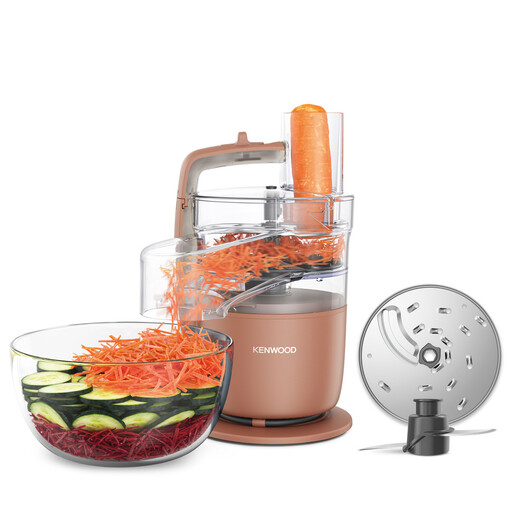
Manufacturers may state separate capacity limits as well as the bowl’s volume. For example, Kenwood lists a stated capacity of 1.3 l for the FDP23.140GY, along with separate usable capacity figures.
Compare the manufacturer’s guidance for your recipe with the actual quantity of ingredients.
A usable capacity that’s too small could mean processing several batches and doing extra washing up.
The recipe described by Good Food processes the butter and flour in the appliance, but brings the dough together by hand after adding the liquid. It also warns against mixing for too long.
Use the appliance only for the steps specified in your recipe, and stop according to the instructions and the consistency of the dough.
Bowls, discs and blades also need somewhere to be stored; some models let you keep the accessories inside the bowl.
Measure the space available for using and storing the appliance, and check what’s included with the specific model.
Bosch marks the MCM3200W food processor, which is still described on its website, as no longer available on its German product page.
Use older technical details for comparison only, and check the identity and availability of the specific model before deciding to buy.
The MultiPro Go range is aimed at shoppers looking for a compact food processor. Kenwood lists a 1.3-l bowl, blades, slicing and grating discs, and a pulse function for the FDP23.140GY.
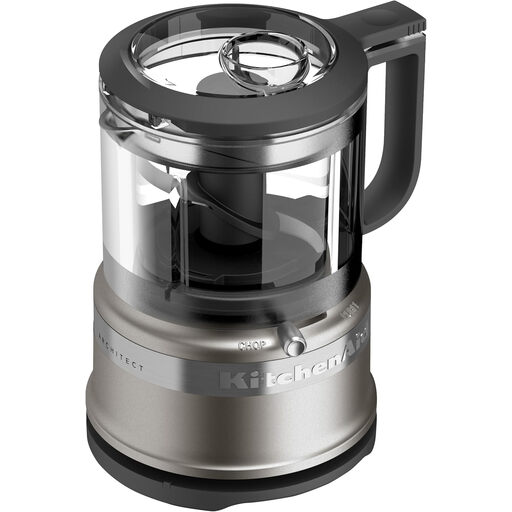
The Food Processor 5KFP0719 may suit shoppers looking for a compact appliance supplied with a dough blade and slicing and grating discs.
According to Philips, the Viva Collection HR7530/10 combines dough preparation with other tasks such as slicing and chopping.
The MultiTalent 3 range offers a point of comparison for shoppers considering a larger compact food processor with several attachments.
The following Joybuy products vary in bowl size and the space they take up. Compare them with the quantity in your recipe and the space available on your worktop. For parts that come into contact with food, check that they’re suitable for the intended food contact.
 No image available
Worth considering if you can prepare several stages of your dough with one appliance and have room for the larger bowl.
Features listed include a 4.5-l stainless steel bowl, 1300 W, six speeds and a pulse function, along with a dough hook, beater and whisk.
 No image available
The compact design and pulse function may suit you if you want to process ingredients in short bursts and keep the space needed for use or storage to a minimum.
The bowl’s stated capacity is 1.3 l; the working capacity is listed as 0.75 l for both dry and liquid ingredients. A pulse function is also listed.
The Kenwood quick-start guide for Type FDP22 specifies a maximum processing time of 30 seconds to prevent the motor from overheating. Check the instructions for the specific model.
 No image available
The small bowl and compact dimensions may suit you if you’re making a modest quantity of scones and space is particularly limited.
Features listed include a 0.83-l bowl, two speeds, a pulse function and a multi-purpose blade. The dimensions are 17.8 × 14.3 × 22.2 cm.
No. A scone recipe published by Good Food processes the butter and flour in a food processor, then brings the dough together by hand after adding the liquid. Another Good Food recipe for Cheddar scones describes making them by hand. Follow your recipe and avoid mixing for longer than necessary.
Not reliably. Kenwood lists a 1.3-l bowl for the FDP23.140GY, alongside separate usable capacity figures. For the MCM3200W, Bosch lists a maximum dough processing quantity of 0.8 kg as well as a bowl volume of 2.3 l. Compare the relevant manufacturer’s guidance with your recipe.
Check the instructions for your specific model for details on the safety lock, permitted tools and cleaning removable parts. Kenwood specifically refers to the instructions for parts that are dishwasher-safe, so it wouldn’t be right to make a general claim about every part.
In the EU, new goods bought from a trader are generally covered by a minimum two-year legal guarantee if they’re faulty. Your Europe explains that a voluntary manufacturer’s guarantee does not limit these rights. Online purchases are also generally subject to a 14-day cooling-off period from the day you receive the goods, subject to legal exceptions.
According to the European Commission, food-contact materials placed on the EU market must comply with Regulation (EC) No 1935/2004; additional rules may apply depending on the material. This general requirement does not prove that an individual product complies.