What should you look for when buying?
The percentages offer a rough guide to the buying priorities described, not market shares. What matters is which requirement takes priority when you make your own scones.
| Buying consideration |
What to check |
Who it matters most to |
| Footprint and storage |
Check the width, depth and height, the clearance above the lid, and how the accessories are stored for the specific model. |
If worktop space is tight, I want to be able to set the appliance up easily and put it away with its accessories after baking. Around 34 % of consumers put footprint at the top of their list. |
| Control when mixing |
Check for a pulse function and a suitable blade; follow the recipe rather than assuming a general processing time. |
If I want a crumbly mixture, I need to process the butter and dry ingredients briefly, then fold in the other ingredients by hand. Around 33 % of consumers prioritise control when mixing. |
| Quantity per batch |
Compare the recipe quantity with the recommended dough capacity and the details for the exact model variant. |
If I regularly bake larger batches, I want to process as much as possible in one go while still matching my recipe. Around 20 % of consumers consider batch size their top priority. |
| Cleaning and other uses |
Check what’s included, along with the model-specific instructions for cleaning and storing the parts. |
If you want to use the processor for other kitchen tasks too, consider how you’ll clean and store the accessories. Around 13 % of consumers make this a priority. |
Food processors to suit you at Joybuy
This selection is for people with limited worktop space who want to pulse ingredients for savoury scones briefly and store the appliance neatly.
 No image available
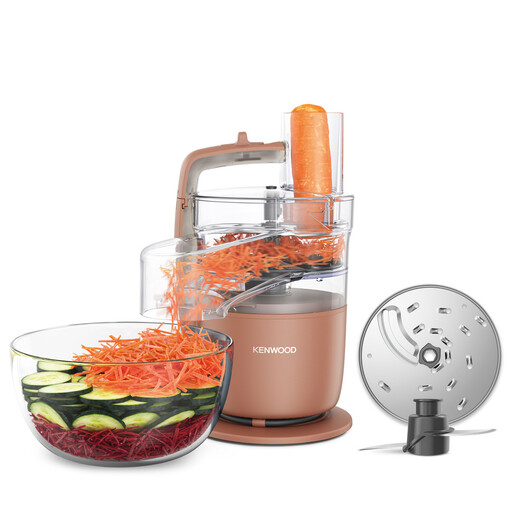
Kenwood MultiPro Go FDP22130RD Food Processor Clay Red
The pulse function and stainless steel blade are suited to processing butter and dry ingredients briefly, with breaks in between; the other ingredients can then be folded in by hand, following the recipe method.
1.3-l bowl; stated working capacity: 0.75 l for dry ingredients.
The product description says its compact design can be stored in a drawer.
View at Joybuy
 No image available
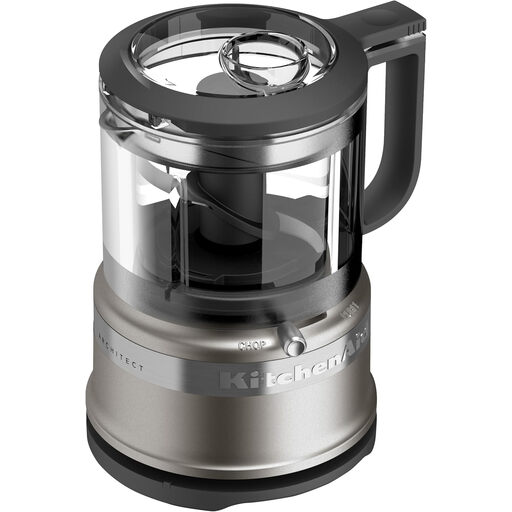
KitchenAid 5KFC35616ECU Mini Food Processor, 240 W, Contour Silver
The pulse function and multipurpose blade are useful for short mixing intervals; check in advance whether the capacity suits the quantity of scones you want to make.
0.83-l working bowl; two speed settings and a pulse function.
The product description calls the design compact and space-saving.
View at Joybuy
Frequently asked questions
Does all the savoury scone dough need to be mixed in the food processor?
No. A recipe method published by Anchor Dairy pulses butter and dry ingredients until crumbly; Parmesan, spring onions and liquid are then mixed in by hand in a bowl. This describes a recipe method, not a general operating limit for all appliances.
How can I tell whether a food processor will fit under a wall cabinet?
Compare the height of the specific appliance with the available clearance, and allow extra room to open it, add ingredients and remove the bowl. For example, Bosch lists the MCM3200W as 375 mm high; this measurement does not apply to other models.
Can the bowl and accessories go in the dishwasher?
It depends on the model and the individual part, so check the instruction manual. For the FDP23.140GY, Kenwood directs customers to the manual for dishwasher-safe parts; Bosch describes the MCM3200W accessories as dishwasher-safe.
What rights do I have if an online purchase in Germany is faulty?
New goods are generally covered by a two-year statutory warranty against the seller; this is separate from any voluntary manufacturer’s guarantee. According to the Verbraucherzentrale, you generally also have a 14-day right to cancel a standard online purchase, starting when you receive the goods. Check the relevant rules for exceptions and specific conditions.
Which product regulations apply when buying an electric food processor in Germany?
Parts intended to come into contact with food are subject to EU Regulation (EC) No 1935/2004 and, where applicable, other rules specific to the material, as the European Commission explains. CE marking is required when the relevant EU harmonisation legislation requires it; according to Your Europe, the manufacturer uses it to declare that the product complies. The mark is not an independent test of how well the appliance makes scones.


