Buffet bakers making several batches
If you’re planning larger quantities, compare the weight of your recipe batch with a stated dough capacity. Bosch Hausgeräte Deutschland gives a maximum dough capacity of 1.5 kg for the MC812S814.


For savoury buffet scones, the food processor’s stated dough capacity should suit the batch you have in mind, and you should be able to control the mixing process. Good Food recommends processing the butter with the dry ingredients, then briefly working in the liquid by hand. So, if you’re making several batches, a stated dough capacity is more useful than the bowl volume. If you’re also preparing cheese or vegetables, check exactly what’s included: a large bowl or high wattage alone doesn’t guarantee better scones.
If you’re planning larger quantities, compare the weight of your recipe batch with a stated dough capacity. Bosch Hausgeräte Deutschland gives a maximum dough capacity of 1.5 kg for the MC812S814.
If you want to work the butter in carefully and mix the wet dough only briefly, a controllable process and the right tool can help. Good Food recommends working the butter into the dry ingredients, then briefly folding in the liquid by hand.
If you want to slice or grate ingredients as well as make the dough, compare the attachments supplied with the exact model variant. Kenwood Deutschland and Braun Household Deutschland both list accessories for additional preparation tasks on the models mentioned.
Start by working out the amount of dough per batch, then weigh up how much control you need, any extra attachments, and the space and cleaning involved.
A good fit if: You’re making several batches and want to compare your recipe quantity with a stated dough capacity. Bosch Hausgeräte Deutschland gives a maximum dough capacity of 1.5 kg for the MC812S814.
Consider: The machine takes up more worktop space. Even with a suitable capacity, you should still process the butter and liquid carefully, following your recipe.
A good fit if: You want to prepare other buffet ingredients as well as the dough. Kenwood Deutschland lists a dough tool and slicing discs, among other accessories, for the FDM71.450SS.
Consider: Extra accessories need storage space and cleaning. A stated dry ingredient capacity is not a confirmed limit for scone dough.
A good fit if: You have limited worktop space and are planning smaller batches. Kenwood Deutschland lists a 2.1-l bowl, a pulse function and a dough tool for the FDP31.360GY.
Consider: A smaller bowl may mean making extra batches; its volume doesn’t tell you how much dough the machine can handle.
| Buying consideration | What to look for | Who is it important for? |
|---|---|---|
| Dough quantity per batch | Weigh your recipe batch and compare it with the maximum capacity explicitly stated for dough for the exact model. Bosch Hausgeräte Deutschland gives a maximum dough capacity of 1.5 kg for the MC812S814. | If I’m planning several buffet batches, I want to compare the weight of my recipe with a stated dough limit. Around 36% of consumers put dough quantity per batch first. |
| Controlled mixing | Check whether a pulse function and a suitable blade are listed; if needed, briefly work in the liquid by hand, following your recipe. Good Food describes this method for scones. | If I want to work the butter in carefully and mix in the liquid only briefly, I look for short, easy-to-control steps. Around 29% of consumers prioritise control over dough mixing. |
| Other buffet ingredients | Check the full model number and whether slicing and grating discs, as well as a dough tool, are included. | If I’m also preparing cheese or vegetables for the buffet, I want to check that the necessary attachments are included. Around 21% of consumers prioritise versatile ingredient preparation. |
| Space and cleaning | Check the machine’s dimensions, the number of separate parts and the cleaning instructions for the exact model. | If worktop and storage space are limited, I also want to know how many parts need cleaning after use. Around 14% of consumers prioritise space requirements and cleaning. |
A bowl capacity in litres and a maximum dough capacity in kilograms measure different things. A stated dry ingredient capacity doesn’t automatically mean the machine is suitable for scone dough.
Compare the weight of your recipe batch with a capacity specifically stated for dough. If you can’t find one, don’t estimate the possible dough quantity from the bowl volume alone.
Good Food recommends working the butter in and briefly folding in the liquid when making scones. A kneading tool or programme described by the manufacturer for bread dough doesn’t prove that the same method will suit scone dough.
Follow your recipe and the instruction manual, keep an eye on the butter and flour mixture, and don’t process the wet dough for longer than necessary.
Whether a machine can knead dough, slice or grate depends on the tools actually supplied with that particular model variant.
Before buying, check the model number and what’s included, especially the blade, dough tool and the discs you want.
The MultiTalent range includes compact food processors. If you’re planning larger batches, the stated maximum dough capacity of the MC812S814 is worth noting.
The MultiPro models mentioned cater for different space and feature requirements: the more compact FDP31.360GY and the FDM71.450SS, which has built-in scales and a wider range of accessories.
The PurEase FP3131WH is an option if you’re looking for a machine with a chopping blade, kneading hook, and slicing and grating functions.
The HR7778/00 combines food processor functions with a metal kneading hook and pre-set programmes.
The Joybuy products below cover dough mixing and, depending on the model, compact or versatile preparation with extra slicing and grating accessories.
 No image available
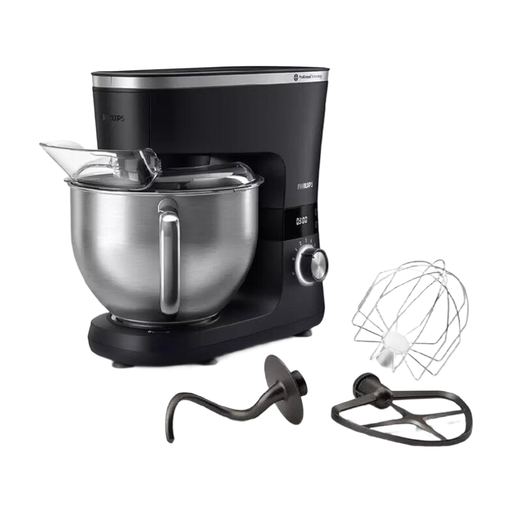
If you’re looking for a machine with a dough hook and several speed settings, check the stated bowl size separately from the maximum dough capacity.
Bowl: 4.5 l; power: 1300 W; speed settings: 6+P; dough hook listed.
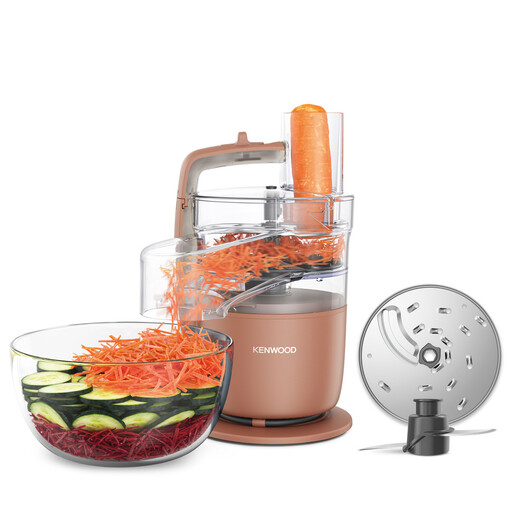 No image available
For smaller batches and extra slicing or grating tasks; a pulse function is listed for short bursts.
Bowl: 1.3 l total; stated capacity for dry ingredients and liquids: 0.75 l each. Dough kneading, slicing and grating listed.
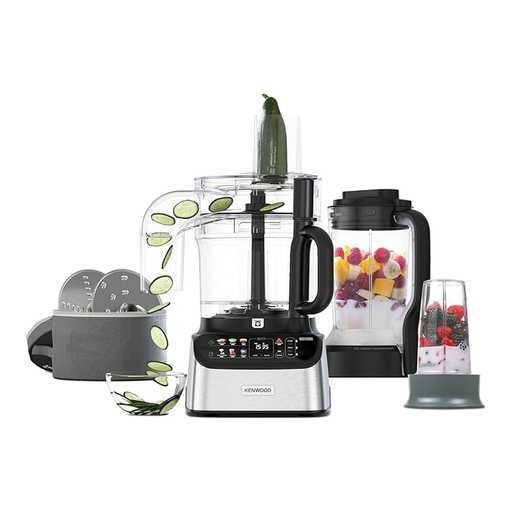 No image available
If you want to prepare dough and other ingredients with one machine, compare the included tools with the tasks you have in mind.
Bowl: 3 l; dough tool and reversible slicing and grating discs listed; Express Serve attachment listed.
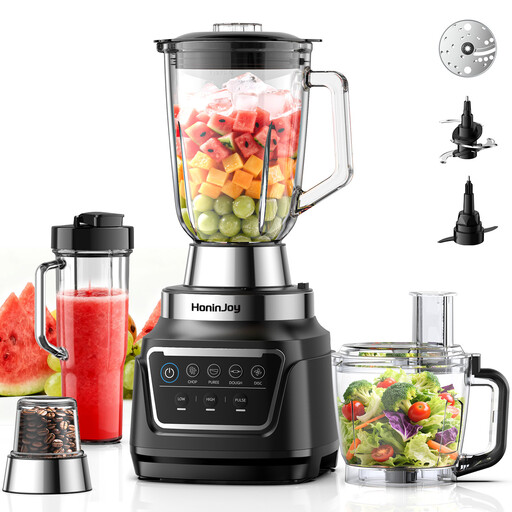 No image available
If you want to prepare other savoury ingredients as well as dough, check that the listed functions suit the steps in your recipes.
Food processor bowl: 2 l; DOUGH programme, slicing and grating functions listed.
 No image available
For larger preparation tasks and processing additional ingredients; compare the bowl capacity and tools with the batch size in your recipe.
Bowl: 5.5 l; blender jug: 1.5 l; eight speed settings; power: 1000 W; chopping, slicing, grating and kneading listed.
No. Good Food describes a recipe where the flour and butter are processed in a food processor. The mixture is then transferred to a bowl, and the liquid is quickly worked in by hand. For savoury versions, follow your recipe rather than using a bread-kneading programme.
Thoroughly clean all surfaces and parts of the machine that come into contact with food. The German Federal Centre for Nutrition recommends using hot water and washing-up liquid; check the instruction manual for your model to see whether an attachment is dishwasher-safe.
The German Federal Centre for Nutrition recommends keeping perishable food in the fridge until shortly before serving. Whether additional requirements apply to an event depends, among other things, on whether it’s a private buffet or food is being supplied to other people.
For a consumer purchase, the seller is generally responsible for defects; your statutory rights relating to defects are separate from any voluntary manufacturer’s guarantee. As of 13 August 2026, the Verbraucherzentrale states that there is generally a two-year period for defects that were present at the time of delivery, and online purchases usually come with a 14-day right to cancel. The terms and exceptions of the individual contract still apply.
The CE marking isn’t an independent EU approval, nor does it indicate how well a machine mixes scone dough. Your Europe explains that there is no central EU body that issues approval or a certificate for using the marking; the rules that apply to the specific product are what matter.