Which option is right for you?

Learning to make tart pastry

If you’re making individual sweet tart cases, a well-controlled pulse function and the right tool can help you keep processing time short. Bosch home appliances recommends using cold ingredients and processing sweet shortcrust pastry briefly; a pulse function, however, is no guarantee of success.

Running a class with several batches

When making several tarts, consider the recipe quantity, the amount of pastry allowed per batch and how many batches you’ll need to make. Manufacturers’ specifications for bowl size and pastry quantity vary by model, so check them against your class recipe.

Bakers with limited worktop space

If you’ll be putting the appliance away between classes or using it for other ingredients too, its dimensions, accessories and ease of cleaning all matter. Manufacturer information on storage and dishwasher-safe parts applies to the specific model described.

What should you look for when buying?

Compact food processor

A good fit if: You usually process small, individual recipe quantities and want to control the process yourself.

The trade-off: A smaller bowl may mean extra batches when you’re making several tarts.

Larger food processor with extra tools

A good fit if: As well as making pastry, you regularly prepare ingredients for fillings or other dishes.

The trade-off: More accessories and larger bowls take up space and need to be stored and cleaned.

Making pastry by hand

A good fit if: You’re making a small quantity of pastry and don’t want to buy another appliance.

The trade-off: You’ll do the mixing yourself; Good Food’s published recipe starts by rubbing the butter and flour together with your fingertips.

Priority What to check when buying Who is this important to?
Short, controlled processing A suitable blade and pulse or momentary function; instructions for pastry and recipe quantities. If I want to process shortcrust pastry in short bursts and check its consistency, the right controls matter to me. This is the main priority for around 36% of consumers who want control over their pastry.
Pastry quantity per batch Compare the recipe quantity with the model-specific guidance on processing pastry. If I’m planning several tarts for a class, I want to know whether my recipe can be processed in one batch or more. Around 29% of consumers prioritise finding an appliance suited to their batch size.
Worktop space, accessories and cleaning Check the appliance dimensions and storage space; consult the instructions to see which parts can be cleaned. If my worktop is small and I need to put the appliance away after class, I also consider the accessories and cleaning involved. Space and cleaning are the main concerns for around 21% of consumers.
Other kitchen tasks Check that the included slicing, grating or chopping functions suit the recipes you actually plan to make. If I want to use the appliance between baking classes too, I need functions that suit my other preparations. Around 14% of consumers put versatility first.

Common buying mistakes

  • Assuming bowl capacity tells you how much shortcrust pastry you can make

    Listed bowl capacity and the permitted pastry quantity are two different things. A general capacity figure doesn’t automatically confirm that your class recipe will fit.

    Compare the quantities in your recipe with the instructions for the exact model, and plan to process the pastry in separate batches if needed.

  • Assuming a long kneading or bread programme is right for sweet shortcrust pastry

    Bosch home appliances recommends processing shortcrust pastry only briefly. Information about bread or pizza dough for other appliances doesn’t prove that the same approach is suitable for sweet tart pastry.

    Check which tool the instructions recommend for your recipe and whether you can control the process in short bursts.

  • Confusing a food processor attachment with a standalone appliance

    According to the manufacturer, an attachment such as KitchenAid’s 5KSM2FPA is powered by a stand mixer and is designed for slicing, dicing and grating. It isn’t the same as a standalone food processor.

    Before buying, check the product type, which base appliance you’ll need and whether the intended tool is designed for your pastry-making task.

    If you don’t already have a compatible base appliance, you’ll need one to use the attachment.

Key brands at a glance

KitchenAid

The manufacturer lists food processors in different sizes: 1.7 l for the 5KFP0719 and 3.1 l for the 5KFP1319.

  • KitchenAid Germany lists a dough blade and pulse function for both models.
  • Bowl capacity doesn’t confirm how much sweet tart pastry you can process; check your recipe quantity against the instructions for each model.

Kenwood

The range of models spans the compact MultiPro Go FDP23.140RD with a 1.3-l bowl to the MultiPro XL Weigh+ FDM72.990SS with a 3.0-l bowl.

  • For the larger model, Kenwood Germany lists a scale, a dough tool and a pulse function.
  • The manufacturer’s information about kneading, such as for pizza dough, is not independent evidence that the appliance is suitable for sweet tart pastry.

Cuisinart

For the Expert Prep Pro FP1300BE, Cuisinart lists a large 3-l bowl and a small 0.95-l bowl.

  • According to Cuisinart, the large bowl comes with a dough blade and the appliance has a pulse function.
  • The dough blade is specified for the large bowl; that doesn’t automatically mean it’s intended for use with the smaller one too. More parts also need extra storage space.

Bosch

Bosch home appliances offers guidance on processing sweet shortcrust pastry briefly. For the MC812M844 model, the manufacturer lists a momentary setting and accessories including a dough hook and universal blade.

  • Bosch home appliances’ recipe instructions recommend using cold ingredients and processing the pastry briefly.
  • Bosch marks the MC812M844 as no longer available. The recipe recommendation isn’t a comparative test and doesn’t confirm the quantity of pastry you can make for a class with this appliance.

Philips

The German product page for the HR7778/00 food processor lists slicing, chopping and kneading functions, as well as a pulse function.

  • Philips describes the metal kneading hook as being for bread dough and the blade unit as being for cake batter.
  • This manufacturer information doesn’t prove that the appliance has a verified advantage for sweet shortcrust pastry; check the instructions to choose the right tool.

Joybuy product selection

This selection includes a food processor with a larger bowl for several baking preparations and a compact model for smaller tasks. Bowl capacity alone doesn’t confirm the permitted tart pastry quantity for either model.

Food processor / dough mixer with 4.5-l stainless steel bowl, 1300 W and Speed 6+P, beige

Food Processor / Dough Mixer, 4.5 l, 1300 W, Speed 6+P, Beige

The larger bowl and the listed baking tools may be useful for several preparations in a baking class; check the instructions to find out how much tart pastry the appliance can process.

The product title lists a 4.5-l stainless steel bowl, 1300 W and Speed 6+P. The description includes a dough hook, whisk, mixing tool and pulse function.

View at Joybuy
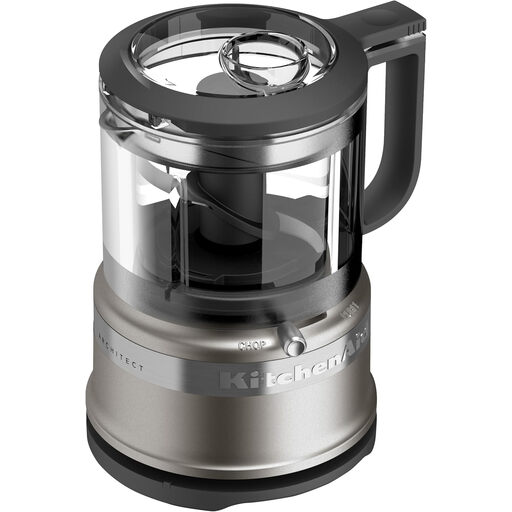
KitchenAid 5KFC35616ECU Mini Food Processor, 240 W, 2 speeds, Contour Silver

KitchenAid 5KFC35616ECU Mini Food Processor, 240 W, Contour Silver

This compact model may suit smaller preparations; check the instructions before planning to make a particular quantity of tart pastry with it.

The product description lists a 0.83-l work bowl, two speeds, a pulse function and a stainless steel multipurpose blade. It also mentions integrated cord storage and dishwasher-safe parts.

View at Joybuy

Frequently asked questions

How can I process sweet tart pastry without kneading it for too long?

Follow your recipe and the instructions for the recommended tool. Bosch home appliances recommends using cold ingredients, kneading sweet shortcrust pastry briefly and then leaving it to rest in the fridge for at least 30 minutes. This is the manufacturer’s preparation advice, not a guarantee of how the appliance will perform.

Can I work out how much pastry I’ll need for a whole class from the size of a large bowl?

No. Bowl capacity isn’t the same as an approved pastry quantity. Compare the ingredients in your recipe with the model-specific instructions and check whether the stated quantity actually applies to that type of pastry.

What should I consider when assembling and cleaning the appliance?

Follow the instructions for fitting the bowl, lid and blade, and check which parts of your specific model can be cleaned. Cuisinart lists the bowls, blades and discs for the FP1300BE as dishwasher-safe; handle sharp tools with care.

Can I return a food processor bought online?

According to the Verbraucherzentrale, consumers generally have a 14-day right to cancel online contracts from the date they receive the goods; you must notify the retailer that you wish to cancel. Check the terms of your specific purchase, and distinguish the right to cancel from a voluntary returns period.

What safety and food-contact rules should I consider when buying?

According to consumer information from the European Union, products sold online must also meet the applicable product safety rules; the required CE marking applies to relevant electrical appliances. Parts that come into contact with food must meet requirements for materials under foreseeable conditions of use. The German Federal Institute for Risk Assessment points out that its material recommendations are not legally binding. A CE marking doesn’t prove that an appliance is suitable for a particular tart pastry recipe.